
U.S. Commends Nigeria For Convicting 386 ‘Islamist Militants’
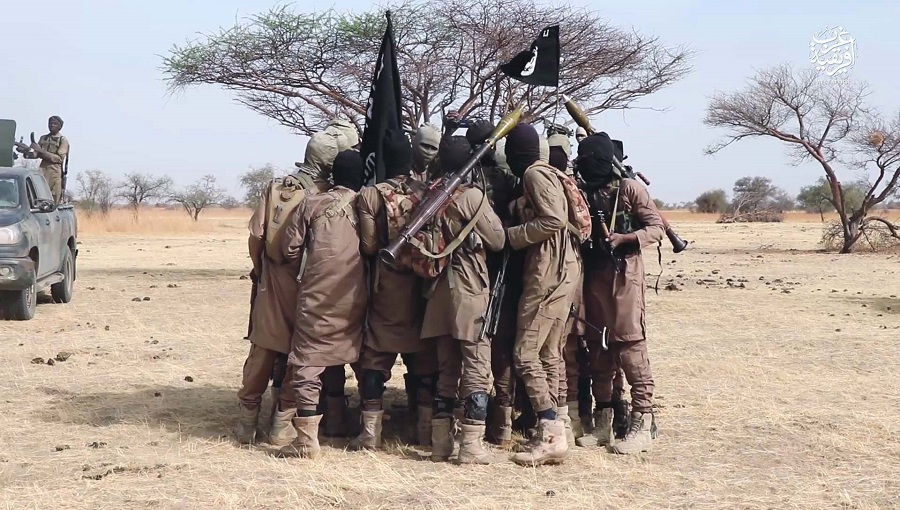
The United States has praised Nigeria for a landmark mass terrorism trial that concluded this past week, in which 386 suspected militants linked to Boko Haram and the Islamic State’s West Africa Province (ISWAP) were convicted in just four days.
U.S. Senior Advisor for Arab and African Affairs Massad Boulos posted the commendation on X on Sunday, stating: “The United States commends the Nigerian government for its strong commitment to expediting trials addressing terrorism and related crimes.
We welcome the convictions of 386 Islamist militants in cases that had previously faced significant delays in the courts, and we recognize this as an important step toward accountability and justice.” Boulos emphasised the importance of efficient and transparent judicial processes in tackling insecurity and strengthening public confidence in the legal system.
The trial, which marked the ninth phase of Nigeria’s mass terrorism trial exercise, commenced on Tuesday, April 7, 2026, and concluded on Friday, April 10.
Defendants were arraigned before 10 judges of the Abuja Division of the Federal High Court, despite the Easter vacation period that commenced on the same day.
Advertisement
A total of 508 defendants were brought before the courts. Of those, 386 were convicted and sentenced to various jail terms ranging from five years to life imprisonment based on the gravity of the charges and their courtroom confessions.
Eight defendants were discharged while two were acquitted. A batch of 112 suspects whose cases could not be concluded will be arraigned in the next phase scheduled for June 15 to 18, 2026.
Nigeria’s Attorney General and Minister of Justice, Prince Lateef Fagbemi, commended the ten Federal High Court judges for sacrificing their Easter holiday to serve in the special courts, calling their efforts a demonstration of commitment to justice and national security.
He also noted that Amnesty International, the Nigerian Bar Association, the National Human Rights Commission, and other civil society groups monitored the proceedings to ensure transparency and adherence to due process.
Beyond punishment, courts also ordered rehabilitation and de-radicalisation for many of the convicts, aimed at reintegrating them into society and preventing future violence.
Advertisement
The convictions mark a significant milestone in Nigeria’s long-running battle against insurgency in the northeast, which has displaced millions of people over the past decade.