After Years Of Distortions, NNPC Ltd Pushes Market-Driven Gas Pricing Model
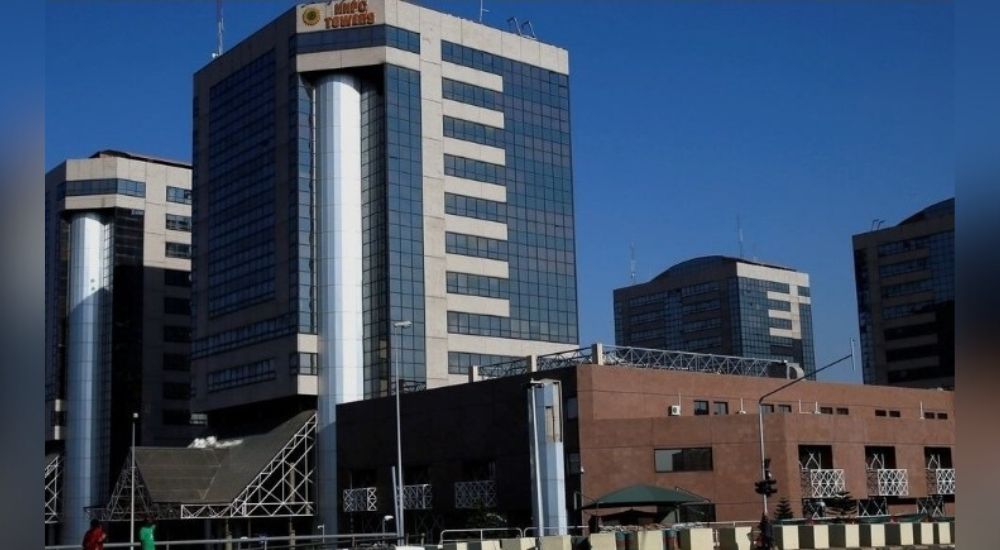
…Targets 75% Gas Commercialisation By 2027
…Eyes 10 Billion Cubit Feet Per Day Gas Production By 2027
…Lists LNG, LPG, CNG As Priority Gas Projects
After decades of price controls, weak payment discipline and structural distortions that discouraged investment in Nigeria’s domestic gas market, the Nigerian National Petroleum Company Limited is pushing a fundamental reset with the introduction of a willing buyer–willing seller pricing framework under its Gas Master Plan (GMP) 2026, THE WHISTLER can report.
The proposed shift marks a clear departure from administratively determined gas prices that left producers exposed to arrears particularly from the power sector while constraining supply to industries despite Nigeria’s vast gas endowment.
Advertisement
Details of the NNPC strategy are contained in the Gas Master Plan (GMP) 2026, seen by THE WHISTLER.
Under the new framework, THE WHISTLER understands that the NNPC aims to create a market-driven pricing regime capable of restoring confidence across the value chain, improving liquidity and supporting its ambition to raise gas commercialisation from about 60 per cent to 75 per cent by 2027, alongside a ramp-up in production to 10 billion cubic feet per day.
The strategy is positioned as a critical enabler of industrial growth, power sector reform and export expansion, as Nigeria seeks to maximise the economic value of Africa’s largest proven gas reserves.
Nigeria’s domestic gas market has long been characterised by mismatches between regulated prices and rising development costs, leading many producers to prioritise exports or reinjection over local supply.
These challenges, according to THE WHISTLER findings were compounded by delayed payments from power generation companies, infrastructure bottlenecks and security risks, creating a cycle of underinvestment and supply shortfalls.
Advertisement
By allowing prices to reflect commercial realities while strengthening aggregation and contract enforcement through institutions such as the Gas Aggregation Company of Nigeria (GACN), NNPC believes the new model will stabilise supply and make domestic gas projects bankable.
The pricing reset is also aligned with the Petroleum Industry Act (PIA) 2021 and the Federal Government’s Decade of Gas initiative, which seek to reposition gas as the backbone of Nigeria’s energy security, industrialisation and energy transition.
For NNPC, the success of the willing buyer–willing seller framework could determine whether the country finally breaks from years of gas market dysfunction—or continues to sit on vast reserves that deliver limited economic value.
The gas masterplan document is a comprehensive framework designed to reposition gas as the backbone of Nigeria’s energy security, industrialisation and economic growth.
The plan aligned with the Federal Government’s Decade of Gas initiative, also targets a significant ramp-up in gas production, with clear presidential mandates to deliver 10 billion cubic feet per day (bcf/d) by 2027 and 12 bcf/d by 2030.
These targets underscore the central role gas is expected to play in powering the economy, deepening domestic utilisation and supporting Nigeria’s long-term energy transition.
Advertisement
At the core of the NNPC GMP 2026 is a strong focus on digitalisation as the operational backbone for effective delivery.
According to the document analysed by THE WHISTLER, the success of the gas strategy will depend not only on securing gas supply and expanding infrastructure, but also on building robust digital systems, governance frameworks and risk controls that ensure transparency, coordination and long-term sustainability.
For decades, Nigeria’s gas sector has been challenged by fragmented and siloed data across business units, limiting visibility, accuracy and timely decision-making.
Under the new Gas Master Plan, the NNPC intends to address this gap through a structured digitalisation roadmap that consolidates infrastructure, production and maintenance data on a unified platform.
The plan prioritises the establishment of a dedicated data office, clear access-level definitions, and a subscription-based update framework to ensure consistent data integrity and transparency.
The NNPC believes that a centralised digital repository will not only improve access to operational information but also enhance collaboration across the industry, support regulatory compliance and provide a solid foundation for long-term planning.
By embedding digital transformation at the heart of the GMP, the national oil company aims to de-risk gas infrastructure projects and attract sustained investment into the sector.
Beyond digital systems, the Gas Master Plan 2026 is anchored on clearly defined strategic focus areas. One of the most critical is improved gas monetisation and market expansion.
The plan supports the resolution of gas-to-power liquidity challenges while facilitating gas supply to gas-based industries on sustainable commercial terms.
Priority projects include LNG, FLNG, LPG, CNG and mini-LNG initiatives, alongside efforts to de-risk gas supply for domestic, regional and international markets.
Cost efficiency and optimisation also feature prominently in the strategy.
Through the Gas Hub Concept, NNPC aims to ensure efficient expansion of gas processing plants, promote facility sharing and unlock synergies across the value chain.
This approach, the plan stated is expected to lower operating costs, improve asset utilisation and make gas projects more competitive.
Another key pillar of the GMP is the increase of reserves, production and supply.
In line with the presidential mandate, the plan seeks to accelerate the development of deepwater gas, minimise gas re-injection and eliminate routine flaring by 2027.
There is also a push to advance 3P (possible) gas reserves to 2P (proved plus probable) reserves, providing a more reliable and bankable supply base for long-term growth.
Closing gaps in gas deliverability and infrastructure remains a priority.
The document showed that Strategic national projects such as the Ajaokuta–Kaduna–Kano (AKK) pipeline, the Trans-Nigeria Gas Pipeline (TNGP) and other critical assets are central to improving gas transportation and supporting industrialisation across the country.
The plan also calls for the acceleration of additional bankable infrastructure projects to ensure gas can be delivered efficiently to demand centres.
On the commercial front, NNPC is pushing for a willing buyer–willing seller framework for domestic gas pricing, aimed at creating a market-driven and sustainable pricing regime over the medium to long term.
This is expected to improve investor confidence, enhance liquidity and support the overall commercial viability of the gas market.
A major institutional pillar supporting the GMP is the Gas Aggregation Company of Nigeria (GACN), which plays a critical role in implementing the Domestic Gas Delivery Obligation (DGDO).
By aggregating gas from producers and allocating supply to sectors such as power generation, manufacturing and wholesale markets, GACN helps streamline the supply chain and promote market efficiency.
Its standardised contractual frameworks, pricing systems and stakeholder engagement efforts are designed to reduce disputes, improve transparency and expand domestic gas utilisation.
Collaboration across the industry is another key theme of the Gas Master Plan.
The document stated that the NNPC, alongside the Independent Petroleum Producers Group (IPPG) and the Oil Producers Trade Section (OPTS), is expected to align on critical infrastructure projects, virtual distribution networks and infrastructure security.
A unified approach, including advanced monitoring systems and community engagement, is seen as essential to mitigating risks such as vandalism and sabotage.
The GMP 2026 is firmly anchored within the framework of the Petroleum Industry Act (PIA) 2021, which provides the legal, governance and fiscal foundation for Nigeria’s oil and gas sector.
By aligning gas development with the PIA’s objectives of transparency, commercial orientation and host community development, NNPC aims to create a more attractive and competitive investment environment.
Importantly, the push to raise gas commercialisation to 75 per cent by 2027 is also tied to Nigeria’s sustainability and climate commitments.
Increasing the proportion of gas that is processed and utilised rather than flared supports the country’s net-zero emissions target by 2060, while enabling flexible gas-fired power generation to complement renewable energy.