
Foundation Urges Sahel Govts To End Arbitrary Arrests Of Journalists
The Media Foundation for West Africa (MFWA) has called on transitional and constitutional governments in Burkina Faso, Mali, Niger and Guinea to end the arbitrary arrest and prolonged pretrial detention of journalists and civil society actors.
The foundation made the call in a report presented at a regional conference on press freedom and democratic governance in West Africa held in Abuja.
The report, which examined the “state, determinants, dynamics and future of media and free expression rights in Burkina Faso, Mali, Niger and Guinea,” identified urgent measures needed to reverse the deteriorating media environment and shrinking civic space across the four countries.
Speaking at the conference, MFWA Executive Director, Sulemana Braimah, said journalists, media professionals, activists and other civic actors had increasingly become targets of restrictions, intimidation, surveillance, arrests and other forms of repression.
He called for sustained and collective action to address the trend.
The report, led by Dr Gilbert Tietaah and Dr Hima Badie, specifically urged governments to “end arbitrary arrests and prolonged pretrial detention of journalists and civil society actors” and immediately clarify the whereabouts and legal status of people detained in connection with the exercise of their freedom of expression.
Advertisement
It also called for investigations and accountability over attacks on journalists, including cases of enforced disappearance.
The foundation urged authorities to conduct credible, independent and transparent investigations into documented cases and ensure that perpetrators are held accountable.
Among the cases highlighted were those of Guinean journalists and activists Habib Marouane Camara, Foniké Mengué and Mamadou Billo Bah, alongside other documented cases of enforced disappearance across the four countries.
The MFWA said the situation in Burkina Faso, Mali, Niger and Guinea should not be treated as isolated national developments but as part of an emerging regional pattern in which military governance, security emergencies and the growing use of digital communication technologies were creating new risks for journalists while making their work increasingly important.
“The four countries examined are not isolated cases but part of an emerging pattern within the subregion in which military governance, security emergencies, and the enablement of digital communication technologies are interacting in ways that are simultaneously creating new risks for journalists and renew the imperative of their work,” the report stated.
Advertisement
The foundation said understanding the dynamics was critical to supporting local actors, guiding national and international interventions and contributing to the restoration of democratic norms and institutional accountability across the Sahel and West Africa.
The report traced the worsening media environment partly to political and governance changes across the region.
It noted that from the late 1990s to the mid-2010s, West Africa experienced a period of democratisation, with virtually all 15 ECOWAS member states operating democratic systems of varying degrees by 2015.
It said electoral politics based on free and open competition made media freedom and freedom of expression important indicators of democratic effectiveness, as democratic legitimacy depended on open discourse, deliberation and decision-making.
However, the MFWA said the democratic trajectory had come under increasing pressure over the past decade due to prolonged geopolitical tensions, violent extremism, concerns over state sovereignty and national security, as well as conflict-related disinformation and foreign information manipulation.
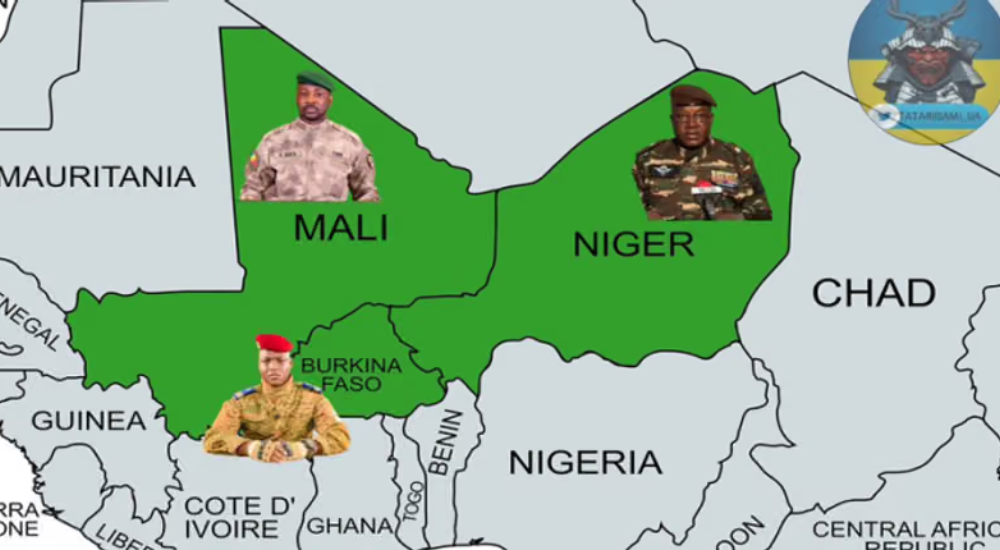
The report identified Mali, Burkina Faso and Niger, whose military governments formed the Alliance of Sahel States, as key examples of the changing political order.
Advertisement
It described the development as part of what it termed a “coup contagion” in the ECOWAS region.
It also cited Guinea and Guinea-Bissau as countries that had experienced military takeovers or attempts, while noting that an alleged coup attempt in Benin was foiled.
Against this backdrop, the foundation said media and freedom of expression frequently became “first-line casualty” whenever democratic orders were disrupted.
“Journalists, social commentators, and civil society activists experience various forms of victimisation and rights violations,” the report stated.
It listed censorship, arbitrary restrictions on independent media outlets, surveillance, intimidation, arrests of critical journalists and political commentators, as well as legislative measures aimed at controlling the internet and social media.