
Fresh Investments, Tantita’s Pipeline Security Raise Hope For 2.5mbpd Oil Target
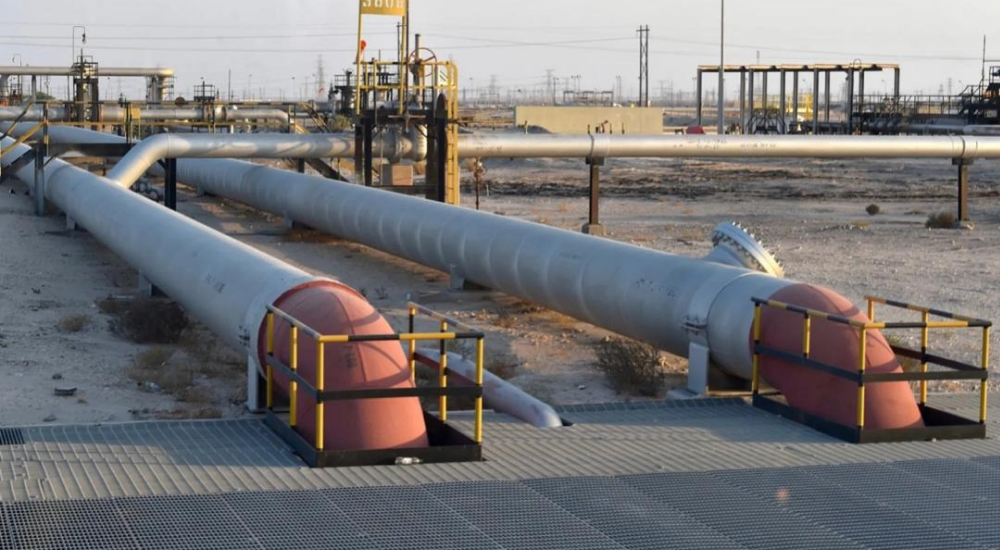
Nigeria’s ambition to raise crude oil production to 2.5 million barrels per day (bpd) is gaining momentum as the Federal Government intensifies efforts to attract fresh investments, revive dormant oil fields, unlock deepwater resources and strengthen the protection of critical petroleum assets.
At the centre of the push is the Nigerian Upstream Petroleum Regulatory Commission (NUPRC), which is working to create an investment-friendly environment while addressing some of the longstanding challenges that have constrained production.
The sustained protection of oil infrastructure, particularly pipelines in the Niger Delta, is also emerging as a critical component of the strategy, with Tantita Security Services Nigeria Limited (TSSNL) playing a prominent role in pipeline surveillance and asset protection.
Nigeria last produced around 2.5 million barrels of crude oil per day more than two decades ago. Historical production data show that output peaked at about 2.5 million bpd in November 2005, when the country was a major force within OPEC and the global oil market.
Despite the implementation of the Petroleum Industry Act (PIA) and renewed efforts to attract investment, national crude and condensate production has remained below that historic level, although output has recorded significant improvement this year.
Advertisement
According to NUPRC data, total oil production increased from about 1.48 million bpd in February to 1.735 million bpd in June.
The Federal Government is now seeking to build on that recovery by combining new investments with increased exploration, aggressive field development, enhanced recovery from mature assets and stronger security of petroleum infrastructure.
Industry stakeholders said achieving the 2.5 million bpd target would require more than increased exploration, stressing that Nigeria must also create the conditions for investors to develop existing discoveries and bring stalled projects into production.
The protection of oil assets remains particularly important because disruptions to pipelines and other infrastructure can undermine production, reduce export volumes and weaken government revenues.
President Bola Tinubu had appointed Tantita Security Services Nigeria Limited, led by High Chief Government Oweizide Ekpemupolo, popularly known as Tompolo, to support the protection of Nigeria’s oil assets in the Niger Delta.
Advertisement
TSSNL works alongside other security agencies in surveillance operations aimed at protecting pipelines and other critical petroleum infrastructure.
Stakeholders have credited the sustained surveillance of oil infrastructure with helping to reduce pipeline breaches and oil theft, thereby improving the reliability of crude oil flows.
President General, Niger Delta Progressive Alliance, Nse Victor Udoh, said pipeline protection had helped national institutions move from reactive crisis management towards more strategic planning in the petroleum sector.
According to him, while pipeline surveillance does not cover the entire energy value chain, securing the infrastructure through which petroleum resources are transported is fundamental to the stability of the sector.
“It is important to clarify the role of pipeline surveillance within the wider energy landscape. Energy security encompasses the full value chain, from exploration and production to refining, distribution, pricing policy, and subsidy frameworks. Pipeline surveillance does not manage these domains,” he said.
He added that the mandate of pipeline surveillance was to safeguard critical infrastructure transporting petroleum resources, but argued that the function was foundational to the wider industry.
Advertisement
“Without secure transportation channels, production targets falter, refining plans collapse, exports decline, and fiscal projections become unreliable,” Udoh said.
He described asset protection as a precondition for economic stability, arguing that predictable crude flows enable refineries to plan feedstock intake, exporters to meet contractual obligations and investors to assess risks more accurately.
“When crude flows are secure, refineries can plan feedstock intake with assurance. Export commitments can be met without fear of sudden shortfalls.
“Investors can assess Nigeria’s petroleum sector with clearer risk profiles. Surveillance therefore does more than stop theft. It reintroduces reliability into national energy planning,” he stated.
According to stakeholders, higher accounted-for production could translate into increased export earnings, stronger foreign exchange inflows and improved government revenues.
However, they stressed that security alone would not deliver the 2.5 million bpd target without sustained capital investment and the development of Nigeria’s substantial oil reserves.
Chairman/Chief Executive Officer of Brittania-U, Catherine Uju Ifejika, highlighted the potential of mature fields, citing the company’s Ajapa field as an example of how investment can increase production from existing assets.
She said Brittania-U invested more than $400m after acquiring the asset from Chevron, including funding additional wells and deploying a Floating Production, Storage and Offloading (FPSO) facility.
According to her, the investment enabled the Ajapa field to commence production at about 2,300 bpd in 2010, with output subsequently increasing and becoming more stable.
The NUPRC has also said new incentives for offshore oil and gas projects could attract as much as $50bn in fresh investment into Nigeria’s offshore energy sector.
The investment drive comes against the backdrop of a sharp decline in annual capital spending in Nigeria’s oil and gas industry.
Industry stakeholders have noted that annual investment has fallen to about $2bn, compared with approximately $26bn in 2014.
The NUPRC is therefore seeking to reverse the trend through regulatory reforms and measures aimed at improving the competitiveness of Nigeria’s upstream sector.
As part of the renewed investment drive, the commission recently warned 31 companies that emerged winners of 37 oil and gas blocks in the 2025 Licensing Round to pay their signature bonuses within the stipulated period or risk losing their provisional awards.
The NUPRC said compliance with the payment requirements had commenced following the issuance of provisional awards to the successful bidders.
It warned that companies that fail to pay their signature bonuses within the prescribed period, in line with the PIA, would forfeit their bid guarantees and lose their provisional awards to reserve bidders.
Under the PIA and applicable licensing guidelines, successful bidders are required to pay signature bonuses ranging from $3m to $7m per block, as well as first-year rents and other post-award obligations.
Beyond new blocks, the revival of major deepwater projects is expected to play a significant role in increasing national production.
Nigeria’s push to revive deepwater investment recently received a boost after the Nigerian National Petroleum Company Limited and its partners signed agreements expected to move the proposed Bonga Southwest/Aparo project closer to a Final Investment Decision.
The project, located in Oil Mining Lease 118, could attract up to $21bn in investment and is projected to deliver peak production of about 175,000 bpd of oil and 140 million standard cubic feet of gas per day.
NNPC Ltd and the OML 118 contractor parties, including Shell Nigeria Exploration and Production Company Limited, Esso Exploration and Production Nigeria (Deepwater) Limited and Nigerian Agip Exploration Limited, executed an Addendum to the OML 118 Production Sharing Contract and an Addendum to the Dispute Settlement Agreement.
The development followed President Tinubu’s approval of the Deep Offshore Oil and Gas Projects Incentives (Tax Remission) Order, 2026, aimed at improving the competitiveness of Nigeria’s deepwater fiscal regime and unlocking new investments.
The partners have also completed the Pre-Front End Engineering Design phase of the Bonga Southwest/Aparo project, positioning it for further engineering work towards the Front End Engineering Design stage, subject to approvals and other governance requirements.
Industry experts said Nigeria would need to combine exploration with aggressive development of existing fields, enhanced recovery from mature assets, improved security, infrastructure upgrades and faster regulatory approvals to sustain the production recovery.
They noted that Nigeria already has substantial proven oil reserves and that the bigger challenge is converting those reserves into sustained production.
According to them, exploration spending alone would not be sufficient to deliver the higher output required to increase government revenues, improve foreign exchange earnings and strengthen Nigeria’s position in the global oil market.
They also called for the accelerated completion of major projects, including Bonga North, Bonga Southwest/Aparo, Zabazaba and Etan, saying their development could provide additional volumes needed to move Nigeria closer to the 2.5 million bpd target.
With crude production already showing signs of recovery, stakeholders believe that sustained investment, improved infrastructure and continued protection of oil assets could provide the foundation for Nigeria to regain the production levels it last achieved more than 20 years ago.