
Fuel Subsidy Savings Used To Pay Debt, Minimum Wage — Oyedele
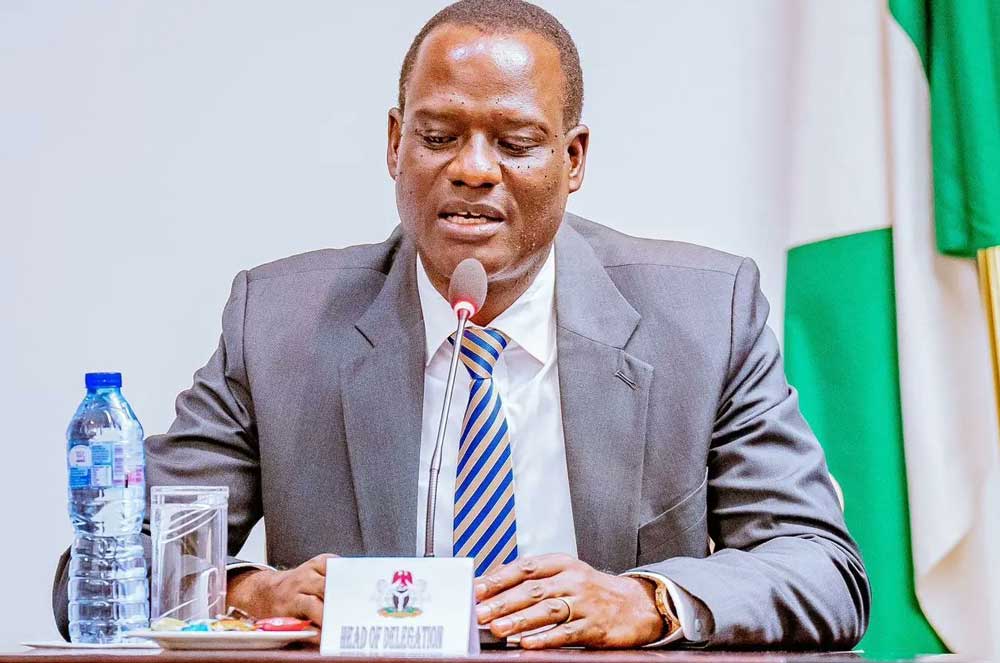
The Minister of Finance and Coordinating Minister of the Economy, Taiwo Oyedele, has disclosed that the Federal Government deployed savings realised from the removal of fuel subsidy and the liberalisation of the foreign exchange market to service public debt, finance the new national minimum wage, support the student loan scheme and meet other critical government obligations.
Oyedele made the disclosure on Thursday while speaking at the 7th Africa Emerging Markets Forum in Abuja, where he also announced that the Federal Government would soon publish a detailed account of how the subsidy savings had been utilised in line with its commitment to transparency and accountability.
His remarks come more than three years after President Bola Tinubu announced the removal of petrol subsidy during his inaugural address on May 29, 2023, declaring that “fuel subsidy is gone.”
The decision, followed by the unification of the foreign exchange market, marked the beginning of sweeping fiscal and economic reforms aimed at reducing government spending, boosting public revenue and attracting investment.
While the reforms significantly increased government revenues, they also triggered a sharp rise in petrol prices, transport costs and inflation, prompting sustained public demands for greater transparency over how the savings from the subsidy removal have been spent.
Addressing the concerns, Oyedele said Nigerians deserved to know how the funds had been applied.
Advertisement
“But the money saving is also important. In a few days, you will see the detailed analysis because we believe that we owe a duty to explain what we do to the Nigerian people. That’s what transparency looks like,” he said.
According to the minister, fuel subsidy and what he described as the foreign exchange subsidy had previously accounted for about five per cent of Nigeria’s Gross Domestic Product, making the reforms necessary to restore fiscal sustainability, eliminate market distortions and curb corruption associated with the previous regime.
Providing a breakdown of the expenditure, Oyedele said a significant portion of the savings had been channelled into settling the Federal Government’s Ways and Means obligations, servicing public debt and implementing the new national minimum wage.
‘If you stop printing money, the spending doesn’t disappear. You need to finance the money you were printing before. That was part of where the savings went,” he said.
He explained that before the reforms, government spending had largely been sustained through monetary financing, making it necessary to identify alternative funding sources after the subsidy removal.
Advertisement
The minister also said rising interest rates had substantially increased Nigeria’s debt servicing burden.
“Instead of paying eight per cent on our debt, we’re paying as high as 24 per cent. When you need to service debts, you don’t debate whether you need to pay. You pay, and you pay on time,” he stated.
Oyedele further revealed that the increase in the national minimum wage from N30,000 to N70,000 had almost doubled the Federal Government’s wage bill, requiring additional fiscal resources to sustain implementation.
He added that subsidy savings had also supported the Nigerian Education Loan Fund (NELFUND), through which more than 1.5 million students have received tuition financing and monthly upkeep allowances.
According to him, the scheme has reduced financial pressure on households by enabling parents to redirect resources previously used for school fees to other essential family needs.
Responding to concerns over the Federal Government’s continued borrowing despite exceeding revenue targets, Oyedele argued that improved revenue performance does not eliminate the need for borrowing where expenditure still exceeds income.
Advertisement
“If you have a budget to spend 10 and your revenue target is six, you need to borrow four. If you eventually collect seven, you have exceeded your revenue target, but you still need to borrow three,” he said.
He maintained that government borrowing should be judged by the value it creates rather than its size.
“We must add more value than the cost of every naira and every dollar that we borrow,” he said.
Oyedele said the ongoing fiscal reforms were intended to strengthen public finances, improve transparency, enhance economic efficiency and ensure that public resources were channelled into programmes capable of delivering sustainable economic benefits for Nigerians.