
GenCos, DisCos Disagree Over FG’s Plan To Decentralise Subsidy Payment
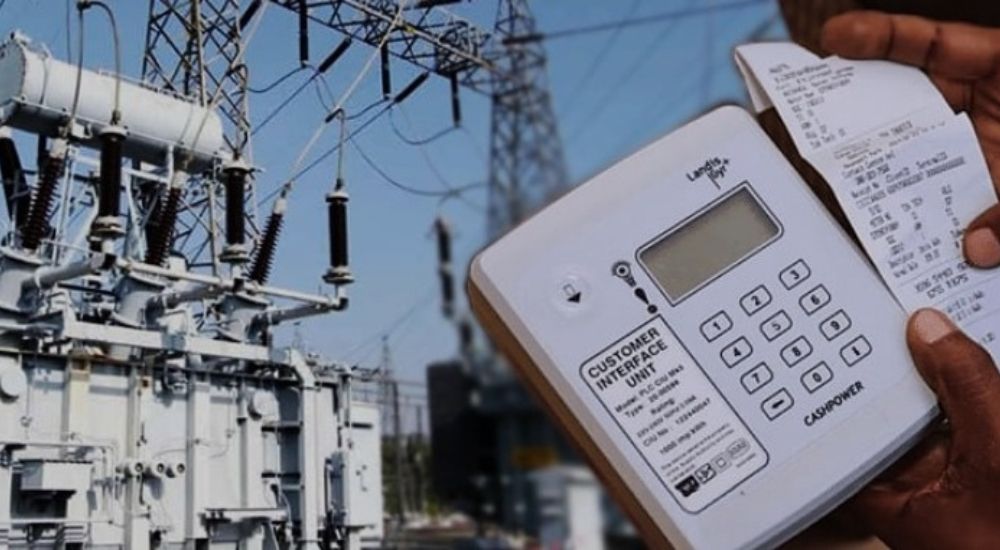
…FG’s Debt To GenCos Hits N6.4tn
…Worse Days In Power Sector Coming, GenCos Warn
Power Generating Companies (GenCos), and Electricity Distribution Companies (DisCos) have expressed divergent views over the Federal Government’s plans to share the cost of electricity subsidies with state and local governments beginning from this year.
THE WHISTLER can report that the power sector liabilities stood at about N4tn at the end of 2025.
Recall that the Director-General of the Budget Office of the Federation, Tanimu Yakubu, had this week announced that President Bola Ahmed Tinub wants electricity subsidy costs to be explicit, practical, and transparent.
He warned that no level of government should carry hidden or unpaid obligations.
Advertisement
The DG noted that this new directive is not a punishment but rather an alignment, adding that it could act as an incentive for the different levels of government to support cost-reflective efficiency as well as have a power market that can deliver.
He noted that the President has instructed that the existing electricity sector legal framework be invoked to ensure that subsidy sharing is practical, transparent, and enforceable.
Speaking on the development,
the Managing Director and Chief Executive Officer of the Association of Power Generation Companies, Dr Joy Ogaji, described the move as misleading and unsupported by any formal documentation or fiscal provision.
She said that for investors, the subsidy could only be established through verifiable fiscal commitments, not assumptions.
“When you say subsidy, where is the evidence to show that there is a subsidy in the sector other than the fact that GenCos are consistently paid less than 35 per cent of their invoice monthly? Does subsidy exist in the power sector, or is it just lip service?
Advertisement
“For any investor in the power sector, the only way you can see that the government is subsidising the sector is to look at the budget. Is the subsidy in the air? Is it a smokescreen? Somebody has to see it somewhere, or is it just a political pronouncement that is not cash-backed?” she queried.
According to her, the long-standing claim that the government subsidises electricity masks the reality that generation companies have been funding the shortfall for more than a decade.
“The story has been going around that the government is subsidising electricity. The true story is that generation companies are the ones subsidising the sector. From the beginning, 2013 until the present, they’ve not received 100 per cent of their invoiced amount. So, when we actually say subsidy, who is paying the subsidy? Where is it recorded?” she said.
Ogaji pointed to budget figures to underline her argument, noting that government allocations fell far short of market needs and had translated into mounting debts owed to GenCos.
“For example, this year, the government only provided N1.09tn for the power sector, and there’s a monthly shortfall of N200bn that is not budgeted for. You need to analyse the budget side by side with how much the shortfall is every month,” she said.
She continued, “As of December 2025, the Federal Government debt to the GenCos via the Nigeria Electricity Trading Plc is already N6.4tn. You also need to look at how much of that has been provided for. Just a N501bn bond.”
Advertisement
She further revealed that she had sought clarification from the Nigerian Electricity Regulatory Commission on whether any official approval existed for the assumed subsidy embedded in tariff calculations.
“I spoke with NERC. I asked them if they received any letter from the Federal Government, whether from the Ministry of Finance, the Debt Management Office, or the Presidency, any document, or any minutes of meetings where it is recorded that the Federal Government approved that there is a subsidy in the market. NERC said no, there is no such official document that shows that there is a subsidy,” Ogaji noted.
She warned that extending the same assumption to states and local governments could worsen the crisis in the sector.
“The same way the Federal Government has been living in denial when it comes to the 65 per cent assumed in the tariff is the same way the states and the local governments will handle this. So, there are worse days in the power sector coming,” she warned.
But, the Chief Executive Officer of the Association of Nigerian Electricity Distributors, Sunday Oduntan, welcomed the development, saying that it would bring fairness and structure to the system.
He said that the Federal Government would likely find a practical mechanism for implementation, possibly through deductions at source from states’ monthly FAAC allocations.
“You know all the states get monthly allocations; maybe they will be deducting at source. As to whether the states can bear the burden, that’s for the states to answer. But I know that it can be done,” he said.
On calls for subsidy removal, he argued against a blanket approach, insisting that subsidies should be targeted at vulnerable customers rather than applied universally.
“I know some customers should be subsidised. But you can only do a proper subsidy when there is proper data. I don’t support a universal subsidy. I support subsidy for the needy, but we need data to identify those in need so that you subsidise only them,” Oduntan said.