
How Nigeria’s Public Schools Promote Entrepreneurship
Muhammad Sanusi, a former student of Government Senior Secondary School (GSS) Kubwa, attended a private school all his life, but his parents decided to enrol him in a public school for his senior secondary education.
“My parents said they wanted me to take my WAEC in a public school,” he stated.
When Sanusi arrived at GSS Kubwa, he discovered that there was more to public schools than just getting a WAEC certificate.
“I was able to participate in the (Science, Technology, Engineering Mathematics ( STEM) programme. It is like having an experience of how things will look, and also seeing technology beyond just creating things, but rather creating infrastructures that serve society,” he explained.
Sanusi who reminisced about various group projects he participated in including a smart school attendance system, microbial fuel cell, and organic fertiliser, disclosed that one of the projects he will not forget in a hurry was the smart school attendance system.
Advertisement
“The smart school attendance system uses Arduino and Radio-Frequency Identification (RFID) technology to track student attendance. When students arrive or leave, they scan a Radio-Frequency Identification (RFID) card, and parents get an SMS notification. It digitalised attendance, eliminating manual registers.
“The project wasn’t implemented due to funding and approval issues, but it was a great learning experience.”
Now awaiting admission to a tertiary institution, Sanusi credits his public school experience with opening doors to new opportunities.
“We had the chance to participate in competitions and represent our school,” he added.
Amina Muhammed, another former student of the school, echoes Sanusi’s opinion. For her, GSS Kubwa was a platform for growth, particularly in public speaking.
Advertisement
“We had competitions and coaching from our teachers, Mr. Obiora and Mr. Chima. It really helped me. I have done public speaking gigs at the Ministry of Foreign Affairs, for the Network of Women with Disabilities, and other events,” she said.
She added that the Cosmetology subject she studied in school has given her the opportunity to practice makeup on her friends and family.
“Now that I am in university, I am not doing it much, but it’s a skill I can pick up anytime. I know how to work with makeup tools,” she added.
Ask an average person what they think about the public schools in the country, and the usual comments are pretty blunt – they feel the schools aren’t living up to par.
Public schools often struggle with inadequate funding, infrastructure, and resources, which can impact the quality of education.
However, digging deeper, Sanusi and Muhammed experiences reveal the stories of resilience, dedication, and a testament to what public schools can achieve with the right support and resources.
Advertisement
So explained the principal of GSS Kubwa, Dr. Anderson Oshe, during a visit by THE WHISTLER to the school popularly known as “Black and White”, due to the colour of the school uniform which is white shirts and trousers/ skirts.
Speaking on the school’s progress, the principal shared that the institution was established in 1989, with a population of seven teachers and over 60 students, and has blossomed into about 3,500 students for only the Senior Secondary School.
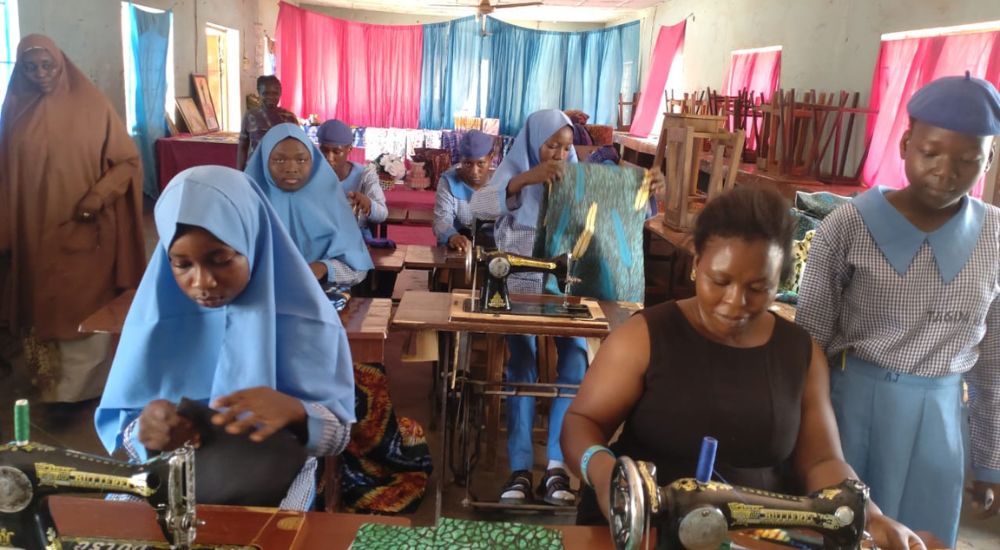
He added that the school offers various skills training, including coding, robotics, data processing, crocheting, cosmetology, leather works, and garment making.
“Technological skills like coding, robotics, and basic data processing help the students use digital tools to solve life problems. While the handiwork skills like crocheting, cosmetology, leather works, and garment making can be marketed and help children make money,” he said.
The principal explained that the school also encourages students to participate in sports and board games to develop their skills and interests.
“We’re also big on sports because it can lead to great opportunities. We have basketball, volleyball, football, taekwondo, and even board games like chess and scrabble. We’re trying to give every child a chance to excel in something,” he added.
One notable initiative is the school’s leather works programme, where students produce sandals and belts.
The school sells these products to students and parents, promoting entrepreneurship and self-sufficiency.

“It is not enough to train the children to make sandals and school belts. We should also think of teaching the children how to market it. And so I told the parents that the next SS1 students that are coming into school to buy the sandals and belts and that is how we started selling them.
“The belt goes for N2,000 while the sandals go for N6,500. They are highly competitive with the ones you get in the market. And the price is also very, very good,” he said.
Oshe added that the school also collaborates with parents to support infrastructure development and staff salaries.
He revealed that the Parents Teachers Association (PTA) pays the salaries of ten extra teachers and four security personnel, totaling over a million naira per month.
Overall, the principal stated that the school’s goal is “to teach entrepreneurship skills, so the students will not be job seekers, but job creators after school.”
THE WHISTLER also visited the Government Girls Secondary School, Dutse. The school which is a boarding school houses close to 2000 students.
The principal of the school, Dr. Fatima Muhammad, revealed that her school shares a similar vision just like GSS, Kubwa,
She explained the school is equipping students with various skills, including garment making, cooking, fishery, painting, and ICT, to make them self-sufficient and employable.
“We want these children to be their own CEOs, to be able to create jobs and not just wait for jobs,” Muhammad said.
She added that the school has introduced entrepreneurship education to encourage students to turn their skills into profitable ventures.
“We tell them, if you make something, what do you do with it? Would you just keep it? Would you just display it and be looking? I need to get someone to buy it. I need to make money out of it and I need to be known for that,” she added.
The school produces uniforms, bread, and other products, which are sold to students and staff. They also produce laptop bags and other items on order.
Muhammad emphasised the importance of empowerment, saying, “Empowerment is key. Empowerment removes you from being lame. Empowerment truly, truly, truly gives an edge.”
She also explained that her school has a unique system of student leadership, with positions such as president, vice president, senators, and ministers, which helps students develop leadership skills and gain practical experience.
Muhammad said the school’s approach to education is holistic, focusing on character building, certification, and trade skills. “We look at the bigger picture, we look at the tomorrow there,” she said.
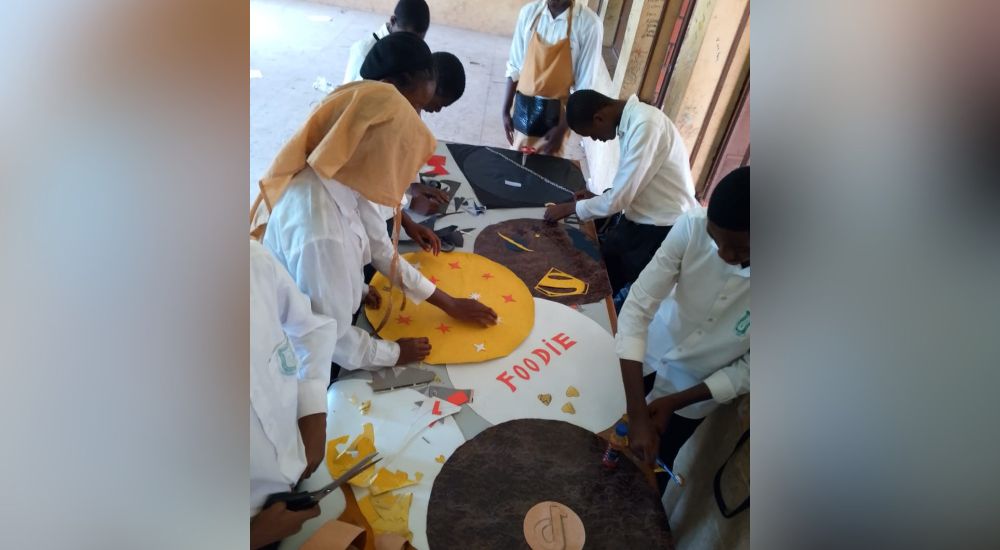
The institution has partnerships with organisations, including the Federal Ministry of Labour and Productivity, to provide students with certification in trade and entrepreneurship. This certification gives students an edge in the job market and opens up opportunities for further education and employment.
Muhammad says her vision for the school is to produce confident, independent, and entrepreneurial young women who can make a positive impact in their communities.
THE WHISTLER observed that students’ dedication to their studies, especially in public schools with large populations, often depends on teachers.
A STEM teacher at GSS Kubwa, Mr Ezeado Obiora, revealed the secret to his success in motivating students to excel in science and technology.
Obiora, who teaches mathematics and further mathematics, attributes his success to his passion for teaching and his desire to help students grow.
To achieve this goal, Obiora goes the extra mile to source information and opportunities for his students, often using his own resources.
He explained that through collaboration with their parents, he takes students to the US Embassy to participate in programs and workshops, where they learn about scholarship opportunities and how to succeed in life.
He added that he also established a WhatsApp group to keep students informed about opportunities and to provide guidance and support.
A recipient of several awards, including 5th best teacher in Nigeria (2022) and best teacher in Abuja (2021, 2022), Obiora emphasises that success comes from dedication, passion, and hard work, regardless of the school.
His approach focuses on building trust and fostering competition among students.
“We go to various competitions and our students compete to represent the school. We encourage them to know hard work pays,” he said.