
Nigeria Not Collapsing, Reforms Working— FG
The Federal Government has rejected claims that Nigeria is on the brink of collapse, saying the country is making steady progress in tackling its security and economic challenges.
This comes after a coalition of 52 Nigerian Civil Society Organisations, including Amnesty International Nigeria, Centre for Democracy and Development, Transparency International, and Socio-Economic Rights and Accountability Project, warned that the country is on the verge of collapse due to escalating insecurity, poverty, and moral decay.
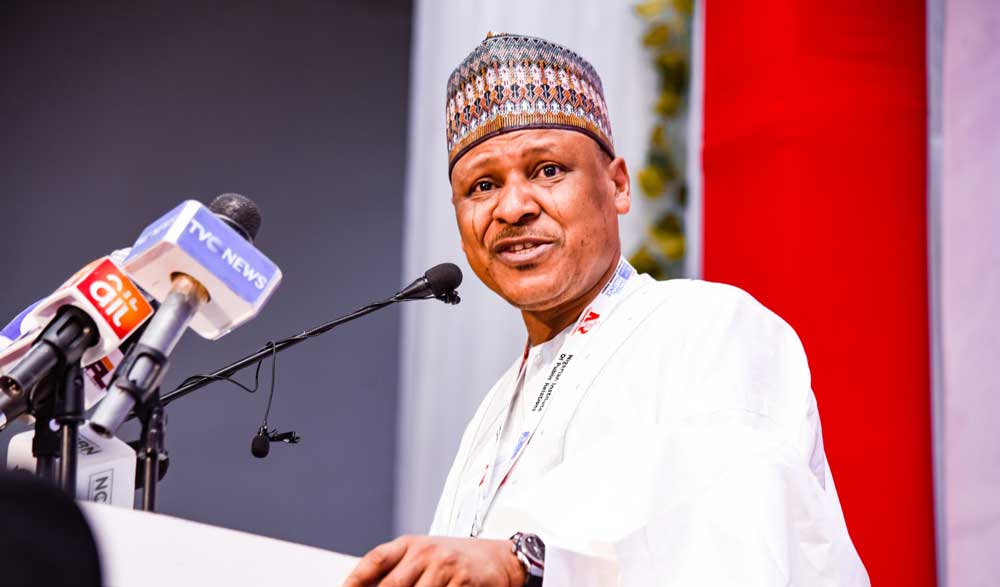
The Minister of Information and National Orientation, Mohammed Idris, during the 81st General Assembly and 23rd Annual General Meeting of the Broadcasting Organisation of Nigeria, on Wednesday in Abuja, dismissed the warnings as “pessimistic narratives” insisting that Nigeria is demonstrating resilience in the face of difficulties.
He cited ongoing security operations, including coordinated military offensives and improved intelligence-sharing, as evidence of progress, saying these efforts have led to the neutralisation of bandits and disruption of attacks, particularly in parts of northern Nigeria.
“We are daily exhibiting resilience and tackling our security and economic challenges more decisively.
“Incidents of large-scale insurgent control have significantly decreased,” he said, adding that enhanced rapid-response mechanisms are being deployed nationwide to safeguard lives and property,” he said.
Advertisement
Idris, in a statement signed by his media aide Rabiu Ibrahim, also pointed to signs of economic recovery, including improvements in foreign reserves and expanding revenue sources across oil and non-oil sectors, attributing these gains to reforms aimed at strengthening transparency and fiscal discipline.
The minister also referenced Nigeria’s recent reclassification as a Frontier Market by FTSE Russell, saying it reflects improvements in foreign exchange liquidity, market transparency, and ease of capital repatriation.
He urged broadcasters to uphold professionalism and avoid promoting narratives that could deepen divisions, especially as the country approaches another election cycle.
“The airwaves are a public trust. Broadcasting must inform, educate, and unite our people while upholding the highest standards of professionalism, fairness, and accuracy,” he said.
Advertisement