
Over 20 Million Africans Face Food Insecurity, IMF Warns
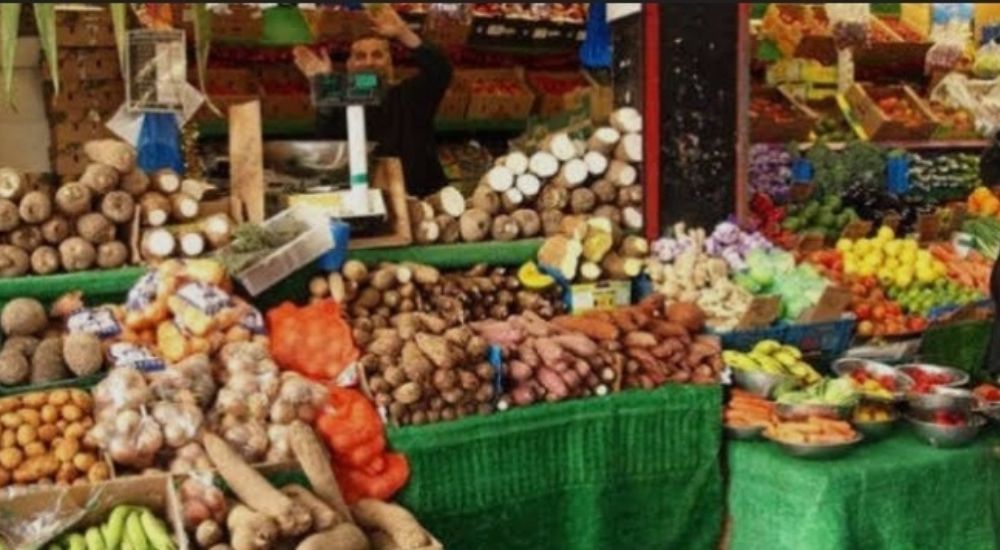
The International Monetary Fund (IMF) has warned that more than 20 million people across sub-Saharan Africa could be pushed into moderate or severe food insecurity due to rising global prices.
The warning was contained in the Fund’s April 2026 Regional Economic Outlook titled “Hard-Won Gains Under Pressure,” which examined recent growth trends in the region and emerging risks from global commodity shocks and geopolitical tensions.
According to the report, while sub-Saharan Africa entered 2026 with relatively strong economic momentum, external pressures are now threatening those gains. Rising inflation risks, weakening trade conditions, and tightening financial markets were identified as key challenges facing the region.
The IMF noted that the region recorded its strongest growth in a decade in 2025, but momentum is expected to slow slightly in 2026 amid worsening global conditions. The data points to a region facing both short-term inflationary pressure and weakening external balances as global commodity prices rise and financial conditions tighten.
“Poverty, food insecurity, and other social indicators, already weakened by the pandemic, face renewed headwinds from declining foreign aid and rising food prices.”
Advertisement
“IMF staff estimates that a 20 per cent increase in international food prices can push more than 20 million people into moderate or severe food insecurity across the region.”
Regional growth was estimated at 4.5 per cent in 2025, the fastest in ten years, driven by stronger global conditions and improved domestic policy management in several large economies. Inflation eased toward the end of the year, supported by falling global food and oil prices, tighter monetary policy, and reduced exchange rate pressures across multiple countries.
Fiscal positions also improved during the period, helped by stronger economic activity and favourable currency movements in key markets.
However, growth is projected to slow to 4.3 per cent in 2026, while median inflation is expected to rise to 5.0 per cent, up from 3.4 per cent in 2025. The IMF warned that renewed inflationary pressures and slowing growth signal a reversal of some of the macroeconomic stability achieved in 2025.
The report noted that sub-Saharan Africa’s recent recovery was driven by improved policy decisions and supportive global conditions following years of economic shocks, including the COVID-19 pandemic and earlier commodity price volatility. Despite the recovery, performance remained uneven between oil-importing and resource-rich economies.
Advertisement
The IMF attributed emerging risks to escalating global tensions, particularly the ongoing conflict in the Middle East, which has disrupted trade routes and increased the cost of key commodities such as oil, gas, fertilisers, and shipping.
It also highlighted broader spillover effects, noting that trade relations with Gulf partners have weakened, while tourism and remittance inflows are expected to decline in several African economies due to global uncertainty. Rising risk aversion has also tightened access to international financing, limiting fiscal buffers in many countries.
Oil-importing economies are expected to face higher import costs, while oil exporters remain exposed to price volatility.
The IMF further warned that a prolonged global conflict could reduce regional output by 0.6 percentage points and increase inflation by 2.4 percentage points.
Meanwhile, the Fund recently cut Nigeria’s 2026 growth forecast by 0.3 percentage points to 4.1 per cent, citing mounting global and domestic pressures.
It stressed that the most immediate concern remains the social impact of rising food and energy prices, particularly on vulnerable populations, warning that a sharp increase in global food prices could significantly worsen food insecurity levels already elevated by past economic shocks.
Advertisement