
Tax Board Cannot Increase Rates Without Legislation – Abia Govt
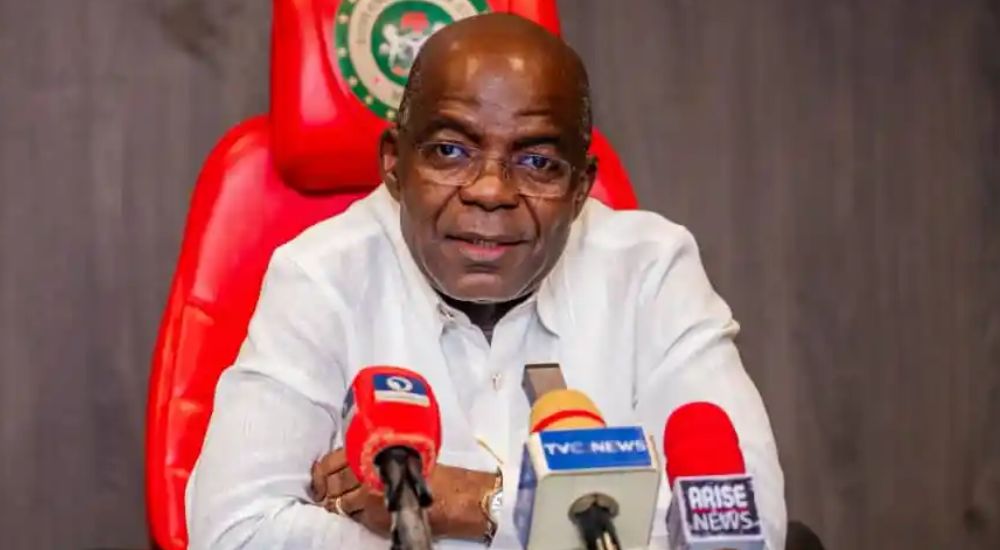
The Abia State Government has clarified that its ongoing tax administration reforms are measures designed to strengthen transparency, eliminate revenue leakages and make the tax system more efficient without increasing the taxes payable by citizens.
The Commissioner for Information, Prince Okey Kanu, gave the clarification on Monday, August 17, 2026, at Government House, Umuahia, while briefing newsmen on the outcome of the State Executive Council meeting presided over by State Governor, Dr. Alex Otti.
Prince Kanu said the reforms were part of the administration’s broader effort to modernise revenue collection and create a tax system that is transparent, accountable, technology-driven and easier for individuals and businesses to navigate.
According to him, the reforms are designed to make tax administration “more transparent, traceable, auditable, automated and taxpayer-friendly, while eliminating leakages, multiple collections and arbitrary practices.
“Automation is not a tax increase. Transparency is not a tax increase. Closing revenue leakages is not a tax increase,” Prince Kanu said.
Advertisement
He explained that the integration and automation of revenue collection platforms, particularly at vehicle licensing offices, were introduced to eliminate cash handling, improve accountability and ensure that payments made by taxpayers are properly captured and remitted to government.
The Commissioner also dismissed claims of increases in Pay-As-You-Earn (PAYE), land and vehicle taxes, stressing that the Abia State Board of Internal Revenue lacked the authority to unilaterally alter tax rates.
He noted that any change in tax rates would have to be backed by the appropriate legislative process, maintaining that the reforms currently being implemented were primarily concerned with improving the administration and collection of existing taxes.
Prince Kanu also addressed concerns surrounding the issuance of Tax Clearance Certificates, explaining that the process was being implemented in accordance with existing tax laws and the emerging national tax framework.
He said taxpayers were expected to undergo proper assessment based on their actual income rather than the previous practice of making flat payments without adequate assessment.
Advertisement
The Commissioner stressed that the government was not seeking to arbitrarily classify every payment or inflow into a taxpayer’s bank account as taxable income.
Instead, he said the process was designed to establish through lawful assessment and verification which portions of a taxpayer’s financial activities actually constitute taxable income.
The Special Adviser to the Governor on Internally Generated Revenue, Dr. Emmanuel Okpechi, said the reforms were intended to introduce greater transparency on both sides of the tax administration process.
He explained that taxpayers were expected to honestly declare their income, while government had the responsibility to ensure that no citizen was made to pay more than the law requires.
Dr. Okpechi also explained the rationale behind the consolidated demand notice introduced for businesses across the state.
According to him, the initiative was designed to bring various government charges together, thereby eliminating the situation where different agencies repeatedly approach businesses for separate payments.
Advertisement
“Instead of multiple people coming to harass you, you pay at one point and you are cleared,” he said, describing the system as an innovation aimed at improving the ease of doing business in Abia.
“What we are doing is strengthening the system, making transparency work, both for the government and for the tax payer. Nobody will be taxed a Kobo beyond what is lawful,“ Dr. Okpechi stated.
He urged residents to disregard misinformation suggesting that the government had introduced new tax increases, insisting that the reforms were targeted at building a fairer, more transparent and efficient revenue administration system.
The Executive Chairman of the Abia State Board of Internal Revenue (ABIR), Mr. Uche Elekwachi, reinforced the government’s position, saying the Board had not increased existing taxes but was enforcing established tax laws while deploying technology to improve compliance and prevent revenue leakages.
He reiterated that the Board could not independently alter tax rates, noting that such changes could only be made through legislation.
“There is no increment whatsoever. No increment on PAYE, no increment on lands, no increment on vehicle licenses or for the issuance of Tax Clearance Certificates (TCC).
“So, what the government has done is to consolidate these payments so that once you pay , nobody comes to you with any other demand notice.
“What we did was mere integration into the the government system,“ Mr. Elekwachi explained.
He further clarified that the Board would not automatically regard every inflow into a taxpayer’s bank account as taxable income.
According to him, taxpayers would have the opportunity to explain and substantiate the nature of transactions during the assessment process, particularly where such assessment is required for the issuance of a Tax Clearance Certificate.
The government’s explanation also places the consolidated demand notice at the centre of its effort to eliminate multiple collections and reduce the burden of dealing with several government agencies.
Rather than allowing businesses and individuals to face repeated demands from different collection points, the new system is intended to consolidate applicable payments and provide taxpayers with a clearer and more predictable process.
The administration believes the approach will not only improve government revenue accountability but also reduce opportunities for unofficial collections, duplication and harassment of taxpayers.
The Chief Press Secretary to the Governor, Ctz. Ukoha Njoku Ukoha, said the clarification became necessary against the backdrop of recent claims by some opposition figures questioning the government’s tax reforms and other developments under Governor Alex Otti.
He explained that the new tax framework was designed to harmonise payments, including charges such as stallage and ASEPA fees, within a consolidated system.
According to him, “what the government did was to consolidate it, so that once one pays, he has paid everything.“
The Abia Government therefore maintained that its ongoing tax reforms represent an administrative overhaul rather than a fresh tax burden, with emphasis on digitalisation, accountability, lawful assessment, elimination of multiple collections and improved ease of doing business.
The administration said the ultimate goal was to establish a revenue system in which government can properly account for public funds while taxpayers can understand exactly what they are required to pay, receive evidence of payment and operate without repeated or arbitrary demands.