
The Greatest African Footballers To Grace The English Premier League
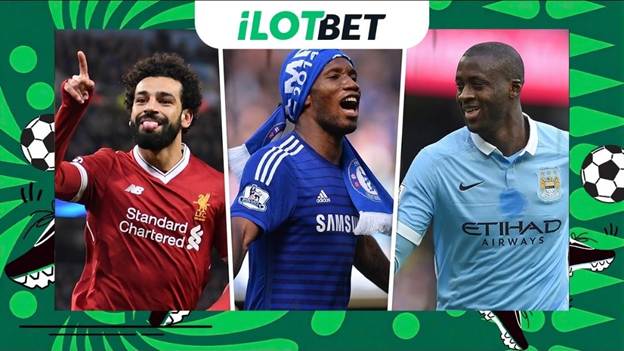
The Premier League has never been merely an English competition. Since its formation in 1992, it has become one of football’s great meeting points, a stage on which talent from every corner of the world has been tested against the relentless demands of English football. Few continents have left a deeper imprint on that story than Africa.
From Didier Drogba’s thunderous finishing to Mohamed Salah’s extraordinary consistency, African footballers have not simply participated in the Premier League’s evolution; they have helped define it. They have lifted league titles, won Golden Boots, inspired title-winning teams, and, in some cases, changed how their positions were understood.
There have been many outstanding African players in England, from Jay-Jay Okocha and Nwankwo Kanu to Michael Essien, Riyad Mahrez, and Emmanuel Adebayor. But a select group stand above the rest when longevity, individual brilliance, silverware, statistics, and influence are considered.
1. Mohamed Salah – Egypt
If greatness is measured by sustained excellence, Mohamed Salah has constructed perhaps the most compelling case of them all.
His first Premier League experience with Chelsea was brief and frustrating, producing only two goals before he left England for Italy. But his return with Liverpool in 2017 transformed the conversation. Salah immediately exploded into the league, scoring 32 goals in his first season, then a record for a 38-match Premier League campaign, and winning the Golden Boot.
Advertisement
Nearly a decade later, the numbers have become extraordinary. Salah finished his Premier League career with Liverpool on 193 goals and 94 assists, having made 328 appearances for the club in the competition. He won two league titles and four Golden Boots, matching Thierry Henry’s record. In 2024/25, he became the first player to win the Premier League Player of the Season, Golden Boot and Playmaker awards in the same campaign.
His importance, however, cannot be reduced to statistics. Salah changed the expectations of what an African wide forward could produce in the modern Premier League. He became Liverpool’s attacking reference point, a player capable of scoring from the right, creating chances, stretching defences and carrying an enormous share of his team’s creative burden.
He also left England as the highest-scoring African player in Premier League history, ahead of Sadio Mané and Didier Drogba. His 94 assists are also the most by an African player.
2. Didier Drogba – Côte d’Ivoire
Before Salah rewrote the record books, Didier Drogba was the standard against which African forwards were measured.
Advertisement
When the Ivorian arrived at Chelsea in 2004, he brought physical power, aerial ability and an imposing presence. What followed was a career that made him one of the defining strikers of the Premier League era.
Drogba scored 104 Premier League goals in 254 appearances, supplied 54 assists, won four league titles and claimed two Golden Boots. His 29-goal campaign in 2009/10 remains the highest-scoring Premier League season by a Chelsea player.
Yet Drogba’s greatest contribution was his ability to appear when Chelsea needed him most. He was more than a conventional penalty-box striker: he could hold the ball under pressure, bring midfielders into play, dominate defenders physically and produce spectacular finishes.
His record in the biggest matches became part of his mythology. Drogba was the sort of striker opponents could spend 90 minutes containing, only for one cross, one loose ball or one moment of space to change everything.
That combination of personality, physicality and clutch performances helped turn him into one of Chelsea’s defining figures. His legacy also extends beyond statistics. Drogba became one of the players who demonstrated that an African footballer could be the face of one of England’s biggest clubs.
3. Yaya Touré – Côte d’Ivoire
Advertisement
If Drogba represented African excellence in attack, Yaya Touré represented its transformation in midfield.
Touré arrived at Manchester City from Barcelona in 2010 and quickly became central to the club’s emergence as a domestic superpower. Powerful enough to overpower opponents and technically gifted enough to dictate play, he seemed capable of performing several midfield jobs simultaneously.
His Premier League record stands at 230 appearances, 62 goals and 32 assists, with three league titles to his name.
The defining season was 2013/14, when Touré scored 20 league goals. That achievement placed him among the very small group of central midfielders to reach 20 in a Premier League campaign. He also contributed nine assists that season.
Those numbers barely explain the visual impact of Touré at his peak. He could collect the ball deep, surge through midfield, carry defenders with him and arrive in the penalty area with the timing of a forward.
He was also instrumental in City’s transition from ambitious challengers to established champions. His influence was not merely statistical; it was architectural. Touré helped give Manchester City the physical and technical authority that would become a defining characteristic of the club’s rise.
4. Sadio Mané – Senegal
Where Salah brought precision and accumulation, Sadio Mané brought explosive intensity.
The Senegalese forward first made his Premier League name at Southampton before moving to Liverpool, where his pace, aggression and finishing became central to Jürgen Klopp’s attacking machine.
Mané eventually scored 111 Premier League goals in 263 appearances and registered 38 assists. He won one league title, one Golden Boot and three Player of the Month awards.
His importance to Liverpool’s great side of the late 2010s and early 2020s is sometimes obscured by the brilliance of Salah and Roberto Firmino. But Mané was indispensable. He could attack space behind a defensive line, press aggressively, score with either foot and turn apparently harmless situations into goal-scoring opportunities.
His greatest statistical footnote may be one of the most remarkable in Premier League history. Mané scored the fastest hat-trick in the competition’s history, taking just 2 minutes and 56 seconds for Southampton against Aston Villa in 2015.
5. Riyad Mahrez – Algeria
Riyad Mahrez’s Premier League story is one of the most improbable.
He arrived at Leicester City when the club were hardly expected to become champions. Two years later, the Algerian winger was one of the most important players in the greatest upset in Premier League history.
During Leicester’s extraordinary 2015/16 title campaign, Mahrez scored 17 goals in 37 league appearances. His ability to cut inside from the right, manipulate defenders with subtle changes of direction and deliver a decisive final action made him one of the league’s most entertaining players.
His brilliance did not end with Leicester. Manchester City signed him in 2018, allowing him to compete at the top of the table regularly. He went on to win further Premier League titles and added another dimension to Pep Guardiola’s attacking options.
Mahrez also became one of the first African players to reach 50 Premier League goals, achieving the milestone in 2019.
6. Emmanuel Adebayor – Togo
Emmanuel Adebayor belongs in this conversation for a different reason. He was one of the Premier League’s most productive African strikers across multiple clubs.
The Togolese forward played for Arsenal, Manchester City, Tottenham Hotspur and Crystal Palace, scoring 97 Premier League goals in 242 appearances.
His best Arsenal season came in 2007/08, when he scored 24 league goals. That campaign demonstrated his unusual combination of height, athleticism and mobility. Adebayor was capable of occupying centre-backs physically while also running into space behind them.
He was also responsible for one of the competition’s strangest scoring records, he remains the only player to score a hat-trick against the same opponent twice in one Premier League season, achieving the feat against Derby County for Arsenal in 2007/08.
His career never quite reached the sustained heights of Drogba or Salah, but Adebayor’s longevity and output across four clubs make him one of Africa’s most significant Premier League forwards.
7. Michael Essien – Ghana
Greatness is not always measured by goals, and Michael Essien is the clearest reminder.
The Ghanaian midfielder became one of Chelsea’s most influential players during José Mourinho’s first spell at Stamford Bridge. He was powerful, athletic, technically reliable and tactically versatile, the kind of midfielder managers trusted because he could seemingly be asked to do almost anything.
Essien made 168 Premier League appearances for Chelsea, scoring 17 goals and providing 10 assists. He won two Premier League titles, including one in his debut season after starting 31 league matches.
His value was particularly evident in the less glamorous aspects of midfield play: tackling, recovering possession, covering ground and protecting the structure of the team. But he could also produce spectacular goals, most famously with his long-range strike against Arsenal.
Essien’s career was disrupted by injuries, which makes his achievements all the more impressive. He was not simply another African player who won trophies at Chelsea; at his peak, he was one of the Premier League’s outstanding all-round midfielders.
8. Nwankwo Kanu – Nigeria
Before the Premier League became saturated with African superstars, Nwankwo Kanu helped make African flair impossible to ignore.
The Nigerian forward arrived at Arsenal in 1999 after winning the UEFA Champions League with Ajax and experiencing European success with Inter Milan. His Premier League career eventually produced 54 goals and 29 assists in 273 appearances.
Kanu was different from the conventional English centre-forward. Tall and elegant, he possessed extraordinary close control for a player of his size and could make defenders look foolish with a flick, turn or improvised finish.
His influence at Arsenal was also tied to the club’s transition into the Arsène Wenger era of technical football. Kanu won two Premier League titles with the Gunners and later produced memorable moments at West Bromwich Albion and Portsmouth.
He never approached Drogba or Salah’s goal totals, but his legacy cannot be judged solely through numbers. Kanu helped broaden perceptions of what an African forward could look like: inventive rather than merely physical, unpredictable rather than purely direct.