
CBN To Reduce Cash Outside Banks To 40% In Two Years
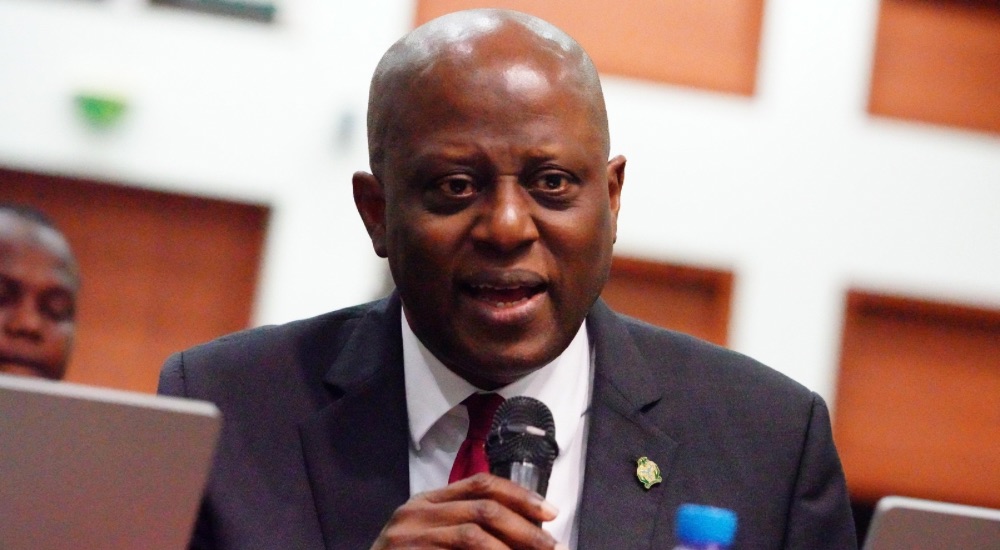
The Governor of the Central Bank of Nigeria (CBN), Olayemi Cardoso, has unveiled plans to reduce the volume of cash held outside the banking system from about 90 per cent to less than 40 per cent by 2028 as part of efforts to deepen Nigeria’s digital economy and strengthen monetary policy effectiveness.
Cardoso disclosed this on Monday in Abuja during the launch of the Nigeria Payments System Vision 2028 (PSV 2028), a new roadmap aimed at modernising the country’s payments infrastructure, expanding financial inclusion and enhancing confidence in digital transactions.
According to the latest CBN money and credit statistics, currency in circulation stood at N5.65tn in April 2026, while N5.08tn was held outside the banking system.
This means that roughly N90 out of every N100 in physical cash currently remains outside banks.
Expressing concern over the trend, Cardoso said the apex bank intends to significantly reduce the amount of cash circulating outside formal financial channels over the next three years.
“I would like to see a situation where we reduce cash outside the banking system to less than 40 per cent of money in circulation,” he said.
Advertisement
The CBN governor noted that reducing cash dependency would improve monetary policy transmission, enhance transparency and accelerate the country’s transition to a more efficient digital payments ecosystem.
Cardoso lamented the continued reliance on cash despite the rapid growth of electronic payment platforms across the country.
Recalling his experience during the recent Sallah celebrations, he said many traders still rejected card payments, underscoring the need to strengthen public confidence in digital payment systems.
“I don’t blame them. It’s us I blame. We need to do a lot more work to build trust and ensure that people have no doubt that they are dealing with a strong and reliable payments system,” he said.
He stressed that payment system reforms must ultimately improve the lives of ordinary Nigerians rather than simply increase transaction volumes.
Advertisement
Cardoso also unveiled an ambitious target of achieving 95 per cent financial inclusion by 2028, up from the current level of about 74 per cent.
Data from Enhancing Financial Innovation and Access shows that financial inclusion rose from 68 per cent in 2020 to 74 per cent in 2023, driven largely by the expansion of mobile money services, fintech solutions and agent banking networks.
According to the CBN governor, the new target would bring an additional 50 million Nigerians into the formal financial system.
“In 2023, a very large number of Nigerian adults had access to financial services. Under Vision 2028, I would like to see this reaching 95 per cent inclusion.
“That means 50 million more market women, farmers and young people will have a bank account or wallet in their name, with their BVN protecting them,” he said.
Cardoso said the apex bank is also targeting a significant reduction in digital payment fraud, with a goal of lowering fraud losses to less than 0.001 per cent of total transactions by 2028.
Advertisement
He said the initiative would be supported by stronger integration of the Bank Verification Number system, identity management platforms and artificial intelligence-powered fraud detection tools.
“People’s money must be safer in the digital system than under their mattress. A payment system is only as strong as the trust people have in it,” he stated.
The governor further highlighted the potential of Nigeria’s open banking framework, noting that more than 100 licensed application programming interfaces (APIs) are already available to support innovation and the growth of globally competitive fintech businesses.
The Payments System Vision 2028 is designed to improve payment efficiency, strengthen resilience, encourage innovation, expand financial inclusion and deepen Nigeria’s integration with regional and global payment systems.
Cardoso said efficient payment systems would lower transaction costs, boost transparency, help businesses access new markets and support economic growth.
“As the Federal Government builds roads, schools and hospitals, we must also build the invisible roads that move money,” he said.
Describing the initiative as a collective national project, he called on banks, fintech companies, regulators, technology providers and development partners to collaborate in delivering its objectives.
“Vision 2028 is not a government project. It is a Nigerian project,” he added.
Earlier, the Director of Payments System Policy at the CBN, Musa Jimoh, said the new strategy became necessary due to rapid technological advancements and changing consumer expectations since the launch of Nigeria’s first payments roadmap in 2007.
He said PSV 2028 would deepen financial inclusion, improve efficiency, strengthen trust in digital payments and enhance Nigeria’s competitiveness in the global digital economy.
“Today, we are here to lay down another three-year strategy that will deepen financial services, make our payment system more efficient, make us more globally competitive and make people comfortable and trust financial services,” Jimoh said.
ENDS