
Dangote Begins Dollar Fuel Sales, Pegs Petrol At $0.779/Litre
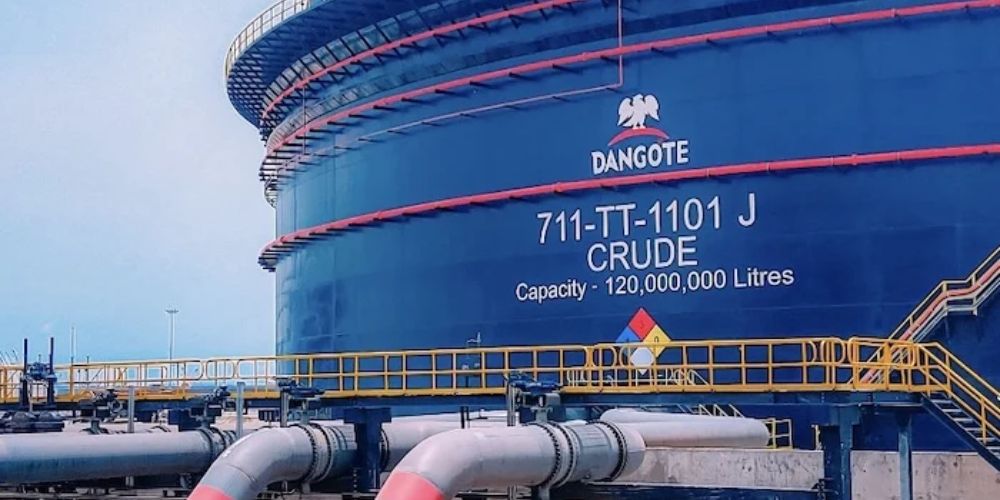
Dangote Petroleum Refinery has officially transitioned to dollar-denominated sales of refined petroleum products, fixing the ex-depot price of Premium Motor Spirit (PMS), popularly known as petrol, at $0.779 per litre, in a significant policy shift expected to influence pricing across Nigeria’s deregulated downstream petroleum sector.
The new pricing regime, which took effect on Monday, July 13, 2026, also sets the ex-depot price of Automotive Gas Oil (diesel) at $1.087 per litre and aviation fuel at $0.942 per litre, while coastal deliveries of PMS have been priced at $1,044.62 per metric tonne.
The development marks the end of naira-denominated transactions for refined petroleum products sold by the refinery, reversing the arrangement introduced under the Federal Government’s naira-for-crude initiative, which commenced on October 1, 2024, to support domestic refining, conserve foreign exchange and stabilise fuel prices.
In a notice issued to petroleum marketers and customers, Dangote Refinery announced that all previously issued naira-denominated Proforma Invoices (PFIs) and Deal Recaps for gantry and coastal transactions had become invalid following the migration to United States dollar transactions.
The notice, signed by the refinery’s Group Commercial Operations, stated: “Following our email of July 9, 2026, regarding the transition from naira to United States dollars (USD), please note that all issued naira coastal and gantry PFIs/Deal Recaps are now invalid, and no payments should be made against them. The applicable USD prices for each product, effective today, July 13, 2026, are provided below.”
Under the revised pricing template, petrol supplied through the gantry will sell for $0.779 per litre, diesel for $1.087 per litre, aviation fuel for $0.942 per litre, while coastal PMS deliveries will be priced at $1,044.62 per metric tonne.
Advertisement
The refinery, however, clarified that the new dollar-based pricing framework does not apply to Liquefied Petroleum Gas (LPG), which will continue to be sold under its existing payment structure.
Industry sources familiar with the development said the transition reflects the refinery’s evolving commercial strategy and the need to align product sales with the currency used to procure a growing proportion of its crude oil feedstock.
According to the sources, Dangote Refinery has increasingly received crude oil supplies from the Nigerian National Petroleum Company Limited (NNPC Ltd.) under dollar-denominated supply arrangements, while a significant volume of its refined products has continued to be sold domestically in naira.
The resulting mismatch between procurement and sales currencies, they noted, has heightened the refinery’s exposure to foreign exchange volatility and international crude oil price fluctuations.
One industry official explained that the imbalance had become increasingly difficult to sustain.
“Dangote Refinery is receiving fewer naira-denominated crude cargoes than dollar-denominated cargoes, while a larger share of its petroleum products has been sold in naira. The resulting currency mismatch, combined with volatility in international crude oil prices and continued exchange-rate uncertainty, made it necessary to migrate product sales to dollars,” the source said.
Advertisement
Analysts believe the latest decision could have far-reaching implications for petroleum marketers, who depend heavily on Dangote Refinery for nationwide fuel distribution. Since marketers will now purchase products in dollars, movements in the foreign exchange market are expected to play a more significant role in determining wholesale and retail fuel prices.
Although the refinery has established new dollar benchmark prices, the eventual pump price paid by consumers will continue to depend on several factors, including the prevailing naira-to-dollar exchange rate, international crude oil prices, transportation and logistics costs, regulatory charges, depot margins and marketers’ operating expenses.
Dangote Refinery has rapidly become the country’s largest supplier of refined petroleum products since commencing commercial operations, making its pricing decisions a major reference point for operators in Nigeria’s deregulated downstream market.
The shift also raises fresh questions over the future of the Federal Government’s naira-for-crude policy, which was introduced to encourage domestic refining, reduce pressure on Nigeria’s foreign exchange reserves and lower dependence on imported petroleum products.
Industry stakeholders have, however, reported implementation challenges in recent months, noting that an increasing proportion of crude oil supplies to local refiners has gradually reverted to dollar-based transactions, thereby weakening the effectiveness of the policy.
With the adoption of dollar-denominated fuel sales, market observers expect the refinery’s pricing decisions to become even more closely linked to developments in the foreign exchange market and global crude oil prices, reinforcing the central role of exchange-rate stability in determining fuel costs across Nigeria.
Advertisement