
EFCC Secures Forfeiture Of Over $500m In Cash, Assets — Olukoyede
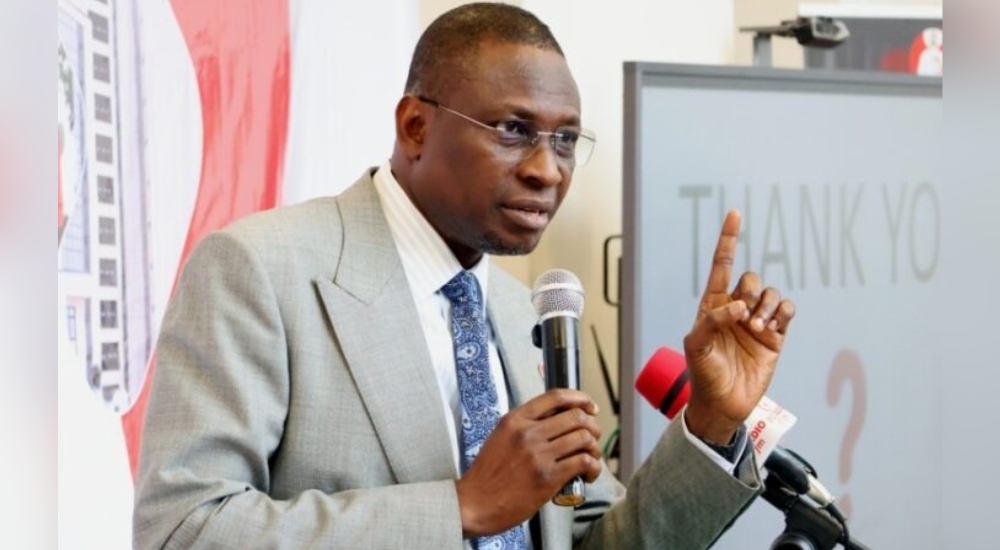
The Economic and Financial Crimes Commission (EFCC) has forfeited cash and assets worth more than $500 million to the Nigerian government in the past three years, EFCC Chairman Ola Olukoyede has said.
Olukoyede disclosed this on Wednesday, August 26, 2026, while delivering a lecture at the Cambridge International Symposium on Economic Crime in the United Kingdom.
“Within three years of my assumption of office, we’ve been able to forfeit both cash and assets worth over half a billion dollars to the government,” he said.
The EFCC chairman said the Commission’s asset recovery efforts have been supported by Nigeria’s legal framework, which allows authorities to pursue the forfeiture of assets suspected to be proceeds of crime without waiting for a criminal conviction.
According to him, the process can begin with an application made to the High Court based on reasonable suspicion that an asset represents proceeds of crime.
Olukoyede cited the recent forfeiture of an aircraft allegedly linked to an individual who he said collected a $30 million bribe in connection with a power project.
Advertisement
He said the aircraft was forfeited about three months ago and had since been added to the Presidential Air Fleet.
The EFCC chairman also disclosed that the Commission had secured the forfeiture of a property comprising about 753 housing units from a former governor of the Central Bank of Nigeria.
He said criminal charges against the former CBN governor were already pending before three courts.
Olukoyede further disclosed that an investigation into former Attorney-General of the Federation, Abubakar Malami, had led the Commission to trace 57 properties allegedly linked to him, of which 48 had been forfeited.
He said the investigation began last year following what he described as reasonable suspicion of criminal abuse of office.
Advertisement
Another case cited by the EFCC chairman involved a private university allegedly linked to a director in the Federal Ministry of Health. He said the official voluntarily surrendered the property following the Commission’s investigation.
Olukoyede attributed the EFCC’s ability to secure non-conviction-based forfeiture orders to three major factors: the capacity of investigators to trace assets, cooperation from the judiciary and access to credible intelligence.
He also called for stronger protection and incentives for whistleblowers, particularly those who provide information that leads to the recovery of Nigerian assets taken abroad.
The EFCC chairman said whistleblowers whose information results in successful recovery could receive between 2.5 and five per cent of the recovered assets as an incentive.
“If any of you is privy to where Nigerian asset is stolen or taken to anywhere in the world, we have an incentive for you. Between 2.5 and 5 percent is going to go back to you upon recovery,” he said.
Olukoyede said stronger international cooperation and credible intelligence remained essential to tracing and recovering proceeds of corruption moved across borders.
Advertisement