
FIFA Bans Argentina Players, Slams Heavy Fine Over W/Cup Final Fight
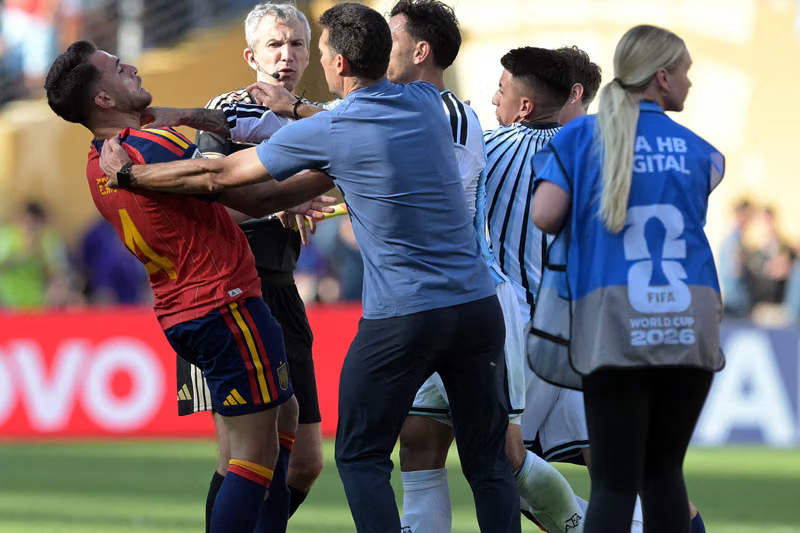
The FIFA Disciplinary Committee has banned Argentina midfielder, Leandro Paredes, for 10 matches over his role in the on-field clashes that followed his team’s 1-0 defeat to Spain in the 2026 World Cup final.
His teammate, Nahuel Molina, was handed a seven-match suspension for his part in the post-match altercations, which broke out at the New York New Jersey Stadium after Spain’s Rodri was involved in a scuffle with several Argentina players.
Both Paredes and Molina will pay fines of $90,000 (£66,000) each, in addition to their bans, which will only apply to international fixtures.
The Argentinian Football Association (AFA) has been slammed with a fine of $321,000 (£235,000) for breaches of the FIFA disciplinary code, including using a sports event for demonstrations of a non-sporting nature, team misconduct, and discriminatory chants and gestures by its supporters.
Of that sum, $100,000 (£73,000) must be invested in a plan to combat discrimination, while another $100,000 (£73,000) has been suspended, subject to a probationary period.
As part of its sanctions, FIFA ordered Argentina to play their next two home matches at 50% stadium capacity, though one of the two matches affected has been suspended.
Advertisement
The fine also covers a banner unveiled by Argentina players proclaiming Argentine sovereignty over the Falkland Islands, a British overseas territory, after their 2-1 semi-final win over England.
Roberto Ayala, a member of Argentina’s coaching staff, was given a three-match suspension and fined $30,000 for his involvement in the post-match confrontations.
On the Spanish side, Gavi will serve a one-match ban and pay a fine of $30,000 for his part in the clashes, a sanction mirrored on Argentina’s Thiago Almada.
FIFA had appointed a disciplinary and ethics prosecutor last month to investigate the scenes that unfolded after the final whistle, when several Argentina players and backroom staff clashed with Spain players.
The punishment marks one of FIFA’s heaviest disciplinary actions in recent years, reflecting the governing body’s anger at scenes that marred a final watched by an estimated 1.5 billion people worldwide.
Advertisement
Argentina, regarded as one of the best football teams globally in recent years, now find themselves at the centre of one of the tournament’s most embarrassing controversies.