INVESTIGATION: Rescued But Forgotten: Govt Abandons 22,000 Homeless Children After Failed Education Drive
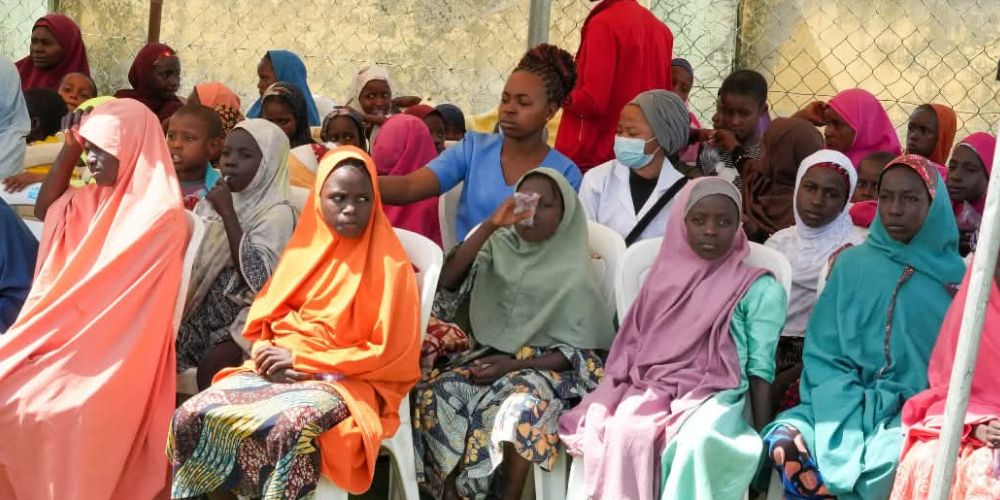
Around mid-November 2024, Abuja’s streets were eerily quiet, a stark contrast to the usual scene of Almajiri children begging for alms. This sudden change was attributed to a mop-up exercise by the National Commission for Almajiri and Out-of-School Children Education (NCAOOSCE) which removed over 22,000 children from the streets.
The mop-up was part of the Commission’s efforts to address Nigeria’s alarming out-of-school children crisis, with the United Nations International Children’s Emergency Fund (UNICEF) estimating that 18.95 million children are currently out of school.
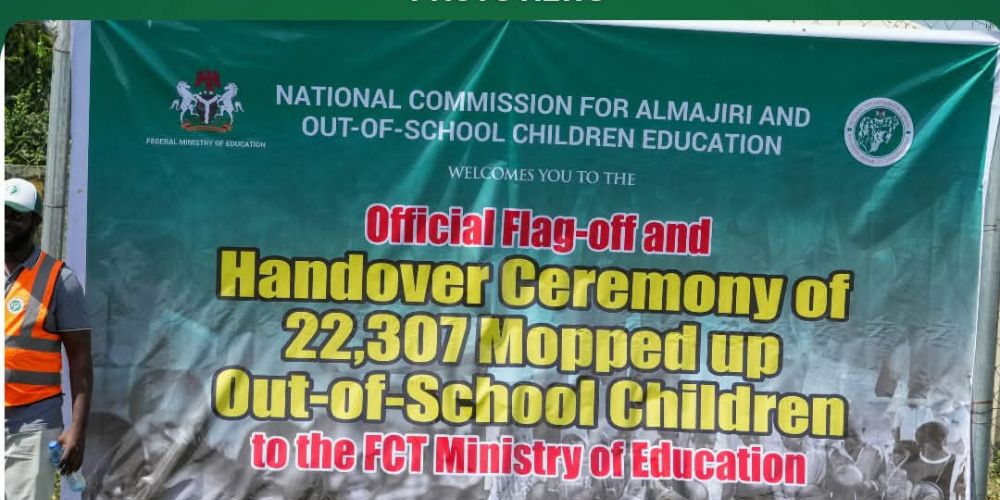
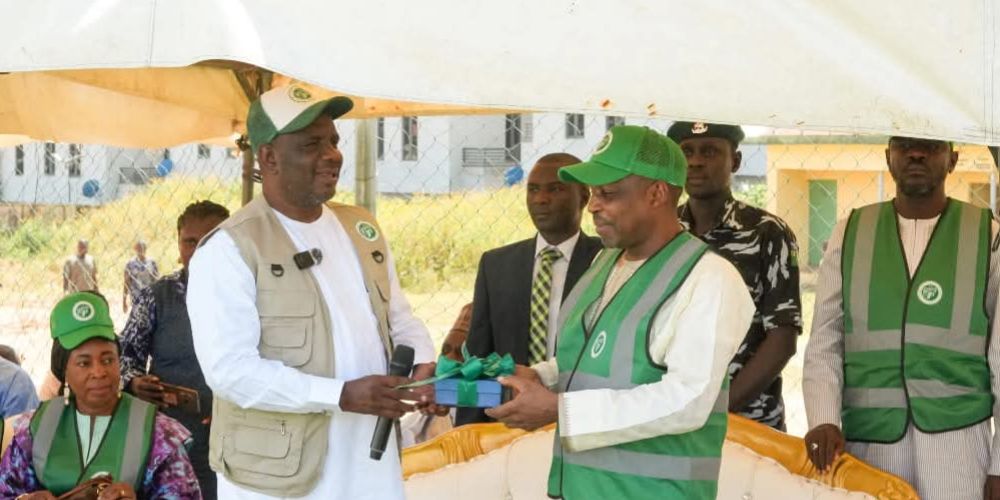
According to the statement released by the Federal Ministry of Education on November 14, 2024, announcing the event, the Minister of Education, Dr Maruf Tunji Alausa, in collaboration with the Commission, “will formally” hand over children mopped up in and around the Federal Capital Territory (FCT) for enrolment into classrooms.
The statement added that the milestone marked the “culmination of the “Back2School” enrolment drive, which was launched earlier this year to tackle the issue of educational inclusivity.
Advertisement
The statement also said that, “the Honourable Minister of Education, Dr Maruf Tunji Alausa and Honourable Minister of FCT, Mr. Nyesom Wike, have generously granted approval for the absorption of these children into schools at no cost to their parents.”
However, two weeks after the ceremony, THE WHISTLER observed that Almajiri children had begun trickling back onto the streets. Young children, some barely four or five years old, roamed the streets in dirty clothes, plates in hand, soliciting alms from passersby and commuters. What happened to the classroom that they were supposed to be in?
THE WHISTLER investigation of the issues revealed how good government initiatives are killed by its unwieldly bureaucracy. The investigation began early January, 2025 when THE WHISTLER visited the Federal Ministry of Education where the statement of the pledge for enrolment emanated from, but the ministry’s Head of Press and Public Relations, Boriowo Folasade, redirected the reporter to the Commission that handled the exercise.
After repeated attempts to reach the Commission for comment, its spokesperson Nura Muhammad informed THE WHISTLER that the children had been handed over to the FCT Education Secretariat for necessary action.
But when THE WHISTLER reached out to the FCT Education Secretariat, Head of Information, Kabiru Musa referred the reporter to FCT Universal Basic Education Board (UBEB).
Advertisement
Returning To Where It All Started…
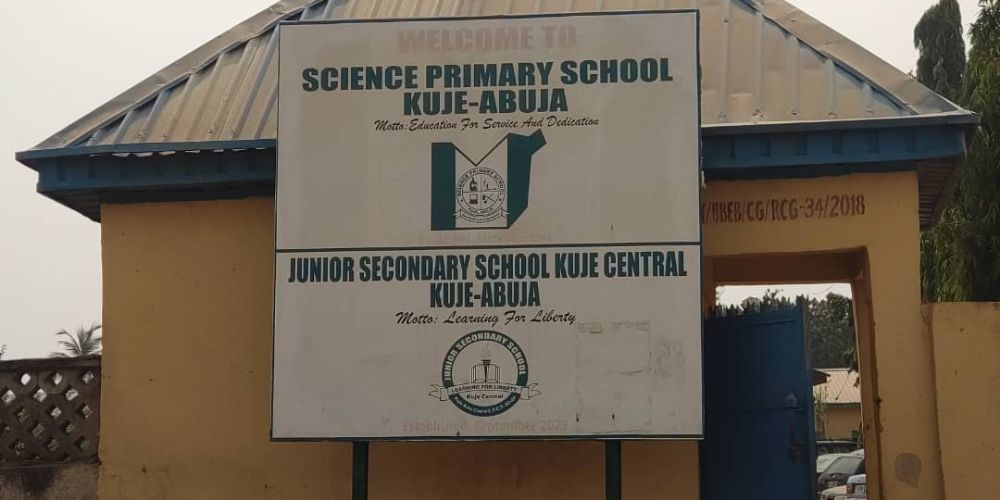
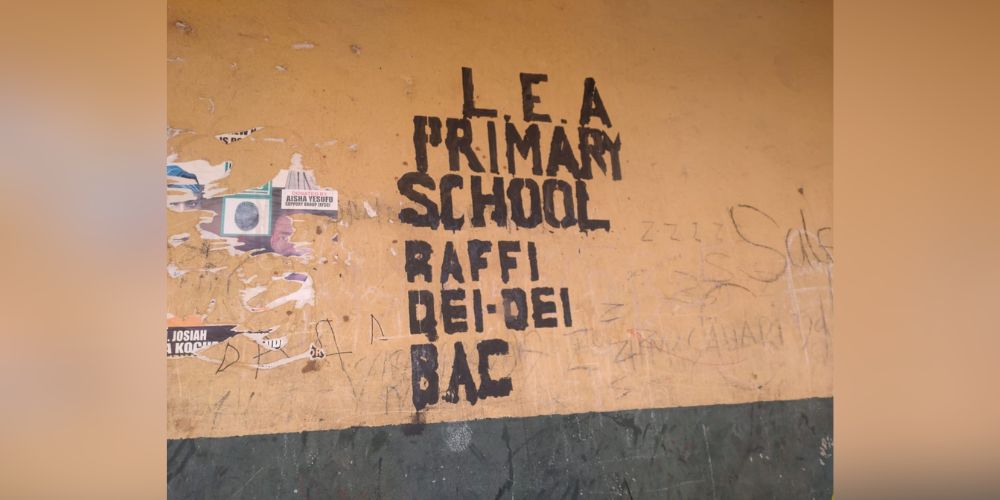
Seeking answers, THE WHISTLER decided to visit two schools where the handover and enrolment were said to have taken place. According to the ministry’s statement, the locations for the handover were Junior Secondary School Kado, LEA Karu Central Primary School, LEA Primary School, Deidei, and Science Primary School, Kuje. The investigation was stalled numerous times due to the strike action embarked by the FCT primary school teachers over the non-payment of N70,000 new minimum wage and backlogs of arrears by the six area council chairmen.
Advertisement
However, on November 4, 2025, posing as an NGO staff, the reporter first visited LEA Primary School, Deidei, where the teachers told her that over 500 children were brought to the school during the mop-up exercise, but there was no follow-up by the authorities involved.
“Many of them were not enrolled. We have their list and you can start up with those children,” the teachers told the reporter.
Fresh registration for each student was N15,000 which include uniform, sport ware, PTA levy and other items, while N2500 was for subsequent termly payment.
In her second visit to the school on February 11, 2026, the reporter was taken to a primary two class after insisting on seeing the “unregistered” pupils. All the pupils were sitting on the floor in an overcrowded class.
According to the teacher, over 100 pupils in the class were street children brought in by the government. They were easily identifiable by their lack of uniforms, with some even barefoot. The same situation was observed at the Primary 1 class, though with a smaller number of over 30 pupils.
“The pupils at the nursery session are even more but they have closed for the day,” the reporter was told.
Speaking further, one of the teachers revealed that the children were simply ‘dumped’ at the school; not enrolled, and without books or uniforms.
“They told me that they are coming back to enrol them. We waited for them to come but they didn’t,” the teacher stated.
The teacher lamented that the school was struggling to cope with the increased numbers, adding that it had reached a breaking point.
“I called their parents and told them that If I wait for government… if this February comes and they didn’t come, they (the parents) need to come and carry the children. My salary cannot take care of them. The other day, I bought a carton of books and shared to those that didn’t have any.
“If the community really have love for education, they would have organised themselves to take up the children’s education. They said the government said they should bring them but this government did not give us a dime,” the teacher added.
The Children Are Eager To Learn
Despite the challenges, the teacher praised the children’s commitment to education.
“The children…early in the morning before 7.30 am, the children are already around. They are more committed than our own children. How can you tell such children to stay at home? If someone tell the children to return home, they will be sick,” the teacher noted.
The teacher made a passionate appeal to well- meaning Nigerians and NGOs for support to keep the pupils in school.
“Anyone you can help us, will be appreciated. I don’t know the area you will assist us with. Either, the uniform, text books and others,” the teacher told the journalist, posing as an NGO worker.
While THE WHISTLER was able to identify some pupils at the school in Deidei, who were brought in during the mop-up exercise but not formally enrolled, there were none to be found at Science Primary School, Kuje.
At Kuje, January 20, 2026, a teacher who spoke with the reporter, and who knew a bit about the exercise, referred her to one of the leaders of the Federation of Muslim Women’s Associations in Nigeria (FOMWAN) in Kuje, who have more information on the issue.
According to the FOMWAN leader, during a phone call with the reporter, she was assigned by the Commission to gather out-of-school children for enrolment during the exercise, but none of the children were enrolled.
“That programme really gave me a headache. After gathering about 500 children, they didn’t enrol anyone. At the end of the day, I was told to go to the FCT Education Mandate Secretariat. I tried my best, but none of the children were enrolled,” she said.
She lamented that the hopes of parents and children were dashed following the unfulfilled promises.
“During that time, I was frustrated because every day, parents were asking me what happened. We gave them hope but…nothing,” she said.
And The Blame Game Continues…
THE WHISTLER reached out to Acting Chairman and Board Secretary of the FCT Universal Basic Education Board (FCTUBEB), Alh. Alhassan Sule, on the board’s findings and he stated that the list of the children were handed over to the area councils and the Local Education Authority for action.
“We gave the list of identified children to area councils and secretaries, and I personally enrolled over 100 at Gwagwalada Nomadic School,” he revealed.
He added that, “The challenge is that some parents brought these children from the north for Islamic education and are now asking who will feed them if they go to school.”
He told the reporter that the area council is responsible for supporting the children, and they are the major custodians and advised taking the issue to the area council.
“You have to go to the area council and find out what they’ve done so far,” he said.
No Response From The Commission That Started The Mop-up Exercise
The Commission’s representative was unreachable despite attempts to contact them via calls and text messages.
The Commission was established on May 27, 2023, under the Ministry of Education, with a mandate to address Nigeria’s out-of-school children and illiteracy challenges.
Its mission is to ensure every Nigerian child has access to equitable and inclusive quality education, regardless of background or social status.
However, the flop of the mop-up initiative in the FCT, where children returned to the streets, suggested a disconnect between the Commission’s mandate and its implementation.
The Commission had planned to replicate the mop-up exercise in all 36 states, but the lack of follow-up and the FCT experience raises questions about the Commission’s ability to deliver and the government’s capacity to implement its plans, especially with N50 billion earmarked for the “Support for Out-of-School Children Project” under the Economic Recovery Growth Plan (ERGP) in 2025.
Expert Speaks…
Mohammed Sabo Keana, a child rights champion and founder of the Almajiri Child Rights Initiative (ACRI), in an interview with THE WHISTLER, questioned the effectiveness of the government’s approach to addressing the Almajiri issue.
“The Almajiri situation is more than just an educational problem… Education is just one of the needs of the Almajiri Children,” he said
Keana emphasised the need for a more holistic approach, citing the importance of addressing the children’s health, shelter, and food needs.
“Are these other needs adequately being provided for? If they are being provided for, then that’s what I will say the enrolment will be sustainable and long term,” he noted.
He argues that the current enrolment drive is only addressing the symptoms of the problem, rather than the root cause.
“The enrolment is just responding to the symptoms of the problem… If these other factors are not addressed, you can see them enrolled in schools and you will still see them on the street,” he added.
Keana emphasised the need to address the root cause of the problem, which he identifies as the lack of access to education in rural communities.
“The fundamental thing that needs to be done is address the root cause; rural communities are lacking in basic educational needs and facilities. They are not functional in many rural areas and so parents don’t see alternatives than to go to city centres,” he said.
He criticised the government’s approach, saying it is a “short term fix” and calls for a more sustainable solution.
“A more sustainable or long term phase will be addressing the root cause of the problem.This is one fundamental issue that needs to be addressed, “ he said.
Keana further stated that while the mop-up exercise is commendable, it needs to be accompanied by efforts to address the root cause of the problem, which is to provide more schools in rural areas.
This report was done with support from Civic Media Lab.