
Lagos Targets $1tn Economy By 2052
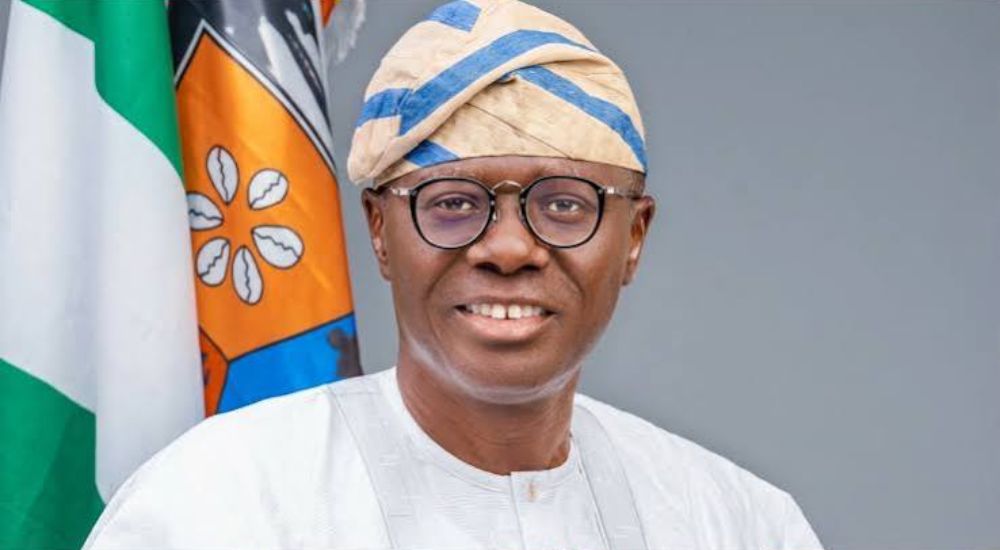
Lagos State Governor, Babajide Sanwo-Olu, has said the state is targeting a $1tn economy by 2052, stressing that African cities will play a decisive role in determining the continent’s investment future.
Sanwo-Olu stated this on Saturday while delivering a keynote address at a dinner in Washington, DC, United States, where he received the 2026 Global Transformation and Good Governance Prize from the Millennium Excellence Award, USA.
The award ceremony, held in Washington, DC, was the highlight of the 2026 Africa Business Investment Summit organised by the Millennium Excellence Foundation at the MGM National Harbor, Oxon Hill, Maryland.
Speaking on the theme, “Lagos and the Future of African Investment,” the governor presented Lagos as an example of how urban governance, infrastructure and private-sector partnerships could drive economic transformation across Africa.
Advertisement
According to a statement on Sunday by Gboyega Akosile, Special Adviser to the Governor on Media and Publicity, Sanwo-Olu said Lagos, despite occupying less than 0.5 per cent of Nigeria’s landmass, has a population larger than the Netherlands and contributes more than a quarter of Nigeria’s economic output.
“Measured by purchasing power, our economy is worth around $259bn – the second-largest city economy on the continent. Our budget this year is N4.4tn and more than half of it is capital spending. Lagos does not wait for the oil price to find out whether it can pay its teachers. Our internally generated revenue this year is projected above N3tn,” he said.
The governor also highlighted the state’s technology ecosystem, noting that Lagos was ranked by Startup Genome as the number one startup ecosystem in sub-Saharan Africa.
According to him, the ecosystem is valued at $8.6bn, with three active unicorns and the strongest technology talent base in the region.
On infrastructure, Sanwo-Olu cited the $1.5bn Lekki Deep Sea Port, which he said overtook Apapa in 2025 to become Nigeria’s leading port by cargo throughput, handling about 40 per cent of the country’s cargo.
Advertisement
He also pointed to the 650,000-barrel-per-day Dangote Refinery as an indication of the state’s growing role in shifting Nigeria from crude oil exports towards refined petroleum production.
On transportation, the governor said the Blue Line rail, described as West Africa’s first electric urban railway, had moved more than eight million passengers.
He added that new eight-car trains had been procured for the Red Line to enable it to move up to 500,000 passengers daily.
Sanwo-Olu further disclosed that the Omi Eko water transport project, backed by €410m, would deliver 75 electric ferries, 25 terminals and 15 routes across the state.
The governor said Lagos’ economic ambition was tied to its broader vision for urban development, declaring that the state had set a target of becoming a $1tn economy by 2052.
“Lagos has set itself the goal of a $1tn economy by 2052. In Lagos, there is a saying every child, market woman and bus conductor knows: Èkó ò ní bàjẹ́. Lagos will not spoil. It is a promise we make to ourselves every morning,” he said.
Advertisement
Sanwo-Olu argued that cities must occupy a central position in Africa’s economic strategy as the continent is projected to add nearly one billion urban residents by 2050.
He urged international investors to look beyond Africa as a single investment bloc and instead focus on individual cities, particularly their infrastructure, business environment and quality of governance.