
Lawyers Warn Against ‘Selective Compliance’ As Court Backs Filming Police
A recent Federal High Court judgment affirming the right of Nigerians to record police officers in public has been welcomed as a win for accountability.
The judgment, delivered in a case between Maxwell Nosakhare Uwaifo and the Inspector-General of Police, protects the right to document public interest activities, including police misconduct conduct at stop-and-search points.
The court also ordered that officers on stop-and-search or checkpoint duty must wear uniforms bearing full names and force numbers, awarded N5m in compensation, and assessed N2m in costs.
However, the judgment has raised questions as to whether it can meaningfully curb police abuse, intimidation, and selective compliance with court orders.
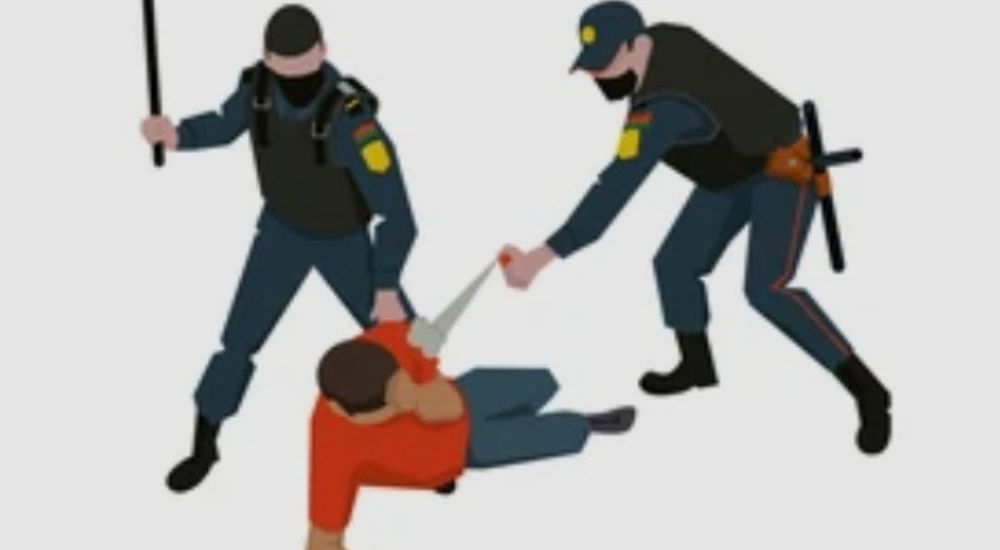
For years, citizens and journalists have reported being threatened, assaulted, or detained for documenting police misconduct. This had fueled the 2020 #EndSARS protests against police brutality and impunity.
Advertisement
Speaking to THE WHISTLER, a lawyer, Otunba Tunde Falola, described the ruling as “legally sound and progressive” but warned that its real test would be enforcement.
He said the judgment affirms a constitutional liberty and aligns with democratic accountability, but argued that the Nigeria Police Force has developed “a troubling reputation for selective compliance with court orders or Judgements,” especially where such rulings constrain operational discretion or expose misconduct.
Falola said that the problem goes beyond isolated incidents and reflects “a systemic issue tied to weak internal discipline mechanisms, inadequate consequences for contempt of court, and a deeply entrenched culture of impunity.”
In his view, the judgment’s practical value will depend “less on the pronouncement itself and more on sustained enforcement by the judiciary, pressure from civil society and the media, and institutional reforms within the police.”
Without those, he warned that the ruling could remain “normative” rather than “operative.”
Advertisement
On whether the decision could expose citizens to more danger, Falola said the concern is “legitimate and complex.”
He said the judgment one had gives citizens a legal shield against arbitrary arrest or harassment for recording police activity and could deter misconduct by increasing transparency. But he cautioned that, in the present enforcement climate, some officers may react “defensively or even aggressively” to being filmed, exposing citizens to intimidation, unlawful seizure of devices, or even physical harm, particularly in isolated settings.
“So, does it increase risk? In the short term, potentially yes,” he said, especially where rank-and-file officers are unaware of the judgment or where enforcement remains weak. Still, he said that in the long term, the ruling is more likely to normalize accountability, reshape police-citizen relations, and gradually reduce abuse if it is consistently upheld and widely publicised.
He advised citizens to assert their rights “calmly and respectfully,” avoid escalating confrontations and, where possible, ensure recordings are backed up or witnessed.
Also speaking to THE WHISTLER, Dr. Chinedu Obienu, the principal partner at Abuja-based law firm Zest Partners, said he had reviewed the full judgment and considered it “a welcome development” that aligns with global human rights trends.
He linked the ruling to long-standing complaints about how police statements are sometimes obtained, arguing that suspects are often pressured into signing dictated or induced confessional statements.
Advertisement
According to him, introducing video or audio recording into police-citizen encounters could help reduce such abuses.
“Of what use is the phone recording device if it cannot capture right abuses and track in real-time commission of offence and all that?” he asked.
Obienu, while acknowledging concerns about police history with court orders, said he believes the police “obey court orders sometimes” and expressed hope that they would comply in this case.
He argued that the order does not weaken the police; rather, it could help the hierarchy identify wrongdoing within its own ranks, expose rights abuses, and even uncover crime where necessary.
“What would the police lose?” he asked adding that “If its officers are meant to comport themselves within the ambit of the law. You are only afraid when you are doing something wrong. If you are doing something right, why won’t somebody report you? You should be applauded.”
Obienu rejected the suggestion that the judgment would expose citizens to more risk, saying instead that it would embolden them to challenge injustice.
He added that although the police may appeal, they cannot obtain a stay of execution because, in his words, it is a declaratory judgment.
“The law immediately becomes operational until the court of appeal sets it aside,” he said.
Human rights lawyer, Deji Adeyanju, also welcomed the ruling, describing it as a decision that “promotes accountability and integrity of police officers on duty.”
He said it is “a judgment that everyone should embrace.”
Adeyanju urged the police hierarchy and the new Inspector-General of Police, Olatunji Disu, to go beyond passive acknowledgement and issue a clear nationwide signal directing officers to comply with the judgment.
Such a directive, he said, should explicitly address accountability and make it plain that the court’s decision must be obeyed across commands.
He argued that the only people likely to oppose the ruling are “those who want to be bribe-seeking and those who violate the fundamental rights of citizens.”
On the question of risk to citizens, Adeyanju said the judgment should instead make officers more careful in public, because “once you see that, there is already that fear that people may be video-recording.”
Though not a lawyer, Edetaen Ojo, Executive Director of Media Rights Agenda, described the decision as “a judgment absolutely worth celebrating.”
He said it clearly states what is lawful in a justice system where evidence is often crucial to proving corruption, human rights violations, and other wrongdoing.
Ojo said video evidence is among the most powerful forms of proof available to citizens, and warned that if police arguments against filming were allowed to stand, victims of abuse would be stripped of one of the few tools capable of substantiating their claims.
“If the Police can successfully advance the argument that recording them and their actions even while they are breaking the law or committing crimes is not allowed, we will never be able to obtain and produce evidence to back up claims of human rights violations, corruption, and other illegal activities,” he said.
According to him, the court has now “set them straight” by clearly establishing that citizens have a legal right to film police actions in public.
He insisted that any officer who brutalises a citizen for filming is committing a fresh violation on top of whatever conduct they may already be trying to conceal.
Ojo said the danger to citizens did not begin with this judgment, noting that police had long brutalized citizens, including journalists, for filming them during unlawful activity.
“That is how they have always behaved, so it is not this judgment that is exposing citizens to risks,” he said.
Instead, he argued, the ruling should be celebrated and publicised widely so that “every police officer in Nigeria hears about it and cannot claim ignorance.”
That argument is reinforced by a long trail of reports tying police conduct to attacks on citizens and journalists documenting abuse.
During the 2020 #EndSARS protests, Amnesty International noted that Nigerian protesters were demanding an end to brutality, extrajudicial executions, and extortion, and later reported that security forces killed at least 12 peaceful protesters in Lekki and Alausa on October 20, 2020.
Meanwhile, Media Rights Agenda’s 2025 free expression report said government officials were responsible for nearly three-quarters of attacks on journalists and that the Nigeria Police Force accounted for 45 per cent of such incidents, making it the single biggest offender named in the report.
MRA also said assault and battery was the second-highest category of attacks recorded.
In March 2026, Premium Times, TheCable, and the Committee to Protect Journalists reported the assault of Bauchi-based journalist Mohammed Adamu while covering an Eid Durbar event. TheCable also reported that MITV journalist Habeeb Adejobi was assaulted by security operatives in Lagos earlier in the month.