
Over 400 Borno Residents In Terrorists’ Captivity, Situation Worsening – Ndume
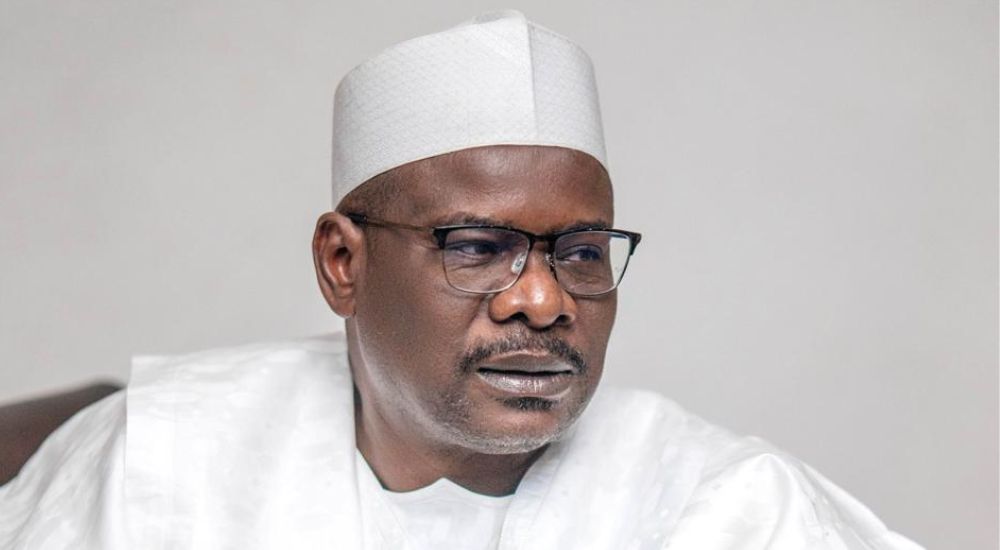
Senator representing Borno South, Ali Ndume, has raised alarm over the worsening security situation in the North-East, revealing that more than 400 residents are currently in the captivity of terrorists following recent attacks on communities in the state.
Speaking on Channels Television’s Politics Today on Monday, Ndume described the development as heartbreaking, noting that many of the abducted victims are women, children, and the elderly.
“I’m just coming back from the affected communities. We have statistics of over 400 people in captivity as displayed in the frightening videos released by the terrorists,” he said.
The lawmaker explained that the attacks have left communities such as Goshe completely devastated, with widespread destruction of homes and infrastructure.
“Everything has been destroyed in Goshe. As I said last time, there’s only a small mosque standing,” Ndume stated.
He noted that displaced residents who fled to Pulka are living under harsh conditions and are increasingly demanding to return to their ancestral homes despite the destruction.
Advertisement
“Our people are resilient. They don’t want to stay in IDP camps in Pulka because the environmental conditions there are worse than Goshe. They are insisting that if possible, they should be allowed to go back and camp there, even if it is temporary,” he said.
Ndume added that the influx of displaced persons has overwhelmed Pulka, with many taking refuge in a primary school, thereby disrupting normal academic activities.
“They are currently housed in a primary school, which means they have displaced the pupils. It is better to take them back to Goshe where they are willing to stay, even in makeshift shelters,” he said.
He called for urgent measures to improve access to affected communities, particularly the road linking Pulka to Goshe, which he described as a major operational challenge for both civilians and security forces.
“One of the advantages the insurgents are taking is that the road from Pulka to Goshe, which is only about 12 kilometres, is not motorable. If that road is fixed, you can get there in 10 to 20 minutes,” Ndume explained.
Advertisement
On the recent resurgence of attacks, the senator attributed the escalation to retaliatory actions by insurgents following military operations that targeted their leadership.
“When security forces went after their commanders and killed many of them, the insurgents regrouped and launched retaliatory attacks. They are now targeting our own military leadership,” he said.
Ndume declined to comment on specific intelligence failures but stressed that inconsistent and unpredictable responses from security agencies have contributed to the current situation.
“People expected decisive action after the declaration of a state of emergency on security, but what we saw was not consistent or predictable enough to end this threat,” he noted.
He also expressed concern over what he described as inadequate equipment, manpower, and motivation for troops deployed in the affected areas.
“Our soldiers are doing their best, but they don’t have enough equipment, they don’t have the numbers, and they need more motivation,” he said.
Advertisement
The senator maintained that the insurgency could be significantly curtailed within a short period if the government demonstrates the required political will.
“If the government is serious, we can end this thing in six months. All we need is to train, equip, and properly motivate our soldiers,” he asserted.
Ndume further called for stronger collaboration between federal and state authorities, suggesting the creation of a centralised “situation room” to enable real-time coordination and rapid response to security threats.
“If you declare a state of emergency on security, then it should reflect at the state level. There should be a situation room where the president is constantly briefed and immediate decisions are taken,” he said.
He also appealed to the international community, particularly the United States, to support Nigeria with intelligence sharing, advanced technology, and specialised military expertise.
“What we need is intelligence and technology. We don’t have enough drones. With proper deployment of drones and surveillance systems, we can significantly reduce this problem,” Ndume said.
Explaining how such a large number of people could be abducted without interception, Ndume pointed to the geography of the area, noting that several communities are closely linked and largely ungoverned.
“It’s not that they transported them in buses. These communities are within short distances, and people move on foot or bicycles. Many of these villages are practically stateless,” he explained.
He added that the insurgency has evolved over the years from a religious extremist movement into a complex network involving terrorism, criminality, and opportunistic violence.
“It started as an extremist ideology, but it has now turned into terrorism and even a business. Criminal elements infiltrated it, and it spread like cancer,” Ndume said.
The senator warned that the crisis, which began in the North-East, is gradually expanding to other parts of the country, with increasing incidents of killings and kidnappings reported in the North-West and North-Central regions.
“But now the North-West—Sokoto, Zamfara, Katsina—are competing with us in terms of losses of lives and kidnappings. The problem is spreading,” he cautioned.