
2027: Can NDC Repeat Obi’s Historic Lagos Upset?
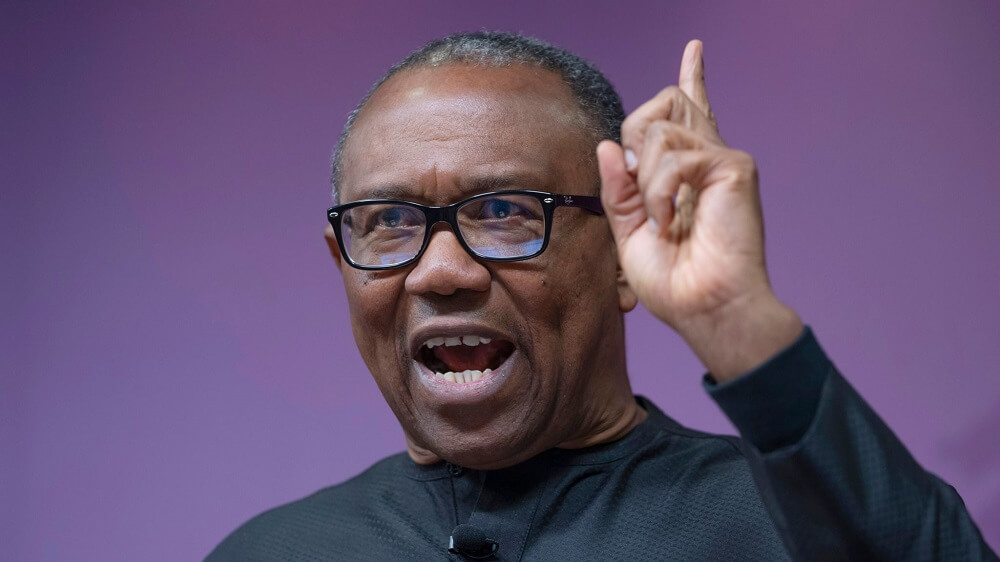
The Labour Party (LP) pulled off one of the biggest political upsets in Nigeria’s recent history in the 2023 presidential election when it defeated the All Progressives Congress (APC) in Lagos State, the political stronghold of the APC presidential candidate, Bola Tinubu.
LP candidate Peter Obi polled 582,454 votes to defeat his closest challenger, Tinubu of the APC, who scored 572,606 votes. Atiku Abubakar of the Peoples Democratic Party (PDP) came a distant third with 75,750 votes.
A total of 1,347,152 voters were accredited for the election in Lagos, where Tinubu had exercised considerable political control and influence, having served as governor of the state from 1999 to 2007.
Although the APC won in 11 of the state’s 20 local government areas, Obi secured more votes overall and won the remaining nine local government areas.
The result was described by political analysts as a demystification of Tinubu, who had been widely expected to win the state because of his longstanding political influence there. Tinubu, however, went on to win the presidential election nationally and was sworn in as president in May 2023.
Obi’s performance in Lagos was largely attributed to a well-organised campaign and strong synergy among LP members and supporters across the state.
Advertisement
However, the LP has since been weakened by leadership crisis and internal divisions following the 2023 general elections, with several members moving to other political platforms, including the Nigeria Democratic Congress (NDC).
With the 2027 general elections approaching, attention is now turning to whether the NDC can replicate the upset achieved by the LP in Lagos in 2023.
The prospect appears increasingly uncertain, particularly because some of the political actors and campaigners who worked for Obi in 2023 are now scattered across different political parties.
The NDC is also facing internal disagreements in Lagos, while the influence of Gbadebo Rhodes-Vivour, the governorship candidate of the African Democratic Congress (ADC) in the state, could further complicate the opposition landscape.
Rhodes-Vivour, who was the LP’s governorship candidate in Lagos in 2023, remains an influential figure among the political movement that rallied behind Obi. His current political affiliation with the ADC means he will also be seeking to mobilise support for Atiku and his party’s platform ahead of the 2027 election.
Advertisement
Amid the opposition’s calculations, however, the NDC has been grappling with an internal crisis that has raised questions about its ability to build the kind of united political structure that helped the LP perform strongly in Lagos three years ago.
In June, members of the Lagos State Executive Committee accused the state chairman, King Okuneye, of manipulating the party’s primary elections to favour preferred candidates.
The allegations followed dissatisfaction among some stakeholders over the outcome of the primaries and the emergence of candidates for various elective positions ahead of the 2027 elections.
The controversy was part of a wider wave of complaints surrounding NDC primaries in parts of the country, with some aspirants and party members alleging manipulation, changes in venues and deviations from established procedures.
Tensions reportedly increased within the Lagos chapter after the primaries, with some members calling on the party’s national leadership to intervene and review the conduct of the exercise.
At a news conference in Ikeja following an emergency meeting of some executive members, the party’s deputy chairman, Akinwande Osikominu, accused Okuneye of running the Lagos chapter without transparency and taking important decisions without adequately consulting other members.
Advertisement
Osikominu alleged that the chairman’s actions had deepened divisions within the party and could undermine its chances in future elections.
The leadership crisis was further exposed in July when the party’s Lagos publicity secretariat publicly distanced itself from activities allegedly being organised under the name of Dr Naheem Balogun.
In a statement signed by the Publicity Secretary, Olushile Akinyemi, the party warned members against a circulated notice inviting NDC local government chairmen and assembly candidates to a meeting with Balogun, including plans for a purported governorship campaign council.
The statement declared that Funso Doherty was the NDC’s Lagos governorship candidate and insisted that no other individual had been nominated, endorsed or presented by the party as its flag bearer.
The publicity secretariat said the meeting and associated activities had no affiliation with the official structures, leadership or campaign of the NDC in Lagos, urging members to disregard the invitation.
The statement called on party members to remain united behind Doherty, describing him as the candidate representing the party’s vision for a better Lagos.
The development came after Balogun, who was a governorship aspirant of the NDC in Lagos, had in mid-June dismissed rumours that another candidate had emerged as the party’s flag bearer.
Balogun had urged his supporters to remain calm and focused, insisting that the mandate given to him by party members could not be taken away through what he described as speculation and propaganda.
He also said he would continue consulting stakeholders across Lagos State and would not take decisions affecting the political project without their input.
However, on June 19, Doherty accepted the NDC’s nomination as its governorship candidate for the 2027 election.
In accepting the nomination, Doherty expressed gratitude to the party for its confidence in him and said Lagos deserved inclusive leadership that works for everyone.
“The real work begins now. Together, we will build the Lagos that we know is possible,” Doherty said on X.
The competing claims and public statements have exposed the depth of the disagreements within the party at a time when opposition parties are expected to consolidate their structures ahead of the 2027 elections.
For the NDC, the challenge is not only to attract the political forces that powered Obi’s strong showing in Lagos in 2023, but also to prevent internal disagreements from weakening its campaign before the election.
The LP’s 2023 performance demonstrated that Tinubu’s political dominance in Lagos could be challenged when opposition forces are sufficiently organised and mobilised.
But with key members of the 2023 Obi campaign now in different political parties, the NDC facing internal disagreements and Rhodes-Vivour operating from the ADC, the opposition vote could be fragmented.
If the divisions persist, it could prove difficult for the NDC to reproduce the level of coordination that enabled Obi to defeat Tinubu in Lagos in 2023.
Efforts by THE WHISTLER to obtain comments from the NDC Lagos State chairman, Okuneye, on the allegations and the divisions within the party proved abortive, as he did not respond to calls.