
Be Proactive To Post-Recapitalisation Risks, Cardoso Tells Banks
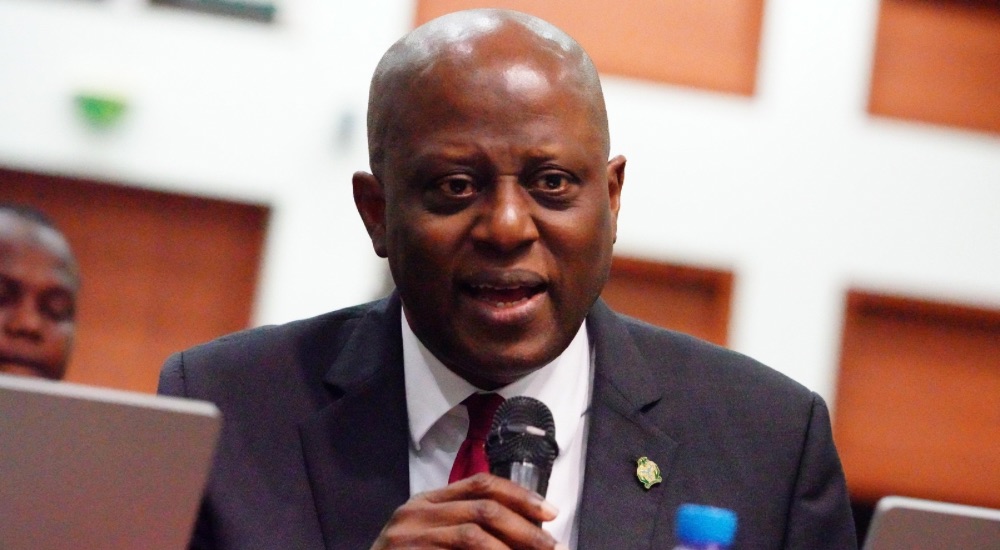
Governor of the Central Bank of Nigeria, Olayemi Cardoso, has urged banks to remain vigilant and take proactive measures against emerging risks following the conclusion of the banking sector recapitalisation exercise.
Cardoso made the call while announcing the outcome of the Monetary Policy Committee (MPC) meeting, where the committee retained the Monetary Policy Rate (MPR) at 26.5 per cent amid sustained inflationary pressures and global economic uncertainties.
According to him, the MPC welcomed the successful recapitalisation exercise, which resulted in the emergence of 33 stronger banks with improved financial soundness indicators and greater capacity to support economic growth.
However, he warned that the strengthening of balance sheets must be matched with strong risk management frameworks to safeguard financial system stability.
“The MPC also noted with satisfaction the successful conclusion of the banking recapitalisation exercise, which culminated in the emergence of 33 banks with stronger financial soundness indicators enhancing their capacity to support the economy,” Cardoso said.
Advertisement
He added that the committee “urged the banks to remain proactive and adopt necessary measures to address potential post-recapitalisation risks towards preserving financial system stability.”
The committee, which had all 11 members in attendance, had retained the MPR at 26.5 per cent, the standing facilities corridor at +500 and -100 basis points, and maintained the Cash Reserve Ratio (CRR) for Deposit Money Banks at 45 per cent, 16 per cent for merchant banks, and 75 per cent for non-TSA public sector deposits.
Cardoso said the decisions were based on a “comprehensive assessment of risks to the outlook,” noting that despite marginal increases in inflation, the broader macroeconomic environment remained stable.
Although inflation has risen for two consecutive months, he said the committee viewed the trend as largely temporary.
“Although inflation has risen marginally for two consecutive months, largely induced by external shocks, the committee recognises its transitory nature and remains confident that the current macroeconomic environment is sufficiently robust to support a return to disinflation,” he stated.
Advertisement
The MPC noted that headline inflation rose to 15.69 per cent in April 2026 from 15.38 per cent in March, driven mainly by food prices.
Food inflation climbed to 16.06 per cent from 14.31 per cent, reflecting higher transportation and logistics costs as well as seasonal factors.
Core inflation, however, eased to 15.86 per cent in April from 16.21 per cent in the previous month, while the 12-month average inflation rate slowed to 19.16 per cent from 20.05 per cent.
The committee also highlighted spillover effects from the Middle East crisis, which have pushed up global energy and logistics costs. However, it said the impact on Nigeria had been muted due to earlier policy reforms.
“These include exchange rate stability, improvements in external reserve buffers, strengthened monetary policy transmission, a well-capitalised banking system and ongoing fiscal consolidation, which have significantly bolstered the economy’s ability to absorb external shocks,” Cardoso explained.
The MPC also welcomed Nigeria’s recent sovereign rating upgrade, describing it as evidence of improving macroeconomic fundamentals and reform credibility.
Advertisement
It noted that a cautious and vigilant policy stance remains necessary to anchor inflation expectations and maintain macroeconomic stability.
“The committee was therefore convinced that the essential conditions for price stability remain firmly in place,” Cardoso said, adding that policymakers will continue to monitor both domestic and global developments closely.