Ifunanya: Senate Demands Nationwide Access To Safe, Affordable Antivenoms
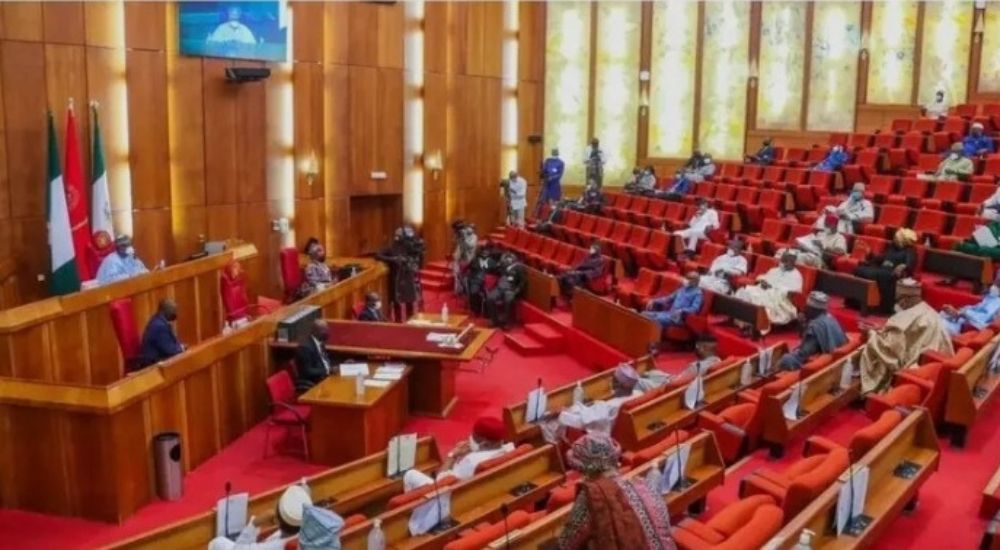
The Senate on Tuesday urged the Federal Ministry of Health and Social Welfare to collaborate with National Agency for Food and Drug Administration and Control (NAFDAC) to ensure safe and affordable antivenoms in hospitals across the country.
The upper chamber also urged the ministry to ensure procurement and proper storage as well as nationwide availability of safe, effective and affordable antivenoms and critical antidotes for use in public and private hospitals.
The Senate’s resolutions were sequel to a point of order raised by Sen. Idiat Adebule (APC-Lagos) during plenary.
The lawmaker was reacting to the death of Miss Ifunanya Nwangene in Abuja, following a snake bite.
The motion was itled: “Urgent Need for the Federal and State Governments to ensure adequate stocking, availability and access to life-saving antidotes and emergency medicines in public and private hospitals across Nigeria”.
Advertisement
The Senate also urged the Ministry of Health and Social Welfare, through relevant agencies and regulatory bodies, to develop and enforce national guidelines prescribing minimum stock levels of essential antidotes and emergency medicines in designated public and private hospitals across Nigeria.
The upper chamber equally called on state governments, through their ministries of health and hospital management boards, to conduct immediate audits of public and private hospitals within their jurisdictions to ascertain compliance with approved antidote-stocking.
Adebule, while earlier raising Order 41 of the senate’s Standing Rules, said that Nigeria had continued to record increasing cases of medical emergencies, including snakebites, scorpion stings, poisoning and drug overdoses and other forms of envenomation.
All of these, she said, required immediate administration of specific antidotes and emergency medicines in both public and private hospitals in order to prevent avoidable deaths and irreversible health complications.
The senator expressed grave concern over what she called the tragic and avoidable death of Nwangene.
Advertisement
According to her, the incident reveals serious gaps in emergency preparedness and antidote availability within public and private hospitals in the country.
“The World Health Organisation (WHO) classifies snakebite envenoming as a neglected tropical disease and underscores the critical importance of timely access to safe and effective antivenoms in public and private hospitals.
“This is particularly in countries such as Nigeria where snakebite incidents remain prevalent,” she said.
The lawmaker expressed concern that a significant number of public and private hospitals across Nigeria do not stock essential life-saving antidotes such as antivenoms and anti-toxins, leading to dangerous delays in treatment, unnecessary referrals and preventable loss of lives.
“Victims of snakebites and other poisoning emergencies are frequently compelled to move from one public hospital to a private hospital, or vice versa, in search of antidotes during the critical ‘golden hour’, thereby substantially increasing mortality and morbidity rates.
“The absence of mandatory antidote-stocking requirements for private and public hospitals and weak enforcement mechanisms are affecting public hospitals,” Adebule said.
Advertisement
She noted that enforcing the mandatory availability, adequate stocking and equitable distribution of essential antidotes and emergency medicines in both public and private hospitals would significantly reduce preventable poor supply chain systems.
In his contribution, Sen. Sunday Karimi (APC-Kogi) described the death of Nwangene as ‘needless, stressing: “That shouldn’t happen in our county because we are supposed to have antidotes.
“We have to be proactive as a government. I don’t see why medical centres should not have antidotes,” the senator said.
Similarly, Sen. Ekong Sampson (APC-Akwa-Ibom) said that the bigger lesson underpinning the motion was the need to put in place policies on the healthcare system and then drive them.
“We don’t have to wait until there’s a fatality through snakebites. This is a lesson for us to be proactive; that we must take healthcare very seriously.
“It is tragic that the deceased went the way she died. The fatalities that are caused by snakebites can be very painful.
“We must protect the health of our people. My heart bleeds for the family of the deceased who have done well for this country. It is one loss too many, but this is avoidable,” he said.
In his remarks, the Senate President, Godswill Akpabio, described Nwangene as a very promising Nigerian, saying that her death was a great loss to the county and her family.
Akpabio, thereafter, moved for a minute silence to be observed for the deceased.