
NSDC Moves To Unlock $1bn Investment, Tighten Import Quota Rules
The National Sugar Development Council (NSDC) has announced plans to unlock a $1bn investment pipeline and tighten enforcement of import quota requirements as Nigeria intensifies efforts to achieve self-sufficiency in sugar production.
The Council said the measures are part of the implementation of the Nigeria Sugar Master Plan (NSMP) 2.0, which seeks to accelerate local production, reduce dependence on imported sugar and retain more value within the Nigerian economy.
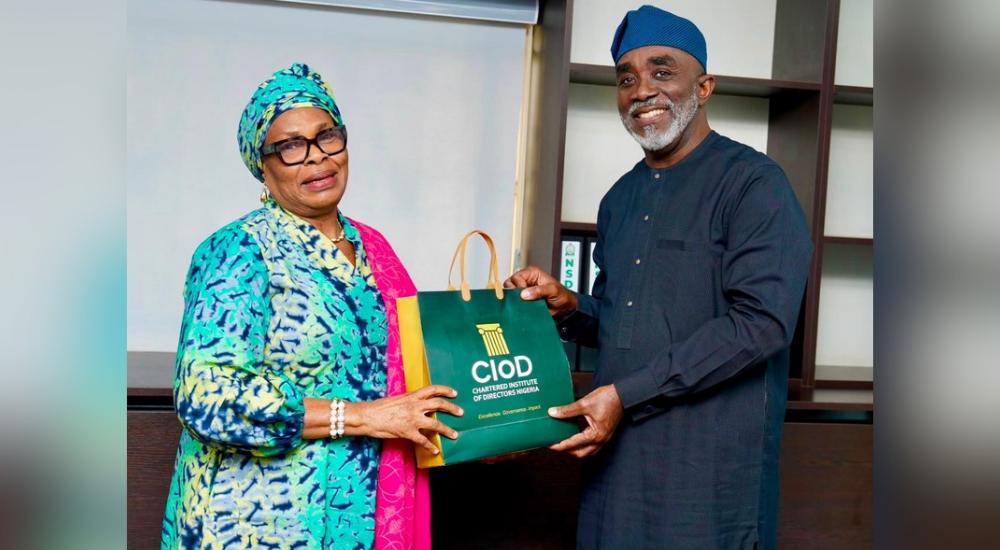
The Executive Secretary/Chief Executive Officer of the NSDC, Mr Kamar Bakrin, disclosed the plans when he received members of the Abuja Chapter of the Chartered Institute of Directors (CIoD) on a courtesy visit to the Council’s headquarters in Abuja.
Bakrin said Nigeria’s annual sugar consumption stands at about 1.8 million metric tonnes, with an estimated $1bn spent each year on imports from foreign producers.
He said the Council now viewed the import-dependent market as an opportunity to build domestic production capacity, create jobs, increase rural incomes and conserve foreign exchange.
Advertisement
According to him, the NSMP 2.0 is designed to accelerate Nigeria’s journey towards producing about two million metric tonnes of sugar locally.
Bakrin said the major challenge confronting the sector had historically not been a lack of policies, but weak execution, adding that the Council was now focused on building the institutional structures required to translate policies into measurable outcomes.
“We don’t lack policy. What we have struggled with is world-class execution,” he said.
The NSDC boss explained that the Council was also repositioning sugarcane as the foundation of a broader bio-industrial ecosystem rather than treating sugar merely as a commodity.
He said sugarcane could provide multiple products, including sugar, ethanol, animal feed and electricity, creating opportunities for investment across the value chain.
Advertisement
“We have been blessed with a crop that is one of the most generous God has ever made. From sugarcane you can get sugar, you can get ethanol, you can get animal feed, you can produce power. Our job is to build a bio-industrial ecosystem around it,” Bakrin said.
On investment financing, he said the Council had identified inadequate project preparation as one of the major constraints preventing available capital from flowing into the sector.
To address this, the NSDC has established a ₦10bn Sugar Project Acceleration Fund in partnership with the Bank of Industry to finance feasibility studies and other project preparation activities.
The initiative is expected to convert greenfield sugar projects into bankable, investment-ready packages that can attract long-term financing.
Bakrin said the prepared projects would in turn feed into a $1bn Engineering, Procurement and Construction (EPC)-plus-finance partnership with SINOMACH of China, providing a channel for construction and financing once projects meet the required preparation standards.
The Council is also engaging with the African Export-Import Bank (Afreximbank) and the Nigeria Governors’ Forum to accelerate the development of sugar estates across the country.
Advertisement
Beyond financing, Bakrin said the Council was strengthening the Backward Integration Programme (BIP) to ensure that companies benefiting from import quotas demonstrate genuine commitment to domestic production.
He said the revamped framework was based on four principles: qualify, reward, verify and enforce.
Under the new approach, companies seeking import quotas would be required to demonstrate actual commitment to backward integration, while major refiners would provide audited production commitments linked to their quotas.
The Council, he said, would impose consequences where companies failed to meet their production obligations.
To improve monitoring, the NSDC is deploying satellite imagery alongside physical field inspections to independently verify activities at sugar project sites.
The approach is expected to reduce reliance on self-reporting and provide the Council with objective data on the progress of projects.
Bakrin said the stronger enforcement regime was necessary to ensure that import privileges were matched by measurable investment and production commitments within Nigeria.
The Council is also placing emphasis on smallholder farmers through its Sugarcane Outgrower Development Programme (SODP).
He said every sugar estate under the NSMP 2.0 would be required to allocate land for outgrowers and invest in host communities through employment, social infrastructure and physical infrastructure.
According to him, the model is designed to make rural prosperity a core component of the sugar development strategy rather than an afterthought.
Bakrin also drew lessons from Brazil, one of the world’s leading sugar-producing countries, saying Nigeria’s challenge was primarily institutional rather than agronomic.
“Brazil did not win by planting better cane. They won by building institutions that compounded productivity for years, for decades,” he said.
He said the NSDC was consequently strengthening its internal processes through the development of Standard Operating Procedures using Six Sigma methodology.
The objective, he explained, was to establish standardised and repeatable processes that would continue to deliver results regardless of changes in personnel or leadership.
“I hold a very strong conviction that the difference between the countries that industrialised and those that did not rarely has to do with the quality of their plants. It is the quality of their institutions,” Bakrin said.
He invited the Chartered Institute of Directors to participate in the emerging sugar economy by supporting stronger corporate governance across sugar estates, mills and outgrower companies.
He also urged the Institute to contribute to policy discussions and efforts to establish the consistency needed to attract patient, long-term capital into the sector.
Earlier, the leader of the CIoD delegation, Mrs Fatima Nana Mede, commended the NSDC leadership for reforms being implemented in the sugar industry and the momentum towards self-sufficiency.
Mede expressed the Institute’s readiness to collaborate with the Council in areas of mutual interest as part of its contribution to the development of Nigeria’s sugar industry.
The NSDC said the combined focus on investment mobilisation, project preparation, enforcement, farmer participation and value-chain development would accelerate the implementation of NSMP 2.0.
The Council’s ultimate target is to produce about two million metric tonnes of sugar domestically, reducing import dependence while creating a diversified sugarcane-based industrial ecosystem covering sugar, ethanol, animal feed and power.
If successfully implemented, the initiative could also reduce the estimated $1bn annual outflow associated with sugar imports and redirect a significant portion of the value into domestic production, employment and rural economic development.