
Perfect-Record Prediction Model Tips Holland To Win 2026 W/Cup
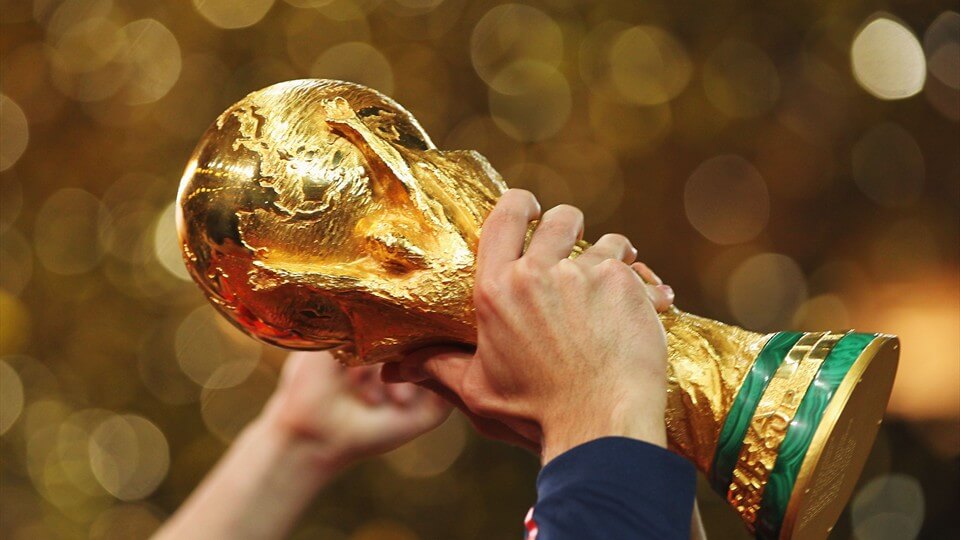
Not holders Argentina with Lionel Messi, nor England with their intimidating squad, have been tipped to win the World Cup. Not even Portugal with their star-studded team – but the Netherlands.
When Paul the Octopus correctly predicted all of Germany’s results at the 2010 World Cup, he was hailed globally as an oracle.
This time, German economist Joachim Klement has developed a complex forecast model which he says has maintained a 100 per cent record in predicting the World Cup winner since 2014, even though little is known about it.
If the Netherlands lift the trophy in July, they would become the fourth successive correct prediction from his model.
As well as identifying the eventual winners, the model also maps out the broader structure of the 48-team tournament, including predicted upsets such as Japan defeating Brazil in the second round and Scotland being eliminated by South Korea at the same stage.
Advertisement
Many football pundits may not agree to his prediction because the game remains unpredictable, as upsets are a regular feature of football.
The model further suggests England would reach the semi-finals, where they are expected to be knocked out by Portugal.
Remember that famous 2006 World Cup encounter involving Cristiano Ronaldo of Portugal and Wayne Rooney of England, both clubmates at Manchester United? This model predicts the two nations would meet at the semis but Portugal again will defeat England, a repeat of the 2006 World Cup – though the model notably avoids predicting outcomes decided by penalties.
Klement, who describes himself as a “pessimist” and has lived in the United Kingdom for 10 years, said the project was never intended as a perfect forecasting tool or betting guide.
Rather, he said it was designed to highlight the limitations and overconfidence often found in predictive modelling.
Advertisement
“This started as an exercise in showing the world the hubris of economists who think they can forecast stuff that they actually have no clue about,” Klement said.
“And now it’s become an exercise in how, if you’re lucky often enough, people will think you’re a guru,” he added.
After correctly predicting Germany’s 2014 victory, Klement initially expected his 2018 forecast to expose the earlier success as a coincidence. Instead, he accurately predicted France as champions, followed by Argentina in 2022.
“Because I was right three times in a row, people now think that this model is unbeatable and that I obviously will have to be right again next time,” he said.
Klement noted that while World Cup outcomes are influenced by measurable factors such as population size, economic strength, climate conditions, and FIFA rankings, these indicators only explain part of the results.
He stressed that randomness remains a decisive factor in football outcomes.
Advertisement
“The other 50% is luck,” he added.
“Every match—especially when you have high-quality teams playing against each other that are very similar in skill and quality—it really depends on the form of the day, a referee’s decision, or a piece of luck in the sense of hitting the post versus the ball going in.
“Things like that are completely unpredictable,” he stressed.
Klement said the model has become an annual talking point ahead of each World Cup, offering both entertainment and distraction from global challenges.
Each tournament cycle, he added, brings increased scrutiny as the model’s previous successes build expectations.
“In particular, in 2026, when there are so many crises, wars, and things going on, it is something that makes me feel good and hopefully the readers feel good and gives them a little bit of a distraction from all the bad things that are going on in the world.”
However, the growing attention has also brought unintended consequences, including personal scrutiny from colleagues and increased public interest in his methodology.
Klement said he is frequently asked to assess how player injuries could affect predictions, including questions around Dutch midfielder Xavi Simons.
Despite the model’s reputation, he stressed that uncertainty remains central to football outcomes.
“I’ve got several colleagues who bet some money on the Netherlands in response to me publishing that note,” he said.
“And if the Netherlands get eliminated from the World Cup, I think the next day I have to work from home,” he added.
For the Netherlands, it may perhaps bring long-awaited joy, as one of the most gifted footballing nations never to have won the World Cup could finally join the elite league of champions – Brazil, Italy, Germany, France, Argentina, and others.