
S/Africa Denied Me Entry, Allowed Free Access To Europeans—Samad
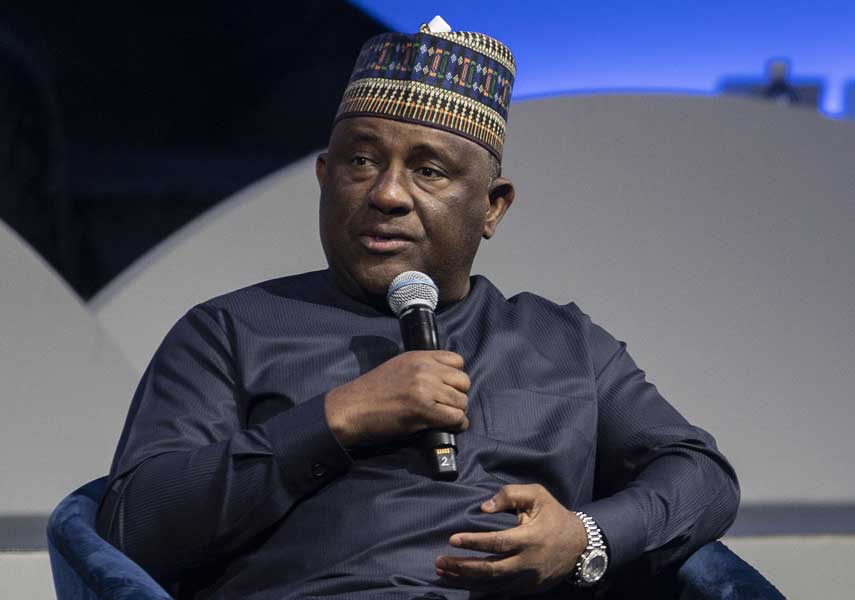
BUA Group Chairman Abdul Samad Rabiu on Thursday recounted how South African authorities once denied him entry at the border because his visa had expired by a single day even as European nationals were allowed through without visas.
Rabiu shared the experience during his keynote address titled “Africa at Scale: Capital, Policy, and the Architecture of Growth” at the 13th Africa CEO Forum, taking place at the Kigali Convention Centre.
The forum has drawn more than 2,000 CEOs, investors, heads of state and policymakers from over 75 countries under the theme “Scale or Fail: Why Africa Must Embrace Shared Ownership.”
The Nigerian industrialist used the personal anecdote to highlight what he described as a deeper contradiction in Africa’s push for economic integration.
“I was denied entry into South Africa because my visa had expired by one day,” Rabiu told the audience. “Yet right there, at the same entry point, Europeans were being let in without any visa at all.”
The story, delivered at one of the continent’s premier business gatherings, underscores persistent barriers to intra-African travel and trade.
Advertisement
Rabiu connected the incident to broader challenges facing the African Continental Free Trade Area (AfCFTA), which aims to create a single market for over 1.4 billion people but continues to grapple with administrative hurdles and uneven implementation.
He noted that BUA Group had encountered obstacles while trying to expand into certain African markets despite the trade pact’s framework. “While some countries embraced the spirit of the agreement, others were less supportive,” he said.
Rabiu’s remarks highlight ongoing restrictions on intra-African travel. Data shows only about 28 per cent of routes on the continent are visa-free, with many others requiring advance visas, while holders of Western passports often enjoy easier access.
He called for faster progress on integrated industrial corridors, modern infrastructure, digital customs systems and cross-border energy projects to make the AfCFTA more effective. Free movement of people and capital, he argued, is essential for genuine industrialisation and resilience.
“Economies with domestic processing capacity are more resilient in times of shock,” Rabiu said, citing Nigeria’s new refining capacity as an example amid global disruptions.
Advertisement
In December 2024, South Africa introduced simplified visa procedures for Nigerians, including five-year multiple-entry visas. In 2025, it also joined other African countries advancing visa-free travel under African Union initiatives.
Despite these reforms, Rabiu’s experience points to continuing inconsistencies in implementation.
He suggested that Africa’s bigger economies have historically made it easier for outsiders to operate on the continent than for Africans themselves.
The 2026 Africa CEO Forum urged public and private sector leaders to commit capital, share risks, and strengthen transnational African ownership as a pathway to securing the continent’s long-term prosperity, under the rallying call: “scale or fail.”