
Scientist Advocates Reformation of Nigeria’s Education To Meet 21C Realities
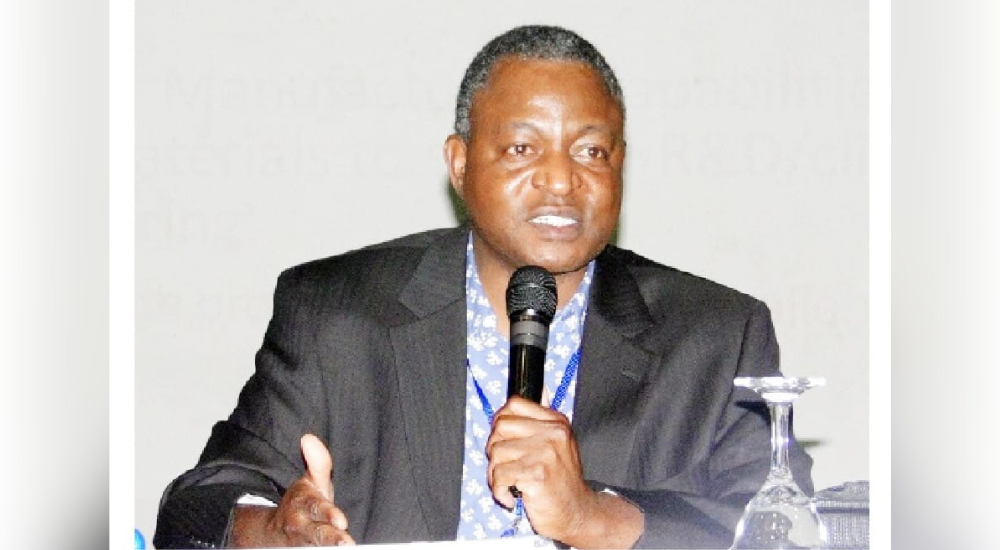
Nigeria’s educational system requires urgent and fundamental reforms if the country is to prepare its young people for the realities of the 21st century.
A member, Talent Development, Africa Centres for Disease Control and Prevention (Africa CDC), Dr Simon Agwale, stated this on Monday in an interview with THE WHISTLER from his base in the US.
Dr Agwale, who is also Vice-Chair, African Vaccine Manufacturing Initiative (AVMI), said education should no longer focus primarily on passing examinations and obtaining certificates. According to him, it must equip students with knowledge, practical skills, critical thinking, creativity, digital competence, strong values, and the ability to solve real-life problems.
He said reform should begin at the primary school level, “where the foundation for lifelong learning is established”. He also said governments at all levels should enact a policy making it mandatory for every Nigerian child have access to quality basic education, regardless of location or economic background.
Quoting him, “A greater emphasis should be placed on literacy, numeracy, science, communication, creativity, and problem-solving. Children should also be introduced early to digital literacy and responsible use of technology. Teaching should move away from excessive memorization toward inquiry, experimentation, teamwork, and learning by doing. Investment in well-trained and properly motivated teachers, functional classrooms, libraries, laboratories, reliable electricity, internet access, and appropriate learning materials is essential.”
He said at the secondary school level, education should become increasingly connected to the skills required by society and the economy.
Advertisement
While students must continue to receive strong foundations in mathematics, sciences, languages, humanities, and social sciences, the curriculum should provide greater exposure to technology, artificial intelligence, coding, biotechnology, agriculture, engineering, entrepreneurship, financial literacy, climate and environmental studies, and vocational education, he added.
He charged Nigeria to change the perception that every successful student must obtain a university degree. In his words, “Secondary schools should provide strong technical and vocational pathways in areas such as electrical and mechanical technology, construction, manufacturing, agriculture, ICT, healthcare support, renewable energy, and other practical professions. Students should graduate with competencies that can lead directly to employment, entrepreneurship, further technical education, or university.”
He called for a reform in Nigeria’s education assessment parametres. He argued that success should not depend almost entirely on high-stakes examinations, suggesting that, “Students should be evaluated through a combination of examinations, practical work, projects, continuous assessment, innovation, teamwork, and problem-solving. Technology should be used to expand access to quality education, particularly in underserved and rural communities. Digital learning platforms can help address shortages of qualified teachers and give students access to high-quality educational resources.”
He however advised that technology support teachers rather than replace them. He outlined relevant educational reforms to include character, citizenship, ethics, discipline, leadership, and national responsibility.
“Nigeria needs young people who are not only knowledgeable but also innovative, ethical, productive, and committed to contributing to society. The ultimate goal should be to transform the Nigerian education from a certificate-driven system into a knowledge, skills, innovation and productivity-driven system. Primary education should build strong foundations and curiosity, while secondary education should develop competence, specialization, creativity, and pathways into employment, entrepreneurship, technical education, or higher education,” he said.
Advertisement
He added that Nigeria’s greatest resource is its young population, noting that reforming education to unlock their potential “is therefore not simply an educational priority, but fundamental to the country’s economic development, technological advancement, national security, and future competitiveness”.
Our correspondent reports that Dr Agwale, renowned vaccinologist and virologist, is the CEO of Innovative Biotech Nigeria.