
Kaduna Communities Battle Erosion Through Grassroots Efforts
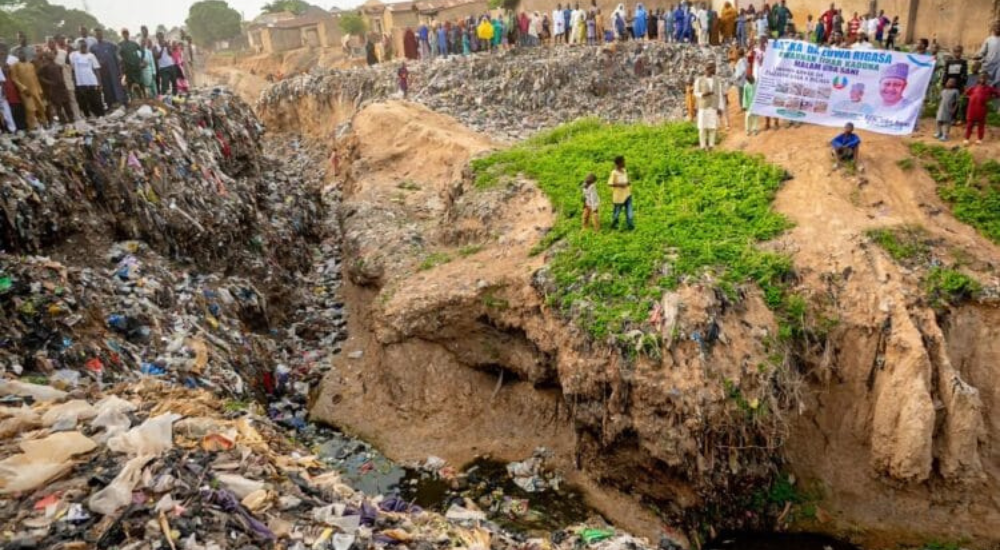
The rainy season brings both relief and apprehension to residents of Rigasa in Kaduna State, as heavy downpours replenish water sources and support farming while also raising fears of flooding, gully erosion, damaged roads and collapsed homes.
For years, residents have relied on community-led measures to limit the impact of erosion.
These include clearing blocked drainage channels, removing refuse from waterways, filling small erosion paths and mobilising neighbours when heavy rainfall threatens vulnerable areas.
However, residents say the increasing scale of erosion has stretched the capacity of communities, making government intervention necessary.
A Rigasa resident, Asmau Sadiq, who spoke with NAN, said erosion had destroyed houses and access roads in the community over the years.
“Erosion has taken away our houses and access roads over the years. We have suffered for years, but I believe this government intervention will finally bring lasting relief,” she said.
Advertisement
Another resident, Sadiq Lawal, said residents living close to erosion channels often become anxious whenever heavy rainfall begins.
“We are always worried when it starts raining. You don’t know what will happen when the rain becomes heavy,” he said.
Lawal said a permanent solution to the problem would provide residents with greater security.
“It will protect our homes and our future,” he added.
The situation in Rigasa reflects a broader environmental challenge affecting several communities across Kaduna State, where uncontrolled stormwater, blocked drainage systems, indiscriminate waste disposal and vegetation loss have contributed to flooding and gully erosion.
Advertisement
The consequences include damage to houses, roads, farmlands and other critical infrastructure.
In Rigasa, community members said their efforts to address erosion started long before the commencement of major government projects.
Residents identify areas where erosion is developing and mobilise neighbours to fill smaller channels before they expand. They also organise sanitation exercises and discourage residents from dumping refuse into drainage channels and waterways.
The District Head of Rigasa, Aminu Idris, said the community had endured gully erosion for many years.
“During the rainy season, we lose farmlands, houses, and sometimes lives because of erosion. This intervention gives us hope,” Idris said.
He, however, acknowledged that community efforts had limitations and could not replace large-scale engineering interventions.
Advertisement
The government has now commenced a N34 billion flood and gully erosion control project along the Rigasa-Tudun Wada corridor.
The 17.8-kilometre project is expected to address persistent flooding and erosion while protecting homes, roads and other infrastructure in the affected areas.
As part of the intervention, the Kaduna State Government also paid about N2 billion in compensation to nearly 1,000 residents whose properties are affected by the project.
Governor Uba Sani said the compensation was in line with the government’s commitment to ensuring that residents were not deprived of their property without adequate compensation.
“This government has promised that we will not demolish anyone’s property until we have paid adequate compensation,” Sani said.
For residents, the project offers an opportunity to move beyond temporary community measures towards a lasting solution.
“We want a permanent solution; we want to be able to sleep when it rains without worrying about our houses,” Lawal said.
Environmental experts, however, caution that infrastructure alone may not completely solve the erosion problem.
They say residents must also protect drainage channels, avoid indiscriminate waste disposal and reduce activities that contribute to soil degradation and flooding.
A 2025 study on gully erosion in Kaduna South Local Government Area identified environmental and socio-economic factors as contributors to the formation and expansion of gullies, reinforcing the need for both engineering interventions and behavioural change.
Experts recommend measures such as tree planting, regular sanitation exercises, proper waste disposal and protection of natural waterways.
Community leaders, they say, also have an important role in mobilising residents, identifying erosion-prone areas and alerting relevant government agencies to emerging threats.
Environmentalists note that residents are often the first to observe blocked drainage channels or newly developing erosion paths. Such local knowledge, they argue, can complement professionally designed erosion-control projects.
Rapid population growth and development in densely populated areas have also increased pressure on natural drainage routes, making proper urban planning and functional drainage systems increasingly important.
Experts therefore advocate an integrated approach involving drainage infrastructure, vegetation restoration, responsible waste disposal, regular maintenance and community participation.
Sadiq said residents were prepared to support the government to ensure the project succeeds.
“We are ready to support the government; we want the project to succeed because it is about our homes, our children and our future,” he said.
Idris also called for continued cooperation between residents and government agencies, stressing that the community had learnt from experience that early action was better than waiting until erosion caused significant damage.
The Rigasa experience highlights the importance of grassroots participation in environmental protection. While communities may lack the financial and technical capacity to undertake major erosion-control projects, their role in sanitation, early detection, public awareness and maintenance remains critical.
Experts say the challenge is to ensure that these community efforts continue beyond the rainy season through regular environmental campaigns, early-warning systems, tree planting and routine maintenance of drainage and erosion-control infrastructure.
For residents who have lived with erosion for years, the goal is straightforward: to protect their homes, roads and livelihoods and finally enjoy the rainy season without fear.
The success of the Rigasa intervention, observers say, will ultimately depend not only on the infrastructure constructed but also on sustained cooperation between the government and the communities it is designed to protect.