
Tinubu Challenges Atiku To Prove N7.98tn Oil Windfall
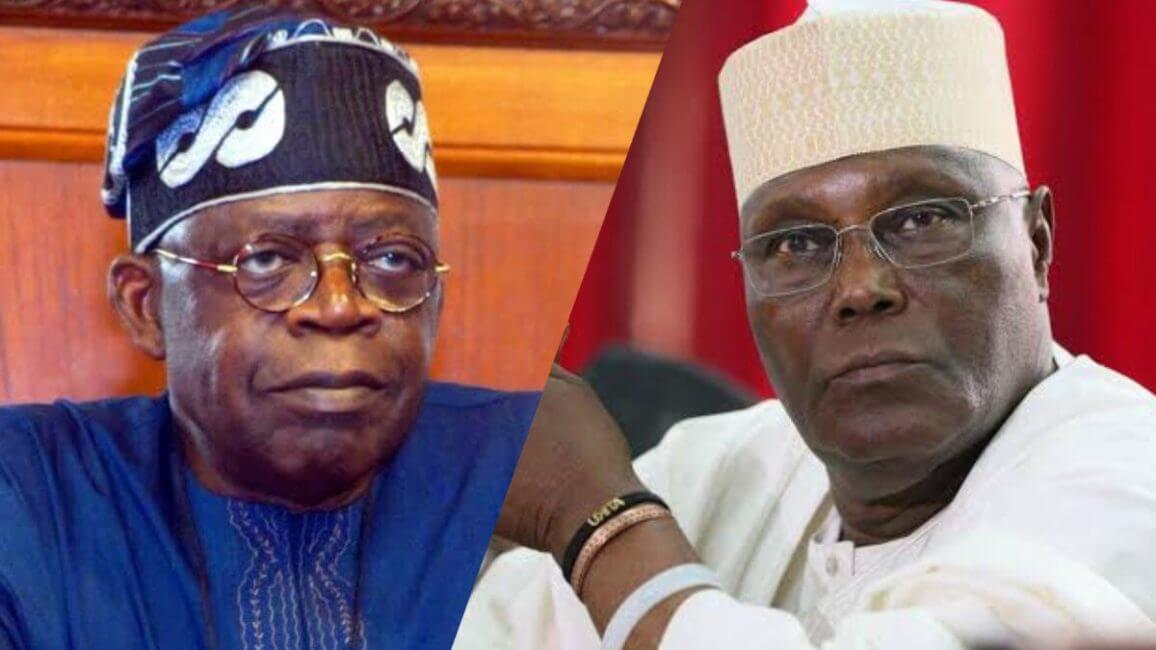
…Accuses Ex-VP Of Twisting Facts On Debt, Economy
…Rejects Atiku’s ‘Fiscal Recklessness’ Claim
The presidency has challenged former Vice President Atiku Abubakar to provide evidence supporting his claim that the Federal Government earned a N7.98tn windfall from crude oil sales.
In a statement on Sunday, Special Adviser to the President on Information and Strategy, Bayo Onanuga, said Atiku’s criticism of President Bola Tinubu’s economic policies relied on outdated figures and ignored changes in the economy since the reforms introduced in 2023 and 2024.
Onanuga was responding to Atiku’s July 26 statement in which the former vice president accused the Tinubu administration of fiscal recklessness, excessive borrowing and failing to account for what he described as an estimated N7.98tn oil windfall.
Rejecting the allegation, the presidential spokesman said there was “no such windfall” and challenged Atiku to disclose how he arrived at the figure.
Advertisement
“There is no such windfall of N7.98 trillion,” Onanuga said.
He explained that although Brent crude prices averaged about $90 per barrel in the first half of 2026, above the budget benchmark of $64.85, crude oil production remained below projections at about 1.6 million barrels per day against the budget estimate of 1.84 million barrels per day.
According to him, the production shortfall reduced the gains from higher oil prices, while part of Nigeria’s crude output had already been committed to servicing loans secured during previous fuel subsidy payments.
Onanuga also faulted Atiku’s method of estimating oil revenue.
“The convenient mistake many analysts make is to multiply the oil price by the daily crude production volume to determine revenue to the government. Such analyses ignore the cost of production, the share of crude belonging to the oil-producing companies and the impact of crude sale contracts such as forward contracts designed to hedge against price volatility.
Advertisement
“Atiku will do well to show the workings for his N7.98 trillion oil windfall.”
The Presidency also dismissed Atiku’s claim that the administration was borrowing despite enjoying higher oil revenues.
Onanuga argued that Nigeria’s debt should be assessed alongside the country’s economic size, revenue generation and debt-servicing capacity rather than in absolute terms.
He said Nigeria’s debt-to-GDP ratio remained below 40 per cent, while the debt service-to-revenue ratio had declined from nearly 100 per cent in December 2022 to less than 60 per cent.
“At a mere 40% debt-to-GDP ratio and less than 60% debt service-to-revenue ratio (improving), the argument of overborrowing is alarmist and does not stick,” he said.
The presidential aide also defended the removal of fuel subsidy, saying the policy had increased allocations to states and local governments, giving them more resources for infrastructure, healthcare, education and social programmes.
Advertisement
He rejected Atiku’s criticism of the administration’s tax reforms, insisting they were designed to reduce the burden on low-income earners and small businesses while improving compliance among higher-income taxpayers.
On healthcare, Onanuga said more than 3,000 primary healthcare centres had been revitalised, over 78,000 frontline workers retrained, and free caesarean section services expanded through more than 100 public health facilities.
He added that over 1.64 million students had benefited from the Nigerian Education Loan Fund, with more than N303bn disbursed to students in about 300 tertiary institutions.
The Presidency further maintained that ongoing investments in roads, rail, power, housing and digital infrastructure, alongside reforms, had contributed to improvements in economic performance.
Onanuga accused Atiku of anchoring his criticism on developments from 2024 while ignoring more recent economic indicators.
He said the economy had recovered from the initial effects of exchange rate reforms, with dollar-denominated GDP rising from about $253bn after the currency adjustment to about $377bn, while naira GDP increased from approximately N314tn to N530tn.
He maintained that while the reforms had imposed short-term hardship, they were necessary to correct longstanding structural distortions and improve the country’s fiscal position.
Atiku had questioned why the Federal Government continued to raise domestic debt despite what he described as an estimated N7.98tn oil windfall resulting from crude prices trading far above the 2026 budget benchmark.
He argued that the administration had borrowed about N5tn from the domestic bond market in the first half of 2026 and demanded transparency on how the additional oil revenue had been utilised.
The former vice president also accused the Tinubu administration of lacking fiscal discipline and promised that, if elected, the African Democratic Congress (ADC) government would ensure all revenues earned above the budget oil benchmark were transparently accounted for and used to reduce debt and fund infrastructure, healthcare, education and agriculture.