
U.S. Launches ‘Project Freedom’ To Free Stranded Ships In Hormuz
The United States launched “Project Freedom” on Monday, a military-backed operation to guide stranded commercial vessels out of the Strait of Hormuz, even as Iran warned the move violated a fragile ceasefire and reported firing on a U.S. Navy ship shortly after the mission got underway.
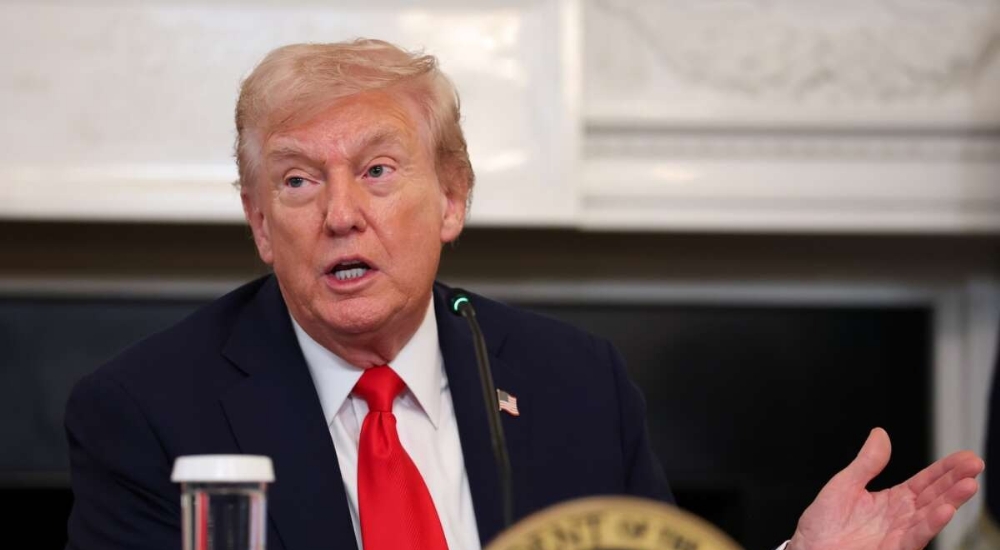
President Donald Trump announced the initiative on Sunday, describing it as a humanitarian gesture for “neutral and innocent” countries whose ships have been trapped in the contested waterway since the U.S.-Iran war began.
“They are victims of circumstance,” Trump wrote on Truth Social, adding that many vessels were running critically low on food, water and supplies for their crews.
U.S. Central Command said the operation would deploy guided-missile destroyers, over 100 land and sea-based aircraft, multi-domain unmanned platforms and 15,000 service members. However, military experts and shipping executives cautioned that the plan raises more questions than it answers.
Rather than directly escorting merchant ships, the operation appears to rely on a broad U.S. military presence in and over the strait to deter Iranian attacks on commercial vessels.
Advertisement
“It takes both sides to unblock — not just one,” Bjorn Hojgaard, CEO of ship manager Anglo-Eastern, told CNN.
Iran rejected the operation outright. The head of Iran’s parliamentary national security commission warned that any U.S. interference in the strait would constitute a ceasefire violation, while the commander of Iran’s armed forces said any foreign military force approaching the waterway would be attacked.
Iranian state media reported that two missiles struck a U.S. Navy vessel near Jask after it allegedly ignored warnings from the Islamic Revolutionary Guard Corps to halt. The claim has not been independently verified and U.S. officials have not publicly confirmed the incident.
Trump had warned that any interference with the humanitarian mission would be met with force. Despite the rising tensions, he told reporters Sunday evening that diplomatic talks with Iran were going “very well.” Iran separately submitted a 14-point peace proposal through Pakistani mediators, though no agreement has been reached.
The Strait of Hormuz has been largely closed since March, when Iran declared it shut in retaliation for U.S. and Israeli airstrikes that killed Supreme Leader Ali Khamenei.
Advertisement
Before the war, the waterway carried roughly a fifth of the world’s seaborne oil trade.
Hundreds of vessels and an estimated 20,000 seafarers have since been stranded in the Persian Gulf, with crew members describing seeing intercepted drones and missiles explode over the water as their ships run low on essential supplies.