
UN Security Council Approves Trump’s Gaza Peace Plan
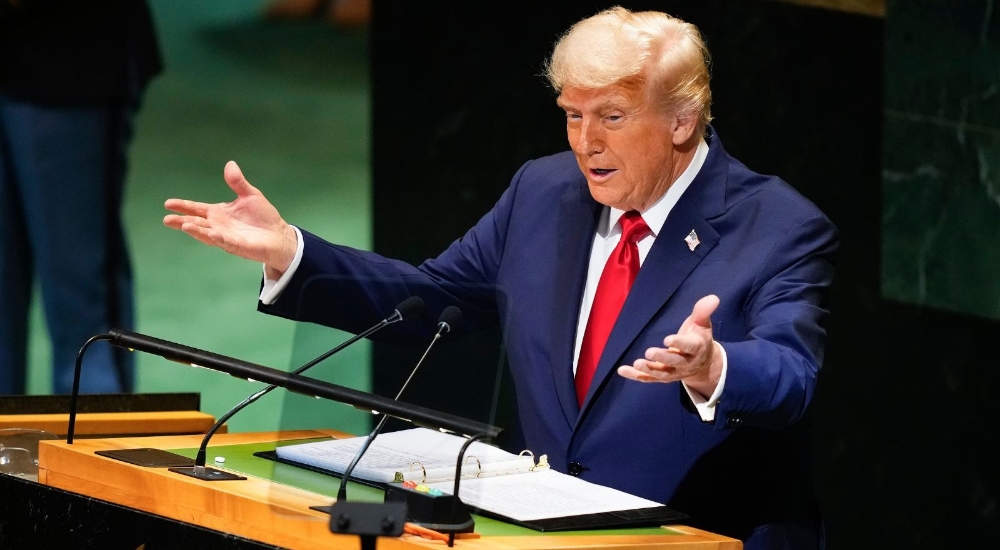
The United Nations Security Council on Monday approved President Donald Trump’s Gaza Peace Plan transitioning from the fragile ceasefire in the enclave to a long-term political settlement and reconstruction.
The 15-member council voted 13–0 in favour of the resolution, with Russia and China abstaining, opting not to exercise their vetoes.
The decision grants international legitimacy to Trump’s 20-point plan, parts of which informed the ceasefire that took effect last month.
Trump hailed the vote in a statement on social media, calling it “an incredible milestone,” and announced that the newly established “Board of Peace”—a transitional authority created under the resolution—would be chaired by him.
“Congratulations to the world on the incredible vote … acknowledging and endorsing the Board of Peace,” he wrote, adding that membership details would emerge in the coming weeks.
According to the adopted text, the resolution also authorizes deployment of an International Stabilization Force (ISF) in Gaza under unified command, tasked with securing the territory, protecting civilians, assisting humanitarian delivery and overseeing demilitarization.
Advertisement
US Ambassador to the UN Michael Waltz said the force would include peacekeepers from a coalition of countries, including several Muslim-majority states such as Indonesia and Azerbaijan.
He described the resolution as critical to preventing renewed conflict, warning that “a vote against this resolution is a vote to return to war.”
The plan includes provisions for disarmament of Hamas and other armed factions, supervision of Gaza’s reconstruction and support for a technocratic Palestinian committee to manage civil administration during reforms of the Palestinian Authority (PA).
The text also makes reference to a future pathway to Palestinian statehood once reforms are completed and redevelopment advances.
Still, uncertainty surrounds implementation, as the resolution lacks clarity on timelines and sequencing, raising questions about its enforcement.
Advertisement
Hamas rejected the measure, denouncing it as an attempt to impose international control over Gaza and as biased in favour of Israel. The group argued that granting the stabilization force internal authority “strips it of neutrality.”
Israeli Prime Minister Benjamin Netanyahu on Sunday, reiterated that Hamas would be disarmed “either the easy way or the hard way.”