
2027 Polls: Defence Minister Warns Of AI-Driven Misinformation, Cyber Attacks
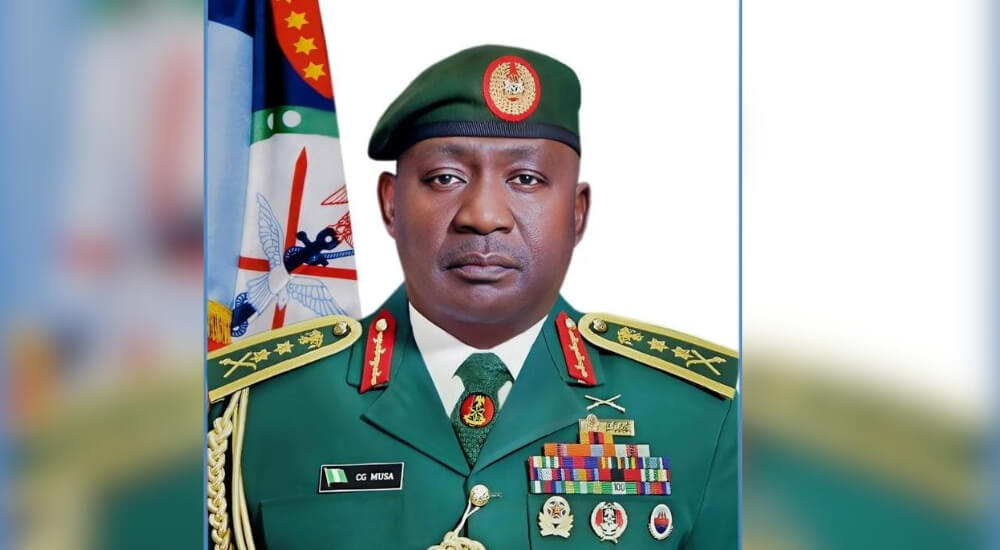
The Minister of Defence, General Christopher Musa (retd.), has warned that Nigeria’s 2027 general elections face emerging threats from artificial intelligence, cyber interference and coordinated misinformation capable of undermining public confidence in the democratic process.
Musa said election security could no longer be restricted to the protection of polling units, as emerging threats were increasingly targeting information, public trust and democratic institutions.
He stated this at the 2025 Blueprint Newspapers Impact Series and Awards Ceremony, where he spoke on the theme, “Security Challenges and the Integrity of Nigeria’s 2027 Elections.”
According to him, the changing nature of security requires Nigeria to expand its preparations beyond conventional election-day threats.
“Today’s threats rarely announce themselves with uniforms or conventional weapons. They emerge through cyberspace, spread through manipulated information, exploit economic hardship, inflame ethnic and religious divisions, and undermine confidence in public institutions,” Musa said.
He added that such threats were no longer limited to influencing how citizens vote but could determine whether they continued to trust the democratic process.
Advertisement
Musa said artificial intelligence had created new vulnerabilities, with technologies now capable of producing fabricated videos, cloned voices and manipulated images that could deceive large numbers of people within minutes.
“Today, sophisticated technologies can generate convincing but entirely fabricated videos, cloned voices and manipulated images capable of misleading millions of people within minutes,” he said.
The minister warned that the threat to elections could increasingly come from actors operating anonymously online rather than from individuals carrying weapons around polling stations.
“The greatest threat to an election today may not necessarily be the individual carrying a weapon near a polling unit. It may well be the anonymous actor operating behind a computer screen, deliberately manipulating information, exploiting social divisions and attempting to weaken confidence in democratic institutions,” he said.
Musa consequently called for election security to incorporate cyber resilience, strategic communication and measures to protect the integrity of information ahead of the 2027 polls.
Advertisement
He said Nigeria’s existing security challenges, including terrorism, violent extremism, banditry, kidnapping, organised crime and communal conflicts, would continue to require the attention of security agencies even as new digital threats emerged.
The minister said the experience of the 2023 general elections had shown that effective election security could not depend on last-minute deployment of personnel.
“Successful election security is not achieved through last-minute deployments. It is achieved through months of planning, intelligence-led operations, inter-agency coordination, effective communication and continuous assessment of emerging threats, and above all, through the confidence that citizens place in the institutions established to serve them,” he said.
He maintained that security planning for the 2027 elections must begin well before voting day.
“Security should never be viewed as an event. It is a process that begins long before campaigns commence and continues long after the final vote has been counted,” Musa said.
The minister also stressed that the Armed Forces of Nigeria would remain bound by their constitutional responsibilities and would not take sides in electoral contests.
Advertisement
“The Armed Forces of Nigeria are, first and foremost, defenders of the Constitution. Our mandate is to defend the sovereignty and territorial integrity of the Federal Republic of Nigeria and, where lawfully authorised, to provide Military Aid to Civil Authority in support of other security agencies,” he said.
According to Musa, military support for the electoral process must remain constitutional and non-partisan.
“The Armed Forces owe allegiance neither to political parties nor to individual candidates. Our allegiance is to the Constitution of the Federal Republic of Nigeria. Our loyalty is to the Nigerian people,” he said.
He said preparations for 2027 should focus on strengthening democratic resilience, including the ability of institutions to withstand pressure, citizens to identify misinformation and voters to participate safely regardless of political affiliation.
Musa proposed a six-pillar framework, which he called the SECURE Framework, for strengthening election security.
The framework covers Strategic Intelligence Integration, Electoral Cyber Resilience, Civil-Military Coordination, Unified Strategic Communication, a Responsible Information Environment and Engaged Citizens.
He said intelligence gathering and early warning systems should form the foundation of election security, while electoral systems, communication networks and other digital infrastructure must be protected from cyber intrusion and sabotage.
Musa also stressed the need for closer coordination among security and electoral institutions, arguing that institutional cooperation would be critical to managing emerging threats.
He said timely and accurate communication would also be necessary to counter misinformation before, during and after elections.
“Government alone cannot defeat misinformation; the media, technology companies, civil society organisations, educational institutions and citizens all share responsibility for promoting fact-based public discourse and rejecting narratives designed to incite violence or undermine confidence in democratic institutions,” he said.
The minister urged political parties and candidates to reject violence, while calling on the media to maintain accuracy and restraint in its coverage of the electoral process.
He also urged young Nigerians to reject attempts to recruit them for political violence or manipulation.
Musa said the Ministry of Defence would work with the Office of the National Security Adviser, Armed Forces, Nigeria Police Force, Department of State Services, Defence Intelligence Agency, Independent National Electoral Commission and other relevant institutions to prepare for the 2027 elections.
He said the objective should extend beyond conducting another election to preserving public confidence, national unity and democratic institutions.
“The election of a President, Governor or Legislator is undoubtedly important. But there is something even greater that must emerge victorious in 2027: Nigeria herself,” Musa said.
He added that the success of the electoral process would ultimately be measured by whether Nigeria remained united, secure and confident in its democratic institutions after the votes had been counted and winners declared.