
Adebayo, Morka Clash Over Hardship, Insecurity, Tinubu’s Reforms
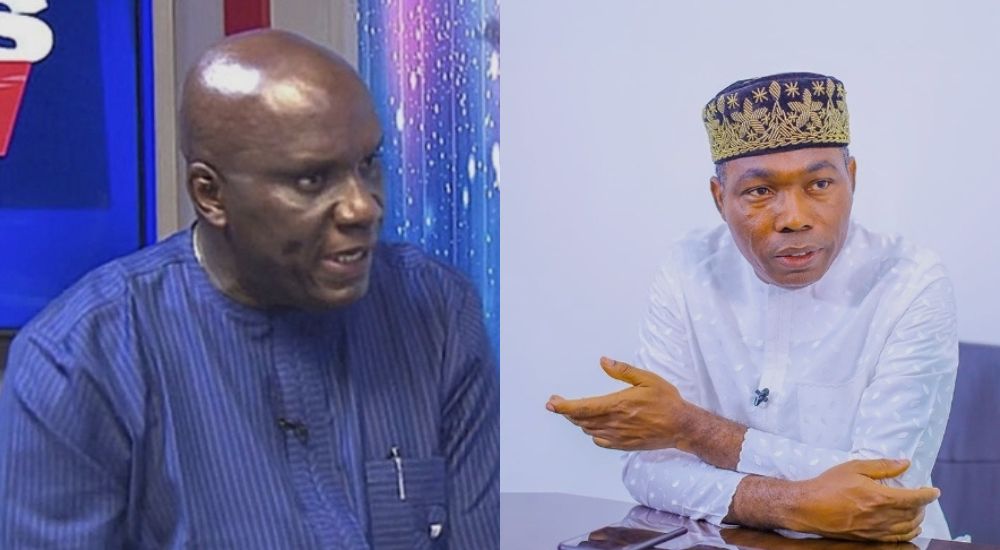
The Social Democratic Party (SDP) presidential candidate, Prince Adewole Adebayo, and the National Publicity Secretary of the All Progressives Congress (APC), Felix Morka, on Sunday clashed over hardship and insecurity that reforms embarked upon by President Bola Tinubu have inflicted on Nigerians.
Speaking on Channels Television’s Sunday Politics, they both spoke on whether Nigerians are better off today than they were when President Tinubu assumed office on May 29, 2023, with Morka defending the administration’s reforms while Adebayo argued that living conditions have deteriorated significantly.
Morka maintained that the Tinubu administration inherited an economy riddled with distortions, particularly in the foreign exchange market and fuel subsidy regime, and has since taken difficult but necessary steps to restore economic stability.
According to him, many of the economic indicators often cited as evidence of better conditions before 2023 were not reflective of reality because they were sustained by policies that distorted market fundamentals.
“I think that Nigerians have every reason to feel more confident about their country and therefore more hopeful about the future,” Morka said, arguing that the government had tackled longstanding structural problems and created conditions for sustainable growth.
Advertisement
He pointed to improvements in foreign reserves, increased investor confidence, stability in the foreign exchange market and positive assessments from international financial institutions as evidence that the reforms were yielding results
Morka also argued that stronger corporate earnings and rising investor activity indicated that the economy was gradually recovering and would eventually translate into improved living standards for ordinary Nigerians.
While acknowledging the hardship experienced by many citizens, he insisted that economic reforms often require time before their benefits are felt at the household level.
“What this government is doing is helping Nigeria reposition for growth that supports microeconomic good, and we are seeing that already,” he said.
Adebayo, however, rejected the government’s assessment, insisting that the daily realities facing Nigerians contradicted claims of economic progress.
Advertisement
“The fact of the matter is that no one’s life is better off, except those who are in government,” he said.
The SDP presidential candidate argued that the APC had been in power since 2015 and therefore could not separate itself from the economic difficulties confronting Nigerians today.
He said rising food prices, transportation costs, rent, healthcare expenses and declining purchasing power were clear indications that the reforms had failed to improve the welfare of ordinary citizens.
According to Adebayo, the government was relying on favourable macroeconomic statistics that did not reflect conditions on the ground.
He questioned the significance of economic indicators such as GDP growth and moderating inflation when millions of Nigerians continue to struggle with basic necessities.
“If the economy is working, you do not need to tell anyone that the economy is working because everyone is a participant in the economy,” Adebayo said.
Advertisement
When pressed while referencing data from the World Bank and the National Bureau of Statistics that poverty levels had increased since Tinubu assumed office, with millions more Nigerians reportedly living below the poverty line, Morka argued that the situation was not unexpected because economic reforms often have a gestation period before producing widespread benefits.
He explained that improvements in macroeconomic fundamentals such as corporate profitability, investment and fiscal stability do not automatically translate into immediate improvements in household welfare.
According to him, businesses require time to expand operations, create jobs and generate economic opportunities that can reduce poverty levels.
He also stressed that many of the factors used to measure multidimensional poverty – including access to healthcare, sanitation and basic social services – fall largely under the responsibilities of state and local governments rather than the federal government.
Adebayo dismissed that explanation and accused the administration of promoting what he described as “pseudo-economics.”
He argued that many of the government’s celebrated gains were the result of naira devaluation rather than genuine economic expansion and claimed that rising revenues had been eroded by inflation and declining purchasing power.
According to him, neither households nor businesses had benefited from the policies being implemented by the administration, pointing out, “The macroeconomic numbers being bandied around are in themselves faulty and incorrect.”
Adebayo also challenged claims regarding improvements in foreign reserves, arguing that a significant portion of the reserves was tied to borrowed funds and therefore could not be viewed as evidence of economic strength.
Morka strongly rejected the criticism, describing it as politically motivated and accusing the opposition of dismissing assessments from respected international institutions.
“That’s just oppositionist mischief speaking,” he said.
The APC spokesman maintained that international financial institutions, credit rating agencies and investors had acknowledged improvements in Nigeria’s economic outlook, adding that such assessments could not simply be
dismissed as manipulated figures.
Despite acknowledging a rise in attacks and killings in parts of the country, Morka defended the administration’s handling of security challenges, arguing that President Tinubu had committed substantial resources to combating terrorism, banditry and other forms of violent crime.
He said security agencies had received increased funding, equipment and operational support under the current administration and were recording greater successes against criminal groups.
According to him, the military and other security agencies were eliminating more terrorists and bandits than in previous years and had intensified operations across several troubled regions.
“Anytime a Nigerian is killed by these actors, it is tragic,” Morka said, while insisting that the government remained committed to restoring peace and security.
Adebayo, however, accused the administration of failing in its constitutional responsibility to protect citizens, noting, “It’s a failure of President Tinubu as Commander-in-Chief.”
He argued that the government had not paid sufficient attention to intelligence gathering and strategic leadership in addressing insecurity.
The SDP candidate also linked the worsening security situation to economic hardship, contending that poverty, unemployment and declining living standards were creating conditions that fuel criminality and instability.
According to him, the government’s economic policies had deepened social pressures and contributed indirectly to insecurity across the country.
While Morka urged Nigerians to remain optimistic and allow time for the administration’s policies to deliver broader benefits, Adebayo insisted that the current economic and security realities demonstrated that the government was yet to achieve the improvements promised under the Renewed Hope agenda and should therefore be voted out.