Buhari Was Troubled By His Failure To Stop Insecurity, Says Ex-Chief Of Staff
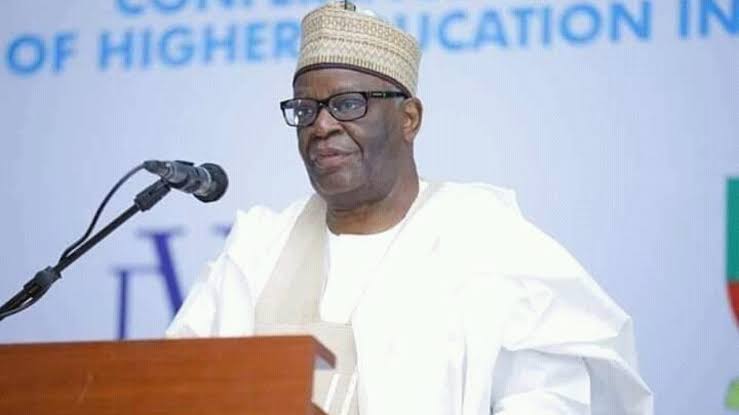
A former Chief of Staff to late ex-President Muhammadu Buhari, Professor Ibrahim Gambari, has said Buhari was deeply troubled by his inability to fully resolve the country’s security challenges before leaving office.
Gambari made the disclosure on Monday during an interview on Channels Television’s Politics Today programme.
He said although Buhari recorded notable successes against Boko Haram, including degrading the insurgents and reclaiming territories in the North-East, the persistence of insecurity in other parts of the country weighed heavily on him.
“The situation in the North-West, in the North-Central, even in banditry, it pained him a lot. And he felt, ‘I’ve done everything I can for these people.’
“He even said at some point that maybe the base was not good enough,” Gambari said.
Responding to questions on reports of coup rumours towards the end of Buhari’s administration, following recent claims by the Minister of Defence that such threats existed before President Bola Tinubu’s inauguration, Gambari said he was unaware of any such intelligence reaching Buhari through his office.
Advertisement
“Honestly, I’m not aware of that. The president had many sources of information. The Chief of Staff is probably a principal one, but not the only one. He could have received information that I was not privy to,” he stated.
Gambari added that Buhari, as a former military head of state who later became a democratically elected president, maintained strong ties with the armed forces but operated strictly within constitutional boundaries.
He also shed light on Buhari’s leadership style, describing him as loyal to individuals who played key roles in his personal and political journey.
He noted that those who benefited most from Nigeria were often the least committed to its development.
On power dynamics, Gambari said every president has a cabal, stressing that Buhari’s inner circle understood its limits.
Advertisement
He further revealed that Buhari did not believe in imposing a successor during the 2023 general election, because he believed that leadership choices should be left to party members and the electorate.
THE WHISTLER reports that Buhari served as Nigeria’s president from 2015 to 2023, after previously ruling as military head of state between 1983 and 1985.
His eight-year civilian administration was marked by persistent and evolving security challenges.
While early gains were recorded against Boko Haram in the North-East, insecurity later spread to the North-West and North-Central regions, with banditry and kidnappings becoming widespread.
By the end of his tenure, insecurity remained one of the most unresolved issues of his administration, despite recorded gains in counter-insurgency efforts.
Buhari died on July 13, 2025, at the age of 82 after a prolonged illness.