CBN Outlines Three-Phase Roadmap For Fintech Reform, Growth
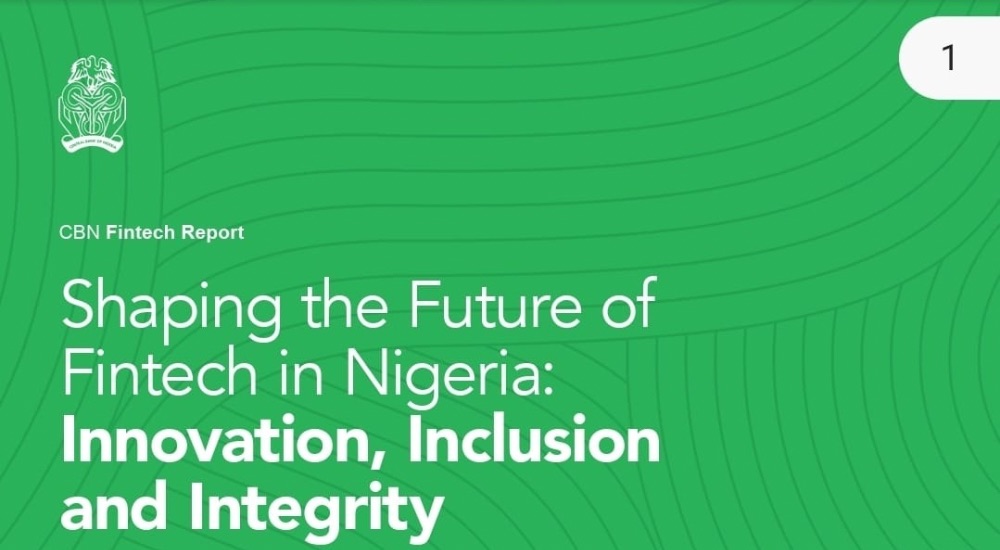
…Fintech Roadmap Will Encourage Innovation, Reinforce Digital Finance Integrity-Stakeholders
The Central Bank of Nigeria (CBN) has unveiled a comprehensive three-phase roadmap aimed at driving the growth, regulation, and inclusion of the country’s fintech sector.
The initiative lays out immediate, near-term, and longer-term priorities, signalling a coordinated approach to modernising digital finance and fostering innovation.
According to the CBN, the roadmap seeks to balance rapid fintech expansion with effective oversight, consumer protection, and financial system stability.
The first phase focuses on urgent interventions to strengthen coordination and regulatory engagement. Central to this is the establishment of a Fintech Engagement Forum under the leadership of the CBN, which will provide a structured platform for dialogue between regulators and industry stakeholders.
The apex bank also plans to issue an implementation roadmap for Open Banking, accompanied by a nationwide sensitisation campaign to prepare operators and consumers for the new framework.
Advertisement
Technical work will begin on a Single Regulatory Window and Smart Licensing Gateway, designed to streamline approvals and reduce bureaucratic delays in fintech operations.
Additionally, the CBN will coordinate a cross-agency review of Public Sector Bank (PSB) lending restrictions and digital ID access, with a deliberate shift in focus towards frameworks for digital bank authorisation rather than expanding PSBs.
In the second phase, the CBN will focus on regulatory experimentation, credit support, consumer protection, and regional collaboration. This includes launching a pilot cohort for Regulatory Sandbox 2.0, which will incorporate use cases for artificial intelligence (AI) and RegTech solutions, allowing fintechs to test innovations under controlled conditions.
The Bank will also operationalise a Fintech Credit Guarantee Window in partnership with development finance institutions (DFIs) to enhance access to funding for promising startups.
Guidance on data portability and consumer protection under the broader Open Finance framework will be issued to strengthen user rights. In a bid to foster cross-border fintech growth, the CBN plans to begin bilateral consultations on regulatory passporting with Ghana, Kenya, and Senegal, enabling compliant operators to expand regionally while maintaining oversight.
Advertisement
The final phase focuses on embedding governance structures, analytics, and regional alignment to ensure sustainable growth.
A Fintech Advisory Council will be formalised to oversee the implementation of reforms and recommend course corrections where necessary.
The CBN will also launch a Regulatory Engagement Platform and publish a public calendar of consultations, promoting transparency and structured dialogue with stakeholders. Supervisory analytics and early-warning tools will be embedded through SupTech pilots, enhancing regulatory monitoring and risk management.
The report shows that fintech operators are increasingly adopting artificial intelligence, particularly for fraud detection and credit scoring. These technologies are seen as vital for managing risk, improving lending decisions, and scaling services to millions of users.
Nigeria’s real-time payments infrastructure was also identified as a major strength. Respondents described it as a national asset and, in some respects, a global benchmark, highlighting the country’s leadership in instant payments and digital transaction processing.
Fintech firms further expressed strong support for regulatory passporting, which would allow compliant operators to expand more easily across borders while maintaining regulatory oversight and consumer protection.
Advertisement
However, sentiment around regulation remains divided. Half of the respondents described the current regulatory environment as enabling, while the other half said it is still restrictive.
The CBN Governor Olayemi Cardoso described the roadmap as a “strategic blueprint for sustainable fintech growth,” emphasising that innovation must be paired with strong governance and consumer protection.
He noted that Nigeria’s fintech ecosystem, now one of Africa’s largest, has the potential to expand financial inclusion, create jobs, and improve livelihoods if supported by clear and consistent regulation.
“The three-phase plan ensures that we act with urgency, experiment safely, and institutionalise reforms for the long term,” Cardoso said.
Cardoso described digital finance as a key driver of economic participation, job creation, and improved livelihoods across the country.
He noted that Nigeria’s fintech space has grown significantly over the past decade, evolving from a small cluster of start-ups into one of Africa’s most dynamic innovation ecosystems, despite global economic pressures.
“With improved stability of our currency and domestic economy, it is clearer than ever that financial innovation can advance inclusion at scale,” the Governor said.
He added that the report underscores the CBN’s commitment to supporting a vibrant fintech sector while protecting the stability of the financial system.
“By surveying fintech operators, financial institutions, and policymakers, we have gathered candid insights on what is working, what is not, and where we can do better,” he said.
According to Cardoso, the findings reveal both progress and persistent gaps, ranging from the need to modernise regulatory frameworks and payments infrastructure to supporting startups in reaching underserved and unbanked communities.
He also noted that the report places Nigeria’s fintech journey within the context of global industry trends.
The governor stressed that while innovation remains a strategic priority for the CBN, it must be pursued alongside strong governance, consumer protection, and effective risk management to sustain trust in the financial system.
The roadmap also reflects CBN’s broader 2026 agenda, which includes stabilising the banking system, modernising payments infrastructure, and leveraging technology to strengthen financial inclusion and oversight.
Industry stakeholders have welcomed the initiative. Olugbenga Agboola, founder of Flutterwave, described the roadmap as “a balanced framework that encourages innovation while reinforcing trust and integrity in digital finance.”
Tosin Eniolorunda, Group CEO of Moniepoint, said the phased approach positions Nigerian fintechs to scale responsibly and expand beyond domestic borders.
Ridwan Olalere, CEO of Lemfi, added that institutionalised collaboration between the CBN and the fintech sector could unlock regional opportunities while maintaining compliance and inclusion.
Reacting to the report, Flutterwave founder Olugbenga Agboola described it as a balanced effort that promotes innovation while prioritising trust, integrity, and financial stability. He said the openness to engagement and co-creation reflected in the report is encouraging and positions Nigeria as a potential global reference point for responsible fintech innovation.
Moniepoint founder and Group CEO, Tosin Eniolorunda, said the report comes at a defining moment for the industry, as many Nigerian fintechs pass the decade mark and shift from proving digital finance works to ensuring it is resilient, inclusive, and built on integrity.
He noted that the CBN’s focus on prudent oversight aligns with Moniepoint’s emphasis on compliance and governance, describing trust as the most valuable currency in digital finance.
Similarly, Lemfi CEO Ridwan Olalere said the report arrives at a pivotal time as Nigerian fintechs expand beyond the country’s borders.
He noted that the shared vision outlined in the report strengthens alignment between regulators and innovators, positioning Nigeria to help shape regional and global fintech standards.
He added that deeper, more institutionalised collaboration between the industry and the CBN could unlock significant opportunities for scaling innovation while maintaining integrity and inclusion.
The Fintech Report aligns with the CBN’s broader 2026 agenda, which focuses on banking system stability, tighter fintech regulation, inflation control, and the modernisation of payments infrastructure.
In a statement issued in January, the CBN Governor said the Bank would promote responsible innovation while ensuring strong consumer protection and financial integrity, stressing that innovation must be balanced with effective regulation to prevent systemic risks.
The agenda reflects the CBN’s continued reform-driven approach, with an emphasis on restoring confidence in the financial system, strengthening macroeconomic stability, and supporting sustainable economic growth.
-Chris Ugwu and Aisha Bello