
External Shocks Triggered Inflation Uptick, Not Policy Failure — Cardoso
…Says Inflation Spike Temporary, Vows To Sustain Reforms
…Assures Support For Banks Facing Regulatory, Legal Hurdles
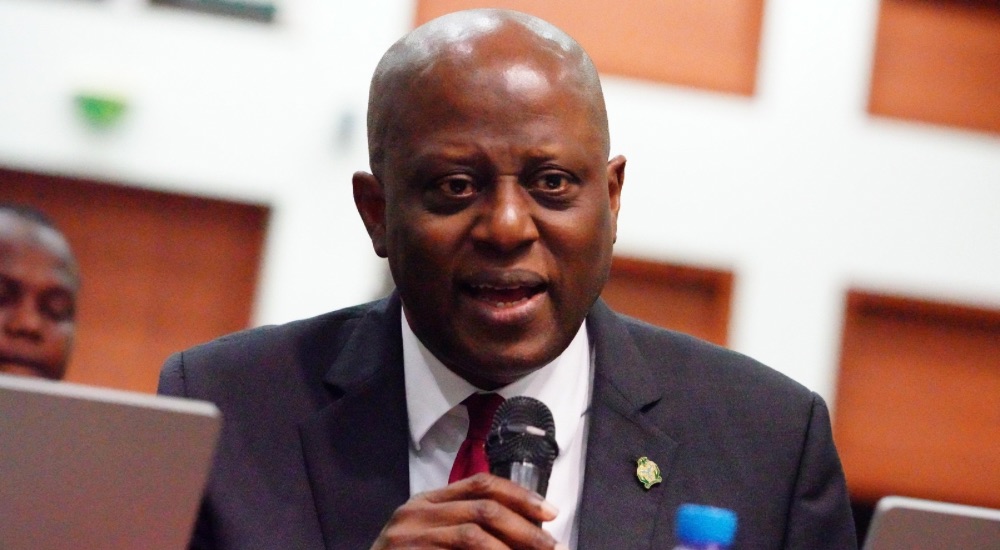
Governor of the Central Bank of Nigeria, Olayemi Cardoso, has attributed the recent uptick in inflation to external shocks rather than policy failures, insisting that the apex bank’s reform measures remain on track and are beginning to yield positive outcomes for the Nigerian economy.
Speaking during the post-Monetary Policy Committee briefing in Abuja, Cardoso said Nigeria had recorded 11 straight months of disinflation before the latest inflationary pressures emerged, stressing that the current rise in prices was temporary and largely driven by global and external economic disruptions.
The MPC noted that headline inflation rose to 15.69 per cent in April 2026 from 15.38 per cent in March, driven mainly by food prices.
Food inflation climbed to 16.06 per cent from 14.31 per cent, reflecting higher transportation and logistics costs as well as seasonal factors.
Advertisement
Core inflation, however, eased to 15.86 per cent in April from 16.21 per cent in the previous month, while the 12-month average inflation rate slowed to 19.16 per cent from 20.05 per cent.
The committee also highlighted spillover effects from the Middle East crisis, which have pushed up global energy and logistics costs. However, it said the impact on Nigeria had been muted due to earlier policy reforms.
But Cardoso said the apex bank has built sufficient buffers to shield the economy from severe shocks while maintaining policies aimed at restoring macroeconomic stability.
“So far, I think it is important to first of all remember where we are coming from,” Cardoso said.
“We have been coming from 11 straight months of disinflation and we believe that what we have now is something that has resulted from external shocks. But notwithstanding, we have been able to create buffers that have protected us during this period.”
Advertisement
The CBN governor said recent improvements in Nigeria’s economic outlook, including the sovereign ratings upgrade by S&P Global Ratings, were evidence that the country was implementing reforms capable of placing the economy on a sustainable growth path.
He said the central bank would continue with its current policy direction, noting that the authorities remained convinced that the disinflationary trend would return in due course.
“The answer clearly is that we will continue in that path. We will sustain the course,” he said.
“We have seen that as a result of adopting the right policies, we have consistently been on a path of disinflation. This we believe is temporary and in due course we should go back to the period that we had embarked upon.”
Cardoso reiterated that exchange rate stability remained central to the apex bank’s strategy, adding that stronger collaboration between monetary and fiscal authorities would also be critical in reducing inflationary pass-through effects.
He noted that the CBN alone could not stabilize the economy without support and coordination from the fiscal side.
Advertisement
“Key to everything we do is to ensure there is continued and enhanced collaboration with the fiscal side because one cannot do it on their own,” he added.
On the banking sector recapitalisation exercise, Cardoso described the process as largely seamless and reflective of growing investor confidence in Nigeria’s economy.
He disclosed that 33 banks had successfully met recapitalisation requirements, with domestic investors accounting for the bulk of participation.
According to him, the exercise demonstrated the resilience of Nigerian investors and their confidence in ongoing economic reforms.
“The banking recapitalisation exercise, which saw the emergence of 33 banks meeting that requirement, shows the resilience of Nigerian investors and the belief investors have in our economy,” he said.
Cardoso, however, acknowledged that some banks were still facing regulatory, judicial and legal impediments affecting their recapitalisation plans, assuring that the apex bank remained fully engaged with such institutions.
“The banks you talk about are banks that have been subjected to various forms of legal, regulatory and judicial issues,” he explained.
“They are ones that, with the fullness of time, will be in a position to move forward on that recapitalisation trajectory.”
He said it would be unfair to compare the affected institutions with others that had enjoyed uninterrupted timelines during the recapitalisation process, noting that some of the troubled banks lost valuable time due to regulatory interventions.
“However, we are fully on top of all the banks that are still on that road of travel. There is business continuing as usual, and we support all the efforts they are making towards getting over the regulatory and legal impediments in their way,” he stated.
The CBN governor also highlighted fresh efforts by the apex bank to improve credit access for Small and Medium Enterprises, saying new lending data already indicated rising appetite among commercial banks for SME financing.
He explained that expanding SME credit was not solely the responsibility of the central bank but required collaboration with institutions such as the Ministry of Industry, Trade and Investment, the Bank of Industry and development finance institutions.
Cardoso said the apex bank increasingly sees itself as a catalyst using its policy tools and convening powers to encourage financial institutions to lend more to smaller businesses.
He revealed that new credit facilities to SMEs rose significantly in April 2026 compared to March, especially within the retail segment of the market.
“I am very pleased to say that from what we have seen recently, the volume of new credits going to the SME sector has increased,” he said.
According to him, the shift may partly reflect efforts by banks to diversify their lending exposure away from large-ticket transactions.
The governor also referenced the recent Memorandum of Understanding signed between the CBN and the Nigerian Communications Commission, noting that the partnership would help address fraud risks and operational bottlenecks affecting SMEs and financial system users.
He added that the Global Standing Instruction framework remained another important tool designed to improve loan recovery and encourage more lending to smaller businesses.
Cardoso further disclosed that the apex bank had recently increased the single obligor limits for development finance institutions to enable them extend larger volumes of credit to SMEs.
He said the CBN was also exploring ways to encourage greater participation by foreign development finance institutions in supporting Nigeria’s small business sector.
“This is all work in progress. We are not there yet, but the willingness to ensure that small credit is directed at the SME sector is certainly increasing in leaps and bounds,” he said.
Cardoso, on Wednesday also announced that the MPC has retained the Monetary Policy Rate (MPR) at 26.5 per cent, citing persistent inflationary pressures and uncertainties in the global economic environment.
Besides retaining the benchmark interest rate at 26.5 per cent, the committee also maintained the asymmetric corridor around the MPR at +500 and -100 basis points.
The MPC further retained the Cash Reserve Ratio (CRR) for Deposit Money Banks at 45 per cent, Merchant Banks at 16 per cent, and non-Treasury Single Account public sector deposits at 75 per cent.
According to Cardoso, the committee’s decisions were anchored on a comprehensive assessment of risks to the economic outlook, particularly rising inflationary pressures driven largely by external shocks.
Cardoso urged banks to remain vigilant and take proactive measures against emerging risks following the conclusion of the banking sector recapitalisation exercise.
According to him, the MPC welcomed the successful recapitalisation exercise, which resulted in the emergence of 33 stronger banks with improved financial soundness indicators and greater capacity to support economic growth.
However, he warned that the strengthening of balance sheets must be matched with strong risk management frameworks to safeguard financial system stability.
“The MPC also noted with satisfaction the successful conclusion of the banking recapitalisation exercise, which culminated in the emergence of 33 banks with stronger financial soundness indicators enhancing their capacity to support the economy,” Cardoso said.
He added that the committee “urged the banks to remain proactive and adopt necessary measures to address potential post-recapitalisation risks towards preserving financial system stability.”
ENDS