FEATURE: The Wrong Lane Is Becoming The Right Way On Abuja Roads
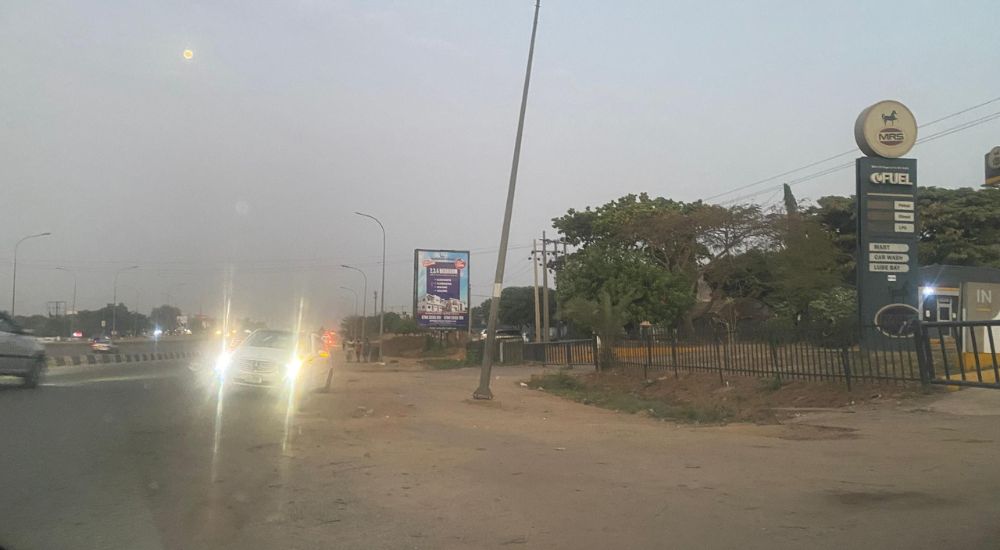
Drive through the Dutse-Sokale Roundabout at 8:00am on weekdays and you’ll think the wrong way has become a right lane. A keke NAPEP driver or commercial driver in a faded Golf car would swerve into oncoming traffic and stare at you as if you are the one coming from the wrong direction. When you honk, they don’t blink, and eventually, you just move.
In Abuja, the law of the road is no longer found in a handbook but rather what you can get away with, and this has sometimes resulted in accidents and loss of lives. The practice is common at the Building Materials Junction in Dei-Dei and along the Lugbe and Kubwa Expressways.
On February 17, a motorist driving against traffic along the Dutse-Sokale Junction in Dutse, Abuja, sped toward pedestrians attempting to cross the road. One of them narrowly escaped being hit. But the vehicle rammed into a tricycle (keke napep) moving on the lane and carrying two passengers. One life was lost in that incident.
A city-wide monitoring by THE WHISTLER across major axes in the FCT revealed an increasing pattern of one-way violations.
Areas observed include Sabon Lugbe (Lugbe Extension) and Airport Road, the Kubwa Expressway, particularly drivers exiting MRS Petrol Station toward Katampe and those from NNPC Station heading to Setraco Gate, Dutse axis, from the market through Sokale Roundabout to the police signboard, and Building Materials Junction in Dei-Dei leading to the Timber Market just before the U-turn.
Our observation in the Central Business District showed fewer one-way offenders. The Federal Road Safety Corps (FRSC), the Nigeria Police Force, and the Nigeria Security and Civil Defence Corps (NSCDC), appear to compel compliance more in the CBD.
Advertisement
“It’s Becoming a Norm”
Michael Agaji, a resident of Lugbe and private motorist, described the situation as a norm.
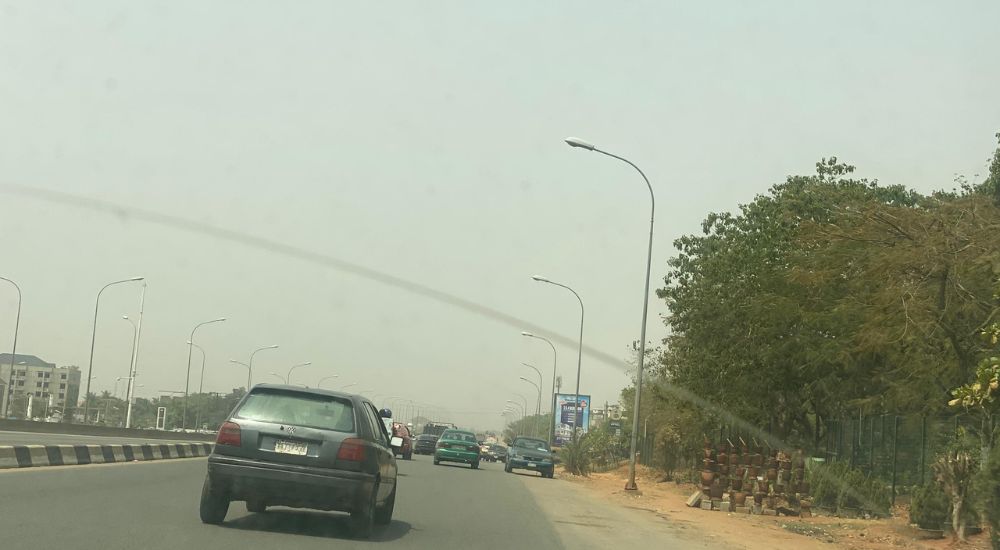
“It’s becoming a norm in Lugbe Extension, especially after Glory Dome (Dunamis),” he said.
Agaji blamed poor road design and impatience, noting that truck drivers are frequent offenders.
Advertisement
He cited ACO Estate residents who must drive as far as Gosa to make a legal U-turn before returning home. “In this economy, people think of their fuel while driving,” he said.
According to him, enforcement inconsistency also fuels the crisis: “When enforcement of law is enacted, people will definitely do the right thing. Law enforcement personnel always break the rule so others easily follow,” while noting the reckless highway crossings by commercial bikers (Okada).
Agaji said he has felt unsafe on that axis because some individuals consider themselves above the law.
“Some people are above the law, especially the Nigerian police and other law enforcement officers and the rich. But when nobody is above the law, surely people will follow the rule,” he said.
He urged the government to redesign U-turns in residential areas, introduce surveillance systems, and deploy more FRSC personnel to enforce traffic rules.
“Abuja does not have surveillance systems that capture offenders at all hours of the day,” he said.
Advertisement
‘Dutse Is Free for All
Agnes Peter, a trader in Dutse, said the problem is most visible around Dutse-Sokale Roundabout and near Dutse Market.
“I see a lot of one-way drivers, especially when there is traffic. You see drivers blocking the traffic by following one-way,” she said.
She noted a particular exit before the market that motorists use illegally to connect to Zenith Bank.
“It’s becoming very, very rampant,” she stressed.
Peter said the lack of enforcement encourages defiance, “The road safety officers are at Dutse Junction close to the Open University, but once you enter Dutse, you most likely don’t meet any road safety officer again till Ushafa. It’s just free for all.”
She added that commercial riders are major culprits.
“Okada riders and tricyclists are the biggest problem when it comes to one-way rides. They believe they can always enter different spaces.”
She recommended that officers should be deployed deeper into the axis or introduce speed cameras “so people know the government is watching.”
“Everyday” on Kubwa Expressway
A journalist, Omeiza Ajayi, also shared his experience on the Zuba-Kubwa stretch of Kubwa Expressway and Zuba-Tunga Maje Way.
He attributed the menace to impatience, poor road design, traffic congestion, weak enforcement, ignorance of rules, and attempts to evade security checkpoints.
“On some occasions, we nearly had a brush or collision,” he said.
According to Ajayi, the persistence of one-way driving boils down to “lack of genuine enforcement by those saddled with such mandate.”
He suggested that more personnel be deployed at flashpoints to ensure rapid response.
The Federal Road Safety Corps (FRSC) admitted that the situation “has gone bad” lately.
The Gwarinpa Unit Commander, Chukwuma Ikpeagha, told THE WHISTLER that one-way violations deteriorated significantly after the referral system for psychiatric evaluation was stopped in September 2023 under former Corps Marshal Dauda Ali Biu.
“Before now, we referred offenders to hospitals to be certified by medical doctors whether they were mentally fit or not,” Ikpeagha said, adding that “But it was stopped. No reason other than there was no need for it.”
According to him, that deterrent worked, “Before the referral stopped, people were always conscious of beating traffic. Now they just pay fine and go. It has gone bad.”
Offenders currently pay N50,000 and undergo public enlightenment sessions lasting between two days and one week.
“Some don’t care. They just want to pay and go,” he said.
Between January and February this year, 10 offenders were caught in the Kubwa Expressway corridor, six in January, four in February. Two of them caused accidents, though without casualties. Two were arraigned in mobile court.
Ikpeagha said his unit conducts public enlightenment at least nine times monthly, exceeding the official three times recommended.
“We go to motor parks and streets to educate drivers. The enlightenment is yielding results,” he maintained.
Sabotage Allegations
Beyond policy changes, Ikpeagha alleged operational sabotage.
“Most times when we come out to enforce, especially in Galadima, it’s the police who sabotage. They give drivers signal to go back when FRSC officers are on the road,” he alleged, adding that a particular officer stationed at Galadima Gate repeatedly signals offenders.
He said offenders often park and wait once they notice FRSC presence, moving only when officers leave.
To counter this, the corps has deployed electric power bikes during evening and rush hours, “We are doing our best,” he insisted.
The Setraco office, known as “Zebra,” focuses on emergency response, and arrives at accident scenes within two minutes, while enforcement remains under the Gwarinpa Unit and other corridors.
Ikpeagha also identified broader structural issues, saying, “Everybody is in a hurry. Nobody wants to be patient.”
He urged attitudinal change among commercial drivers who frequently park in the middle of the road.
He further suggested decentralising ministries from the Central Business District to satellite towns like Gwagwalada and Zuba to reduce rush-hour congestion.
“If they say resume referral, I will start,” he added, referring to the suspended psychiatric evaluation policy.