
Gadzama Sues LPDC, Challenges Three-Year Suspension Over Alleged Misconduct
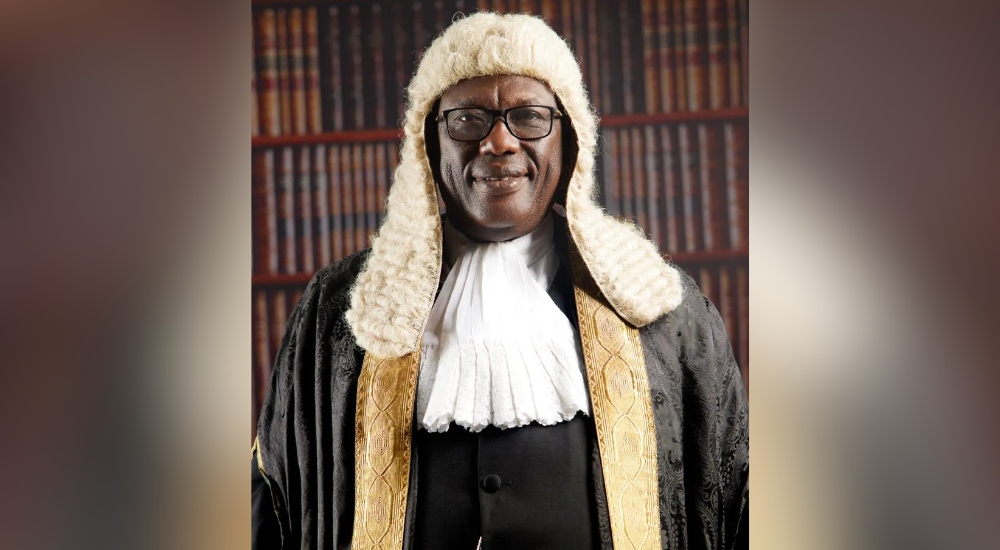
Senior Advocate of Nigeria, Chief Joe-Kyari Gadzama, has approached the Federal High Court in Abuja to challenge the three-year suspension imposed on him by the Legal Practitioners Disciplinary Committee over alleged professional misconduct.
Gadzama commenced judicial review proceedings after the LPDC found him guilty of professional misconduct arising from a longstanding dispute over compensation for victims of the 2001 Zaki-Biam military operation in Benue State.
The Federal High Court has granted him leave to pursue the judicial review, allowing the court to examine the legality, constitutionality and procedural fairness of the disciplinary proceedings.
The LPDC had suspended Gadzama for three years after finding him culpable of professional misconduct in relation to his handling of the compensation dispute.
Among the allegations against the senior lawyer was that he poached and hijacked clients who were already represented by another lawyer, acted for some judgment creditors who subsequently denied instructing him, and continued taking steps in the matter after some of the alleged clients had expressly disowned him.
Gadzama, however, is challenging both the findings and the procedure through which they were reached, arguing that the evidence, facts and applicable legal principles were not properly evaluated.
Advertisement
His application places the dispute before the Federal High Court in the exercise of its supervisory jurisdiction and raises broader constitutional questions about the disciplinary powers exercised against legal practitioners.
A central issue in the case is whether a disciplinary decision can be effectively reviewed where the existing legal framework does not provide an affected lawyer with an effective and operational appellate avenue.
The application also relies on the legal implications of recent judicial decisions, including the Supreme Court’s ruling in the case involving Ben Mene-Ejegi, which clarified the avenue for challenging decisions of the disciplinary body.
According to Gadzama’s case, an LPDC decision can have immediate and severe consequences for a lawyer’s professional career, yet there is currently no effective operational appellate mechanism for reviewing the merits and legality of such decisions.
The senior lawyer’s challenge consequently raises issues bordering on access to justice, fair hearing, judicial oversight and constitutional safeguards available to persons subjected to professional disciplinary proceedings.
Advertisement
Gadzama is also contesting aspects of the manner in which the proceedings were conducted, including the evaluation of evidence, procedural fairness, adequacy of notice, reliance on collateral judicial observations and allegations which he argues were not independently established before the LPDC.
He maintains that relevant documentary evidence supporting his position was not properly considered and that some of the conclusions reached by the disciplinary body were based on matters that required independent scrutiny and proof.
The suit is therefore asking the Federal High Court to determine whether enforcing disciplinary sanctions against a legal practitioner without an effective avenue for appellate review is consistent with constitutional guarantees of fair hearing, natural justice and the rule of law.
The case could also have wider implications for the exercise of disciplinary powers against lawyers, particularly where such proceedings result in suspension from legal practice.
The granting of leave by the Federal High Court enables Gadzama to proceed with the substantive judicial review proceedings while preserving his right to practise as a Senior Advocate of Nigeria pending the determination of the challenge.
Among the reliefs sought are orders concerning the legality of the LPDC’s decision and directives, the findings made against him and the constitutional validity of enforcing disciplinary sanctions in circumstances where an effective appellate mechanism is allegedly unavailable.
Advertisement
Gadzama has maintained that he respects the institutions of justice and remains confident in the Nigerian judicial system.
He has consequently chosen to pursue all lawful avenues available to him, insisting that the issues arising from the LPDC’s decision should be determined in accordance with the Constitution, principles of natural justice and the rule of law.