
Immediate Solar Import Ban May Worsen Nigeria’s Energy Crisis—-Experts
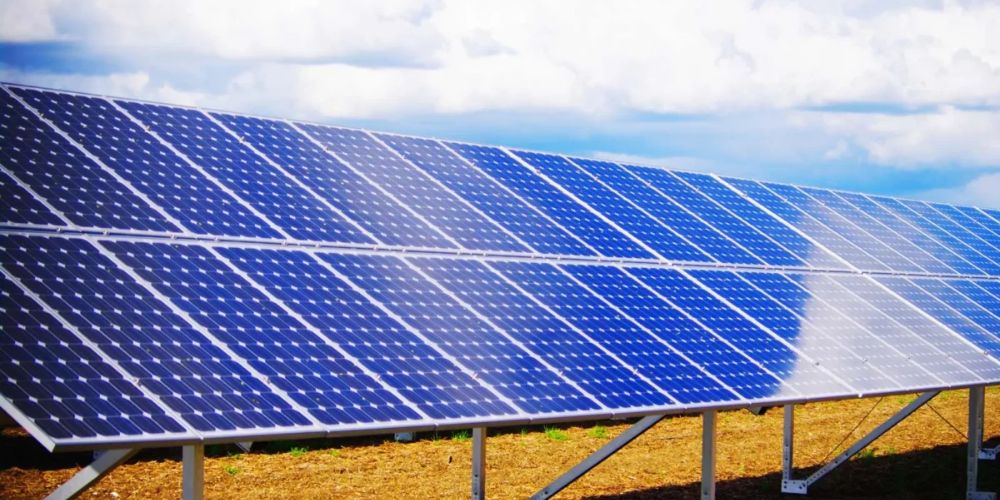
Experts in Nigeria’s renewable energy sector have warned that an immediate ban on solar panel imports could worsen the country’s electricity deficit, deepen energy poverty and make clean energy unaffordable for millions of households and businesses.
The experts, drawn from government agencies, private sector organisations, civil society groups, development partners and academia, instead urged the Federal Government to adopt a phased transition strategy supported by a comprehensive national renewable energy roadmap that would allow local manufacturing capacity to mature before any import restrictions are introduced.
The position was presented on Wednesday at the Lagos Solar Forum, organised under the Solar Power Nigeria campaign by the Secure Energy Project, where participants stressed that Nigeria’s current industrial capacity is insufficient to sustain a blanket prohibition on imported solar panels and related components.
They argued that while the Federal Government’s objective of promoting local manufacturing is commendable, implementing an immediate import ban without adequate domestic production would likely trigger shortages, increase the cost of solar systems and slow the country’s transition to renewable energy.
Speaking at the forum, the Nigerian Campaign Director of the Secure Energy Project, Joseph Ibrahim, said Nigeria remains heavily dependent on imported solar panels because local manufacturing is still at a nascent stage.
According to him, only two companies currently assemble solar panels locally using imported components, leaving the country without the production capacity required to meet rapidly growing demand.
Advertisement
He explained that the Secure Energy Project was established to identify policy bottlenecks slowing Nigeria’s clean energy transition and work with stakeholders to develop evidence-based policy recommendations capable of accelerating renewable energy adoption.
Ibrahim disclosed that deliberations from the forum would be compiled into a policy brief to be submitted to the Federal Government as part of ongoing engagement on the proposed import restriction.
He noted that demand for solar energy has increased significantly since the removal of petrol subsidy in 2023, as rising fuel prices have pushed households and businesses to seek cheaper and more reliable alternative energy sources.
He added that the anticipated gradual removal of electricity subsidies is expected to further accelerate the shift toward renewable energy, making it even more important to ensure uninterrupted access to affordable solar technologies.
“Banning imports before domestic manufacturing capacity is fully developed will create supply shortages, increase prices and make solar systems unaffordable for millions of Nigerians,” Ibrahim said.
Advertisement
He proposed a gradual transition period of between five and 10 years, modelled after Nigeria’s backward integration policy in the cement industry, under which imports would continue while government provides incentives for local production, technology transfer and investment.
According to him, Nigeria requires a comprehensive national renewable energy roadmap with clearly defined short-, medium- and long-term targets to guide investment, industrial development and policy implementation.
He also called for stronger collaboration between manufacturers, universities and research institutions to develop indigenous technologies, improve production efficiency and strengthen Nigeria’s renewable energy value chain.
In his opening remarks, Senior Director of the Secure Energy Project, Chris Kiff, said the forum was designed to strengthen collaboration among stakeholders already working to improve energy access across Nigeria.
He observed that while governments, development agencies, private companies and civil society organisations are implementing various renewable energy initiatives, many operate independently, reducing their collective impact.
Kiff said the dialogue would help stakeholders identify existing programmes, exchange experiences and align their efforts under a coordinated framework capable of accelerating Nigeria’s transition to cleaner energy sources.
Advertisement
He urged participants to build stronger partnerships, avoid duplication of projects and develop unified policy recommendations that would strengthen the sector’s influence on government decision-making.
Also speaking, Executive Director of the Global Initiative for Food Security and Ecosystem Preservation (GIFSEP), Dr David Michael Terungwa, described energy poverty as one of Nigeria’s most pressing development challenges.
Citing a 2025 World Bank report, he said approximately 86.8 million Nigerians currently lack access to electricity, the highest number globally, while unreliable power supply continues to constrain economic growth and reduce productivity.
Terungwa noted that the removal of fuel subsidy has significantly increased operating costs for households and businesses that rely on petrol-powered generators, making solar energy an increasingly viable alternative.
He, however, warned that introducing an immediate solar import ban would undermine that transition because virtually all solar panels, batteries, inverters and related accessories currently deployed in Nigeria are imported.
According to him, such a policy would increase the cost of renewable energy systems, slow solar adoption and worsen energy poverty across the country.
Rather than imposing immediate restrictions, Terungwa urged the Federal Government to introduce fiscal incentives for local manufacturers, support domestic assembly plants, expand access to affordable financing for renewable energy projects and gradually develop local production capacity before implementing import controls.
He also encouraged state governments to leverage the opportunities created by the Electricity Act 2023 by establishing state electricity markets and promoting decentralised renewable energy projects to improve electricity access.
Providing an overview of Nigeria’s energy investment landscape, Co-founder of the Africa Energy Tracker, Daniel Awolaja, said the country attracted about $100 billion in disclosed energy investments across 422 projects over the past decade, making it Africa’s second-largest destination for energy investments after South Africa.
Despite the substantial investment, he said Nigeria continues to face severe electricity shortages because funding has largely been concentrated in power generation, with inadequate investments in transmission, distribution and energy storage infrastructure.
Awolaja noted that although Nigeria has an installed electricity generation capacity of approximately 14 gigawatts, only about five gigawatts are consistently delivered through the national grid, leaving nearly 90 million Nigerians without reliable electricity.
He added that privately owned petrol and diesel generators now produce several times more electricity than the national grid, highlighting the country’s continued dependence on self-generation.
According to him, nearly 92 per cent of disclosed energy investments over the past decade have been directed to the oil and gas sector, while renewable energy and critical grid infrastructure have received only a fraction of total investment.