
INTERVIEW: Election-Related Uncertainty May Influence Investment Decisions — SEC DG
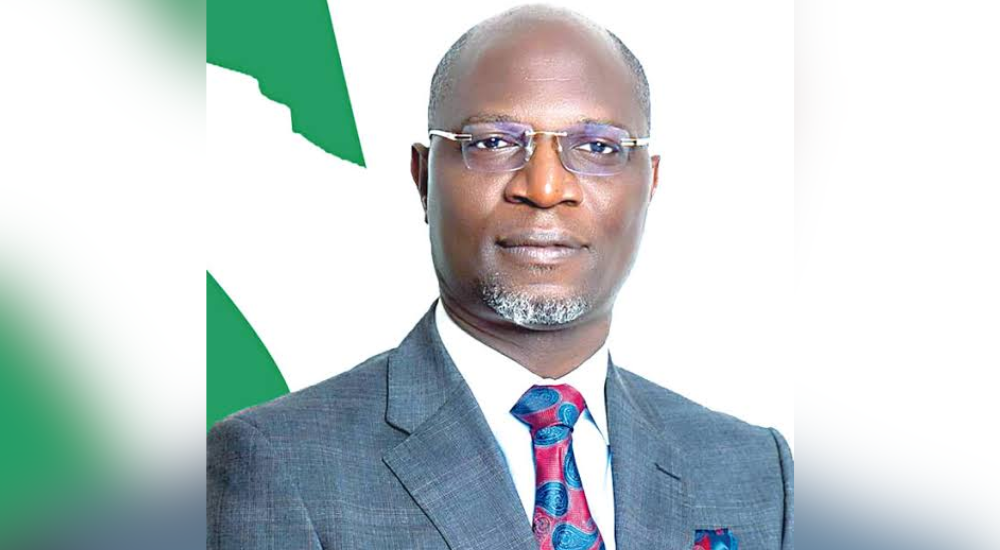
The Director-General of Securities and Exchange Commission (SEC), Dr. Emomotimi Agama, in this interview at Mid-Year Capital Market Review and Outlook organised by Arthur Steven Asset Management Limited, speaks on general issues affecting Nigeria’s capital market, Chris Ugwu of THE WHISTLER was there.
Since FTSE Russell put Nigeria’s Frontier upgrade on hold to monitor the impact of the new T+1 cycle on foreign portfolio flows, what specific operational benchmarks must the market meet in H2 to clear their concerns and secure the upgrade?
Let me first put the review in its proper context.
FTSE Russell’s decision to observe the market through the T+1 transition is not a setback; it is standard index-governance practice whenever a market undertakes a structural change of this magnitude. Nigeria went live with T+1 settlement on June 1, 2026 ahead of most frontier and several emerging markets and the index provider is simply verifying that the shortened cycle works as well in practice as it does on paper, particularly for foreign portfolio investors.
The benchmarks we are focused on delivering in the second half are clear. First, settlement efficiency: a sustained, near-zero trade fail rate under T+1, with full delivery-versus-payment discipline across custodians, brokers and the CSCS.
The early evidence since June is encouraging, and we intend to demonstrate at least a full quarter of clean settlement data. Second, funding and FX workflow: foreign investors must be able to complete their currency conversion and funding within the compressed cycle without being forced into pre-funding.
Advertisement
We are working closely with the CBN, custodians and settlement banks to ensure same-day FX execution and confirmation for portfolio flows.
Third, repatriation certainty: the Certificate of Capital Importation process must be fully electronic, timely and predictable, so that entry and exit are equally seamless.
The Commission has formally engaged the CBN on CCI modernisation precisely to align the regime with T+1 realities. Fourth, custodian and global-intermediary readiness: affirmation and confirmation cut-off times that work for investors in London and New York time zones.
If the market demonstrates these four things consistently and I am confident it will, the operational case for reclassification becomes compelling.
We are engaging FTSE Russell continuously and providing verifiable data, not assurances.
Advertisement
With the NGX up 47.4 per cent in H1 but inflation and energy costs rising, do you expect corporate margins to compress in H2, and should investors now pivot to high-yielding fixed income, or is there still room for growth in equities?
It is important to separate the short-term noise from the structural trend. Yes, inflation ticked up modestly between March and May, largely reflecting the pass-through of the fuel price shock linked to the Middle East conflict.
But the June reading of 15.91 per cent shows the disinflation path reasserting itself and remember, this time last year headline inflation was above 25 per cent. Core inflation has nearly halved year-on-year.
So the direction of travel remains favourable, even if the pace has moderated.
On margins, the picture will be differentiated rather than uniform. Companies with pricing power, dollar-linked revenues or energy self-sufficiency will defend margins; energy-intensive manufacturers with weak pricing power will face pressure.
That is precisely why the 47.4 per cent rally has not been indiscriminate, the market has been rewarding earnings quality, recapitalised balance sheets and dividend visibility.
As a regulator, I do not direct investors into asset classes. What I will say is that the question is not equities or fixed income, it is both, in proportions that match each investor’s horizon and risk tolerance.
Advertisement
Fixed income yields remain attractive in real terms as disinflation continues, and a laddered bond allocation is a sensible anchor. But equities are not exhausted: the banking sector enters H2 with the strongest capital base in its history, landmark listings are in the pipeline, and T+1 plus improving foreign participation are structural positives.
Disciplined diversification, not wholesale rotation, is the prudent posture.
Looking back at the first half of 2026, how would you assess Nigeria’s macroeconomic performance, and what has been its most significant impact on the capital market?
The first half of 2026 confirmed that Nigeria’s macroeconomic reforms are bearing durable fruit. GDP expanded by 3.9 per cent in the first quarter, headline inflation at 15.91 per cent in June is roughly ten percentage points lower than a year earlier, the naira has traded within a stable band around N1,380 to the dollar, and external reserves have benefited from firmer oil prices and improved production.
Food inflation touching single digits earlier in the year was a milestone many thought impossible.
For the capital market, the most significant impact has been the restoration of confidence and the return of real returns. The All-Share Index gained 47.4 per cent in the half year, total market capitalisation now stands at approximately N217 trillion, and crucially, this performance has been underpinned by earnings, recapitalisation and reform, not speculation.
Exchange-rate stability has been the single most important variable: it has allowed foreign investors to re-enter with confidence in their exit, and it has allowed domestic institutions to plan.
A stable macro foundation, married to our own market reforms the ISA 2025, T+1 settlement and a strengthened disclosure regime is what converted macroeconomic recovery into capital market performance.
Given the current economic environment, what is your outlook for equities, fixed income securities, and alternative investments in the second half of 2026?
For equities, I expect a more selective but still constructive second half. After a 47.4 per cent first-half advance, some consolidation is natural and indeed healthy.
The drivers remain intact: recapitalised banks deploying fresh capital, a strong pipeline of new listings, improving foreign participation and half-year earnings that we expect to be broadly resilient.
For fixed income, the environment remains rewarding. With disinflation continuing and yields still elevated, real returns are positive across much of the curve, and we expect vibrant sovereign, sub-national and corporate issuance, including infrastructure and green instruments. For alternatives, this is the most exciting frontier: our regulatory frameworks for digital assets under the ISA 2025 and the Accelerated Regulatory Incubation Programme, alongside REITs, infrastructure funds and commodities, are opening credible new channels.
Tokenised funds and asset-backed instruments will feature more prominently before year-end. The overarching theme for H2 is breadth, the market is no longer a one-asset-class story.
Inflation, high interest rates, and exchange rate volatility remain major concerns for investors. How do you see these variables evolving over the coming months, and what implications will they have for the capital market?
Our reading is that the worst is well behind us. The uptick in inflation between March and May was principally an external shock, the fuel-price pass-through from the Middle East conflict, rather than a failure of domestic policy, and June’s moderation to 15.91 per cent suggests the disinflation trend is resuming, supported by base effects, a stable naira and the harvest season ahead.
We expect gradual further easing into year-end, though food prices remain the swing factor.
On interest rates, the Central Bank has rightly prioritised stability; as inflation resumes its descent, room for measured easing should emerge, which historically is constructive for equity valuations and for duration in fixed income.
On the exchange rate, the naira’s stability this year has been the anchor of investor confidence, and improved reserves and oil receipts give the authorities credible capacity to sustain it.
For the capital market, the implication is straightforward: a disinflating economy with a stable currency and gradually normalising rates is among the most favourable backdrops an emerging capital market can ask for.
Investors should nonetheless remain diversified, because global shocks, as March demonstrated do not send advance notice.
The SEC has implemented several reforms aimed at strengthening market integrity and investor protection. Which reforms have had the greatest impact so far, and what additional initiatives should investors expect before the end of the year?
Three reforms stand out. First, the Investments and Securities Act 2025, which modernised our entire legal architecture, bringing digital assets within the regulatory perimeter, strengthening enforcement powers, outlawing Ponzi schemes with severe sanctions, and giving investors a far stronger protective framework.
Second, the transition to T+1 settlement on June 1, which places Nigeria in the vanguard of global market infrastructure and reduces counterparty risk for every investor.
Third, our digital assets regime including the Accelerated Regulatory Incubation Programme which has begun admitting virtual asset service providers into supervised operation rather than leaving Nigerians exposed to an unregulated shadow market.
Before year-end, investors should expect further implementation of our Capital Market Liquidity Roadmap; continued rollout of the recapitalisation of market operators to ensure intermediaries are as strong as the market they serve; deepened sustainability and ESG disclosure standards; enhanced RegTech-driven supervision; and continued expansion of regulated digital asset admissions.
Investor protection is not an initiative for us, it is the organising principle of everything the Commission does.
Foreign investor participation in the Nigerian capital market has shown signs of improvement. What more needs to be done to attract sustainable foreign capital inflows and deepen market liquidity?
Foreign investors return for three things: macro credibility, exit certainty and market depth. The first two have improved markedly, the naira is stable, reserves are stronger, and repatriation has normalised.
What remains is to institutionalise these gains. That means completing the modernisation of the Certificate of Capital Importation regime so that it is fully digital and aligned with T+1 timelines; securing our return to the global frontier indices, which unlocks passive flows; growing free float in our largest listed companies so that institutional-scale capital can enter and exit without moving prices; and expanding the market-making and securities-lending framework under our Liquidity Roadmap.
Beyond portfolio flows, we are also building durable channels, the diaspora investment framework, cross-border distribution arrangements for landmark African offerings, and regional regulatory harmonisation through WASRA and IOSCO’s Africa/Middle East Regional Committee.
Sustainable foreign capital follows markets that are liquid, rules-based and connected.
That is exactly the market we are constructing.
Investor confidence is essential for market growth. In your view, what are the biggest factors currently influencing investor sentiment, and how is the SEC addressing them?
Sentiment today is shaped by four factors: macroeconomic stability, corporate earnings, regulatory credibility and increasingly, the approaching electoral cycle.
On the first two, the fundamentals speak for themselves. On regulatory credibility, our task is to be predictable, transparent and firm: enforcing disclosure standards, sanctioning market abuse, dismantling Ponzi schemes under the expanded powers of the ISA 2025, and ensuring that every naira an investor commits is protected by a functioning rulebook.
On the electoral cycle, our message is that Nigeria’s market institutions have matured through multiple election cycles; policy continuity in market regulation does not depend on the political calendar.
We are also addressing the confidence question at its root, financial literacy and inclusion. A market trusted by millions of domestic retail and institutional investors is structurally more stable than one dependent on any single class of capital.
Our investor education programmes, the national savings agenda and technology-enabled access are all directed at that outcome.
Technology is rapidly transforming financial markets worldwide. How is the SEC positioning Nigeria’s capital market to leverage innovation while safeguarding investors and maintaining market stability?
Our philosophy is simple: regulate innovation, do not strangle it, but never confuse innovation with impunity.
The ISA 2025 gave us the statutory foundation by recognising virtual assets as securities where appropriate. On that foundation we have built the Accelerated Regulatory Incubation Programme, through which digital asset operators enter supervised operation; a tiered authorisation framework for crypto exchanges proportionate to their risk; and active collaboration with the NFIU and security agencies on the integrity of the sector.
We are equally investing in our own capability, RegTech and supervisory technology that allow the Commission to monitor the market in real time, and frameworks for the responsible deployment of artificial intelligence in market operations and surveillance.
Tokenisation is a particular priority: tokenised money market funds and digitised instruments can dramatically widen retail access.
And through the Africa Virtual Asset Summit and our WASRA leadership, we are ensuring Nigeria does not merely adopt global standards but helps write them for the continent.
Innovation with investor protection at its core — that is the Nigerian model.
What sectors or investment opportunities do you believe will offer the strongest potential returns for investors in the second half of 2026, and why?
While the Commission does not recommend specific investments, the structural themes are visible to any careful observer.
Banking enters the second half with historically strong capital following the recapitalisation exercise, and the deployment of that capital into risk assets should support earnings over the next several years.
Energy and oil and gas benefit from firm crude prices, rising domestic refining capacity and the gas-industrialisation agenda. Agriculture and agro-allied businesses stand at the threshold of significant capital market financing, a theme underscored at the recent Niger Delta Agricultural Development and Investment Summit, supported by improving food production and government priority.
Infrastructure, through bonds, sukuk and specialised funds, offers long-duration, inflation-conscious returns as sub-national and corporate issuers come to market. And telecommunications and technology continue to ride tariff adjustments and digital adoption.
The common thread is real-economy earnings backed by reform, investors should study fundamentals, not chase momentum.
What portfolio positioning strategies would you recommend to institutional and retail investors seeking to balance risk and returns amid prevailing economic uncertainties?
Without offering individual investment advice, the principles are timeless.
First, diversify across asset classes, a blend of quality equities, government and investment-grade corporate fixed income, and a measured allocation to alternatives suited to one’s sophistication.
Second, ladder fixed income maturities to capture today’s elevated yields while retaining flexibility as rates normalise.
Third, in equities, favour earnings quality, strong governance and dividend capacity over speculation, the second half will reward selectivity more than the first half rewarded beta.
Fourth, maintain liquidity discipline; T+1 has made our market more efficient, but investors should never be forced sellers.
Fifth, retail investors in particular should use collective investment schemes, mutual funds, index-tracking products and regulated digital platforms, rather than concentrating risk in single names.
And finally, deal only with operators registered with the Commission. If a return sounds too good to be true, it is.
The ISA 2025 has given us sharper teeth against Ponzi schemes, but the first line of defence is always the investor’s own vigilance.
As we look beyond 2026, what is your vision for the Nigerian capital market, and what key milestones should stakeholders expect from the SEC in achieving a more resilient, competitive, and globally attractive market?
My vision is a Nigerian capital market that finances Nigeria’s transformation, a market measured not only in capitalisation but in the roads, farms, factories, homes and enterprises it funds; a market that is Africa’s deepest and most trusted, and a global destination in its own right.
The Capital Market Master Plan 2026–2036 is our blueprint, and stakeholders should watch for concrete milestones: restoration and progression through the global index classifications; landmark listings that broaden the market’s industrial base, including pan-African offerings anchored on the NGX; a commodities ecosystem that finally monetises Nigeria’s agricultural and mineral wealth; a fully-fledged digital asset and tokenisation framework that makes Nigeria the continent’s centre for regulated innovation; sub-national and infrastructure financing at scale; and a dramatic deepening of domestic institutional and retail participation through the national savings agenda.
Underpinning it all is institutional excellence, a Commission with the people, technology and standards to regulate a market ten times its current size.
By God’s grace, and with the collaboration of all stakeholders, that is where we are headed.
How will the electioneering period influence market performance?
Electoral cycles introduce a premium of caution, that is true in every democracy, and Nigeria is no exception. Historically, our market has seen some foreign investors adopt a wait-and-see posture in the quarters preceding general elections, with domestic institutions providing the counterweight.
But I would caution against over-reading history. This cycle is different in important respects: the macroeconomic foundation is stronger than at any comparable pre-election period in over a decade, domestic institutional capital, pension funds, insurance, collective schemes, is far deeper and now anchors the market, and the regulatory framework under the ISA 2025 is more robust.
Markets price policy uncertainty, not elections per se; where reform credibility is sustained, the electoral discount narrows.
The Commission’s own role is to guarantee that market regulation remains entirely insulated from the political calendar, rules, enforcement and infrastructure will function identically before, during and after the elections.
Investors with medium-term horizons have often found pre-election caution to be an opportunity rather than a warning.
Is the market overpriced or underpriced?
It is not the place of the regulator to call price levels, that is the market’s job, and it does it every trading day. What I can speak to is the quality of the price-discovery process.
The first-half advance was not a valuation bubble inflated by leverage or speculation; it was driven by recapitalised banks, recovering corporate earnings, currency stability and the return of foreign capital.
On conventional measures, Nigerian equities continue to trade at multiples that are undemanding relative to emerging-market peers, and dividend yields on many quality names remain meaningful even after the rally.
That said, a 47.4 per cent half-year gain means the easy repricing is done; from here, prices must be earned by earnings.
Some names have run ahead of fundamentals, others still lag them, which is precisely why investors should be selective and analytical rather than treat the index as a single trade.
Our concern as a regulator is that disclosure is full, trading is fair and manipulation is punished, so that whatever price the market sets is an honest one.
What are the three sectors that hold the highest yield potential in your view?
Framed as structural potential rather than investment advice, three sectors stand out. First, banking and financial services: the recapitalisation exercise has left the sector with unprecedented capital strength, and as that capital is deployed into credit and risk assets, the earnings and dividend trajectory over the next two to three years is compelling. Second, energy, oil, gas and the refining value chain: firm global prices, rising domestic production, expanding refining capacity and the gas-to-industry agenda create multiple earnings engines, with significant listing activity anticipated from the sector.
Third, agriculture and agro-industry: this is the sleeping giant. With food production recovering, government priority evident, including the recent national focus on Niger Delta agricultural investment, and the capital market developing dedicated instruments from commodity exchanges to agro-bonds and specialised funds, the sector’s financing gap is becoming its opportunity.
I would add infrastructure as an honourable mention for fixed income investors: sub-national and corporate infrastructure issuance offers some of the best risk-adjusted yields available.
There is a recent call for specialised commercial tribunals to sit on investment and business cases. What is your view?
I am firmly supportive of specialised commercial adjudication, indeed, the capital market already demonstrates its value.
The Investments and Securities Tribunal, strengthened under the ISA 2025, exists precisely because capital market disputes demand speed and technical expertise that generalist dockets cannot always provide.
Justice delayed in commercial matters is capital destroyed: an enforcement action or shareholder dispute that takes a decade to resolve chills investment far beyond the parties involved.
The evidence globally is unambiguous, jurisdictions with specialised commercial courts, from London to Singapore to Dubai, attract capital partly because investors can price legal risk with confidence.
So the broader call for specialised commercial tribunals aligns entirely with what the capital market has learned: expert judges, strict timelines, and procedural rules built for commercial reality.
My counsel would be to design them for enforcement of judgments as much as speed of hearings, to resource them with genuinely specialist personnel, and to preserve the existing jurisdiction of the Investments and Securities Tribunal over securities matters so that the architecture is complementary rather than overlapping.
Anything that shortens the distance between right and remedy strengthens investor confidence in Nigeria.
What are the biggest risks that could derail the market in the second half of the year?
I would identify five, in candour. First, external shocks, the first quarter reminded us that geopolitical events can move oil, fuel prices and inflation with little warning; a renewed escalation would test the disinflation path.
Second, a reversal in exchange-rate stability, which remains the single most important variable for foreign participation; the recent shift by some large corporates toward dollar-indexed domestic pricing is a dynamic we are watching closely for its inflation pass-through.
Third, electoral-cycle sentiment, which can amplify volatility even when fundamentals are unchanged.
Fourth, valuation complacency, after a 47.4 per cent half-year gain, investors chasing momentum rather than earnings create pockets of fragility.
Fifth, and within our own remit, operational risk in the new T+1 environment, which is precisely why our surveillance of settlement performance is intense. Against these risks stand strong mitigants: robust reserves, a recapitalised banking system, deep domestic institutional capital and a modern regulatory framework.
Our posture is vigilance without alarm, the risks are real, but they are manageable and being managed.
Foreign portfolio investors have gradually returned to the Nigerian market. What additional steps are needed to sustain and deepen foreign investment inflows?
The return of foreign portfolio investors validates the reforms, but sustaining the flow requires converting cyclical attraction into structural commitment.
Four steps matter most. First, complete the plumbing: a fully digital, time-bound Certificate of Capital Importation process aligned with T+1, and guaranteed FX workflow for portfolio entry and exit, we are engaged with the Central Bank on exactly this.
Second, index restoration: regaining our frontier classification unlocks passive and mandate-constrained capital that cannot currently allocate to Nigeria regardless of how attractive our fundamentals are.
Third, depth and free float: we are pressing for larger free floats in major listings and building market-making and securities-lending capacity under the Liquidity Roadmap, so that institutional-scale orders can be absorbed. Fourth, product breadth: foreign capital increasingly wants more than equities, sovereign and corporate debt, infrastructure instruments, sustainability-linked products and, for a growing class of investors, regulated digital assets. Beyond these, consistency is the ultimate magnet: investors reward markets that keep their rules stable and their promises kept.
That is the reputation we are building, deliberately.
What is the outlook for initial public offerings (IPOs), new listings and corporate bond issuances during the remainder of 2026?
The pipeline is the strongest I have seen in my time at the Commission. On equities, the combination of a rerated market, successful recapitalisation offers that demonstrated deep domestic demand, and a modernised issuance process under the ISA 2025 has changed issuers’ calculus, companies that spent years avoiding the public market are now preparing for it. We anticipate significant listing activity in the second half and into 2027, including from the energy, telecommunications and financial sectors, and we are working toward landmark, large-ticket listings that will be transformational for the market’s depth, with frameworks that allow broad African and diaspora participation anchored on the NGX.
On corporate bonds, activity is already vibrant and should accelerate: our recent review of the commercial paper and bond approval data shows issuers returning to the debt market at scale, and as rates begin to normalise, corporates will increasingly term-out expensive short-term debt into bonds.
Expect strong sub-national issuance for infrastructure, growth in sukuk and green instruments, and continued innovation in asset-backed securities.
The Commission’s role is to ensure the approval process is efficient without ever compromising disclosure, speed and integrity together.