INTERVIEW: Interest Rate Uncertainty Fuelling Equity Market Rally — Mike Eze
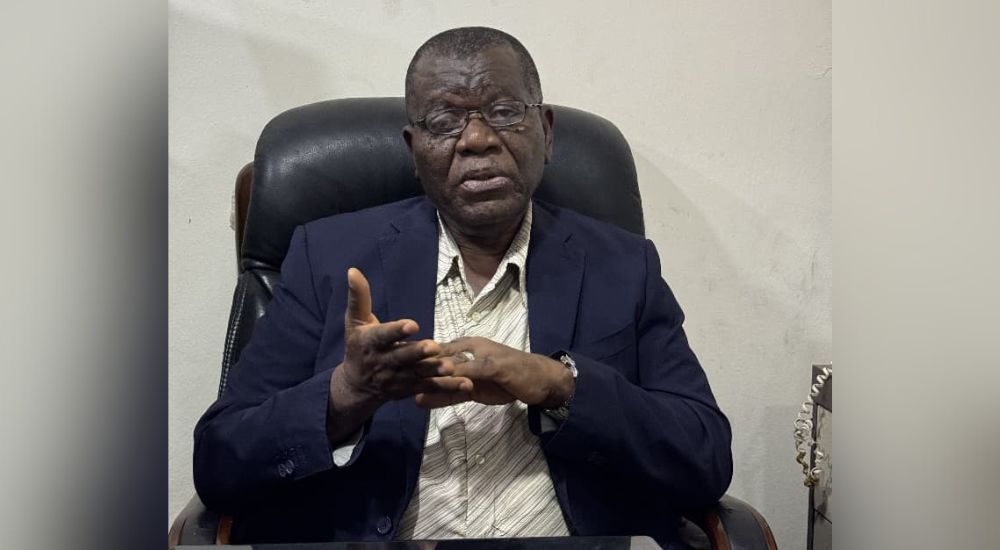
In this interview with Chris UGWU of THE WHISTLER, the Group Managing Director of Crane Securities Limited, Mr. Mike Eze, offers a review of Nigeria’s capital market performance in 2025, evaluates developments in the first quarter of 2026, and discusses the implications of financial sector recapitalisation, retail investor participation, and possible monetary policy adjustments by the Central Bank of Nigeria (CBN).
The 2025 financial year was a landmark period for the Nigerian financial sector. How would you summarize the market’s performance, and what were the fundamental drivers behind that activity?
When reviewing the capital market performance of 2025, one must recognize that the market does not exist in a vacuum. The activity we witnessed was almost entirely determined by the intersection of politics and aggressive economic policy.
First and foremost, 2025 saw the recapitalization of the banking and insurance sectors move into full gear. Simultaneously, the Federal Government’s policy regarding the transition to a $1trn economy began to exert a significant influence on national economic activity.
As I often say, the capital market is the engine room of the economy. Any hiccup or surge in the market determines the rhythm of the entire economic system.
Advertisement
The economy cannot be dissociated from politics. How did that politics of economics manifest in the market specifically?
Many analysts attempt to view the economy through a purely mathematical lens, but in Nigeria, we must defer to the politics of the economy. The market saw the government’s $1trn aspiration not merely as a figure, but as a challenge for the administration to succeed.
Because the market recognized its significant role in this direction, we saw a reflection of that urgency in trading volumes.
The market was vibrant, boisterous, and deeply engaging. Total market capitalization, the primary measure of market activity, hit an all-time high. It was unprecedented. Stock prices surged across the board, moving in a decidedly positive direction, signaling a collective vote of confidence in the nation’s long-term economic trajectory.
We are now well into the first quarter of 2026. Given the current high price points and the impending 2027 general elections, what is your total outlook for the market?
Advertisement
We are currently witnessing a fascinating phase. Prices are high, but I must clarify that they are not out of control. The capital market possesses a sophisticated, self-adjusting mechanism. If prices escalate beyond fundamental value, the market, of its own volition, begins to adjust, either upwards to find a new ceiling or downwards to find support.
However, the current vibrancy is also a result of an “overflow” from the money market. Throughout 2025, frequent adjustments by the Central Bank of Nigeria (CBN) made interest rates in the banking sector intermittently unattractive or volatile.
This triggered a massive inflow of funds from the money market into the capital market.

Which demographic of investors led this charge?
Advertisement
We saw a significant move by wholesale investors, particularly Pension Fund Administrators (PFAs). Pension capital moved from fixed-income instruments into equities, which fundamentally altered the demand-and-supply status of the market.
Interestingly, it wasn’t just the blue-chip stocks that benefited. Low-priced stocks, which many had ignored for years, became highly competitive. I won’t mention specific names, they haven’t paid for the advertisement yet. But we’ve seen stocks that were priced at 65 kobo or 95 kobo suddenly surge to N1.70 or even N2.50 in this first quarter alone. Prior to this, no one was looking in that direction. We are also seeing renewed interest in tech-heavy media companies.
What drives an investor to move capital during such a volatile period? Is it purely about the quick win?
It’s about the three pillars of investment; Return on Investment (ROI), Stability of Capital, and Future Prospects. Investors look at dividend payouts, bonuses, and capital preservation. No investor wants to lose their principal. Once they are reassured of stability, they will invest at any level.
There was a moment of panic in the last quarter of 2025 where people feared a market crash similar to the 2008–2009 crisis. I consistently argued against that narrative. The market today is far more stable because it has gone global. Our market is now an integral part of the global village. What happens in New York, London, Tokyo, or even closer to home in Johannesburg or Cairo, is felt here instantly. We are synchronized with the world, and that global interaction provides a level of maturity and daily oversight that didn’t exist fifteen years ago.
Historically, the market tends to dip as elections approach. Do you see the 2027 elections breaking this trend?
Usually, the market is on a downtrend before an election due to investor caution. However, the first quarter often provides an inkling of the year’s end. In Q1, investors take their time to consult with professional stockbrokers and formulate long-term strategies. Despite the looming elections, the current momentum suggests the market will remain vibrant. The underlying desire to reach that $1trn GDP target is currently outweighing the typical pre-election jitters.
Let’s discuss the recapitalization of banks and insurance firms. Some are scaling up comfortably, while others seem to be in limbo. What is your take on the eventual outcome?
Nigeria is an undeniable economic hub. While we have occasionally been overtaken as Africa’s largest economy, the sheer volume of activity here is immense. Our banking sector is actually under-banked when you consider our population and the number of bankable products entering the system.
From a capital market perspective, we are the ones who assist these institutions in raising the necessary funds. The CBN is not making the process unnecessarily difficult; they are assisting firms to meet the conditionalities. In a nutshell, we need these banks to be recapitalized to handle the scale of a $1trn economy.
Will every bank survive?
Realistically, some may fall by the wayside, and we will likely see more mergers. We have already seen a few significant mergers, and I anticipate more. But for the quoted insurance companies and the active banks, most will scale through and emerge stronger, ready to facilitate the massive business volumes that are currently in the system.
The SEC has also introduced new recapitalization guidelines for Capital Market Operators (CMOs). Some argue the base is too high. What is your professional stance?
It aligns with the broader $1trn economy policy. You cannot have a robust capital market, the engine room, operating with under-capitalized facilitators. The previous base didn’t give operators the “liberty” to handle the billion-naira companies we are now seeing.
While it is true that CMOs do not carry the same systemic risk as banks or insurance companies, we are not exposed to the same types of credit or underwriting risks, the policy is still in the right direction. It forces operators to shore up their capital, which in turn gives the global financial system confidence in our capacity.
Does this pose a threat to employment within the sector?
Definitely. We saw this in 2016. Some operators will fall by the wayside, and mergers will occur. When two elephants fight, the grass suffers. Just as we saw job losses when AI and ChatGPT emerged and rendered certain roles moribund, the same will happen here. There will be an uptick in unemployment for a period as the industry consolidates.
Won’t this consolidation alienate the small investor?
That is a very real concern. When you have a few, highly capitalized mega-firms, they often focus on high-net-worth individuals and institutional clients. We see it in banking already, take Standard Chartered Bank, for example, which reportedly informed customers that accounts with balances below N7.5m might face closure.
The same risk exists in the capital market. If a stockbroking firm requires a minimum of N5m to open an account, they are effectively discouraging retail participation. Yet, the retail investors in the hinterlands are the majority. It is the medium-scale operators who take the message of the capital market to the rural areas. If we lose them, we create a gap between the haves and have-nots.
Is there a solution to this potential exclusion?
The idea is still being tinkered with by regulators. I believe a middle way will be found. You cannot neglect the hinterland if you want a truly national market. The market is meant to be spread; as the saying goes, the more the merrier. When you spread your hands wide, you gather more. We must ensure the message of the capital market reaches beyond the major cities.
Finally, let’s talk about the money market. With inflation cooling to 15.1 per cent in January, do you believe the CBN should implement a rate cut?
While I am speaking from the capital market perspective, I would say yes, it is time. The CBN regulates the money market, while we are regulated by the SEC and the NGX, but the two are inextricably linked.
The CBN considers many variables, statistics, foreign exchange, and productivity. From our side, the current overflow of investors leaving the money market for the capital market has been positive for us. If there is a rate cut, we might see a gradual gravitation back toward the money market, but it won’t be a sudden run.
Why wouldn’t investors rush back to the banks if rates stabilize?
Because investors have tasted the daily appreciation of the capital market. In the money market, your investment is fixed-income; you are locked into a rate for 30, 60, or 90 days. You cannot adjust that rate until the tenure expires. In the capital market, appreciation happens daily. If the market is open, you can gain every single day.
Since the last quarter of 2025, we have witnessed a daily appreciation in investor funds that is unprecedented, a two-year high. Once an investor experiences that level of growth, they become more sophisticated in how they balance their portfolio between the short-term certainty of the money market and the daily dynamism of the capital market.
If rate cuts occur, there may be some rebalancing of portfolios. Some funds could gradually rotate back to the money market. However, equities have recently delivered strong daily appreciation, particularly from late 2025 into early 2026.
The market is resilient. Despite the politics and the recapitalization hurdles, we are moving toward a more mature, globalized system. Consult your professionals, look toward the long term, and remember that the capital market remains the most reliable vehicle for wealth creation in this $1trn journey.
Investors should expect continued activity, selective sector performance, and occasional corrections. The Nigerian capital market is more resilient than in previous cycles, supported by institutional participation and improved regulatory oversight.
While election-related uncertainty may introduce volatility, the structural outlook remains positive. Recapitalisation across the financial ecosystem, banks, insurers, and capital market operators, should ultimately strengthen the market’s capacity to support economic expansion.
The focus now should be on maintaining stability, deepening retail participation, and ensuring that the capital market continues to serve as a catalyst for national growth.