Lagos Traders Blame Iran War As Beans, Tomatoes Prices Surge
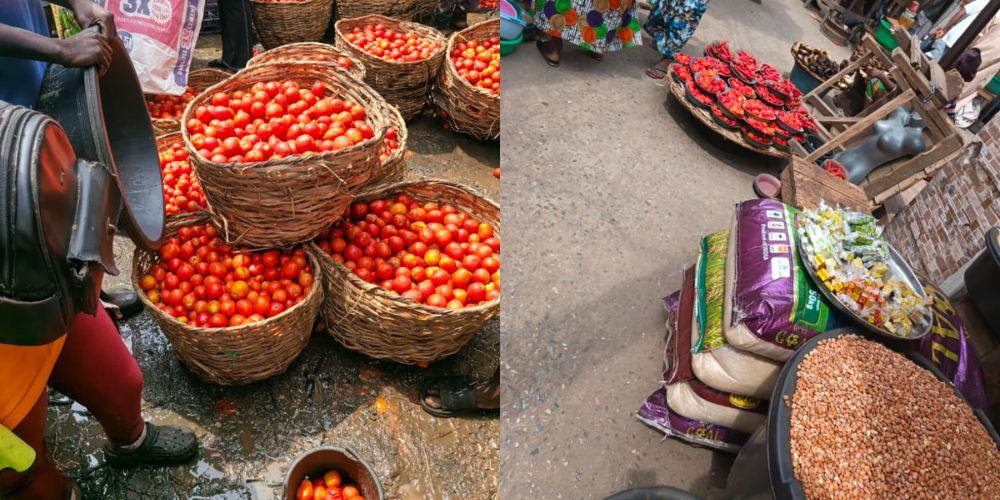
Foodstuff traders in Lagos State have attributed the surge in the prices of some food items to the ongoing war involving the United States, Israel and Iran.
THE WHISTLER correspondent who visited Ilepo Market observed that a bag of beans, which sold for N45,000 less than two weeks ago, is now selling for between N65,000 and N67,000.
Also, a basket of tomatoes now costs about N28,000, representing a 100 per cent increase from the N14,000 it was previously sold for.
Similarly, a bag of melon, which earlier sold for less than N230,000, now costs N290,000. However, the price of a bag of rice has remained relatively stable, recording only a slight increase of about N4,000, from N42,000 to N47,000.
Some of the traders who spoke with THE WHISTLER said the constant adjustment in the price of petroleum products has continued to affect transportation and logistics costs.
Advertisement
They, however, noted that the recent price increase cannot be attributed solely to the Iran war, adding that the ongoing Ramadan fasting period and seasonal supply challenges have also contributed to the sudden rise in the prices of some food items.
A resident who spoke with THE WHISTLER said her friend’s cousin bought a basket of tomatoes for N75,000 at Oyingbo Market on Monday.
According to her, the traders blamed the increase on the latest hike in diesel and petrol prices.
The Founder of Adugan Jollof, Folukemi Olamiposi, also decried the sharp increase in prices.
In a video posted on Instagram, she said: “Today tomatoes jumped from 25k to 75k a basket, Rodo 80-90k, petrol 1400 per liter. Reason? Iran is bxxmbing Dubai.
Advertisement
“Pls (please) people that understand what is going on (?) explain. Are we also at w+r?”
The war involving the United States, Israel and Iran began on February 28, with coordinated airstrikes targeting Iranian missile infrastructure, military sites and leadership.
Crude oil prices surpassed $110 per barrel on Monday, reaching levels last seen in 2022 amid escalating tensions linked to the Iran conflict and its impact on global energy supply.
Although prices have now dropped to below $100 per barrel, the ripple effects of the war have been significant.