
Oando To Accelerate Upstream Investments With $100m
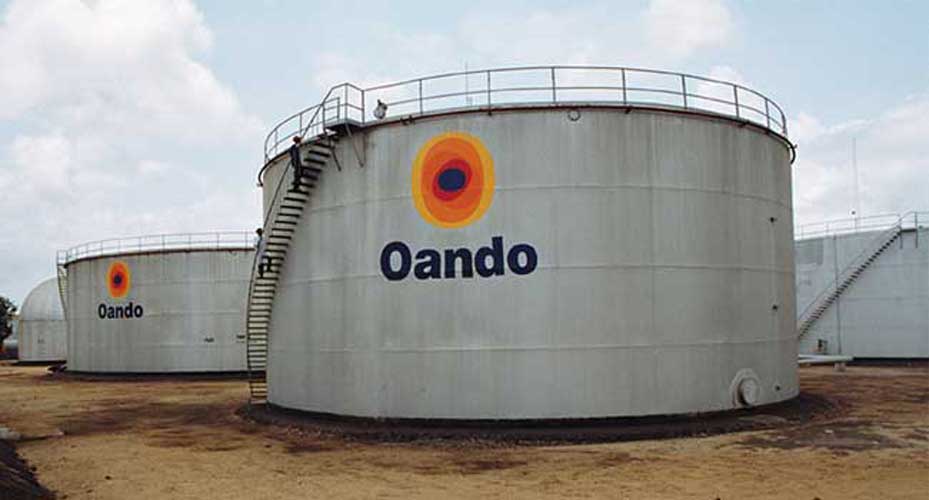
Oando Plc has disclosed plans to increase crude oil production to as much as 50,000 barrels of oil equivalent per day (boepd) by the end of 2026, backed by planned capital expenditure of between $90m and $100m in the second half of the year to accelerate upstream development activities.
The indigenous energy company, in its unaudited financial results for the six months ended June 30, 2026, said it would sustain the momentum from its first-half operational performance by executing an intensive drilling programme, well intervention campaign and capital raising initiatives aimed at strengthening production capacity, liquidity and long-term shareholder value.
The company maintained its full-year production guidance of between 40,000 and 50,000 boepd, while outlining plans to complete a seven-well development programme across Oil Mining Leases (OMLs) 60, 61, 62 and 63.
Two wells have already been drilled and completed, while two additional wells are currently being drilled.
The programme will be complemented by about 100 rig-less well intervention activities across its asset portfolio.
Oando also disclosed that it expects to invest approximately $90m to $100m during the year, with the spending focused on high-impact, short-cycle upstream projects designed to increase production and optimise existing assets.
Advertisement
The company revised its full-year crude oil trading volume guidance to between 22 million and 26 million barrels from earlier projections following adjustments to one of its crude marketing programmes.
It also said it would complete its Rights Issue and continue executing its planned $1.5bn multi-instrument capital raising programme to strengthen its balance sheet and improve financial flexibility.
The outlook follows a first-half performance driven by higher production, stronger operational efficiency and improved financial returns.
Oando reported average production of 42,789 boepd during the first six months of 2026, representing a 16 per cent increase from the corresponding period of 2025.
The growth was attributed to new wells, restoration of previously shut-in wells and improved facility uptime.
Advertisement
Revenue rose by 20 per cent year-on-year to N2.1tn from N1.7tn in the corresponding period of 2025, supported by stronger earnings from its exploration and production business and higher product prices.
Profit after tax increased by 8 per cent to N68.6bn from N63.3bn a year earlier, while cash generated from operations stood at N179.5bn, compared with a cash outflow of N287.9bn in the first half of 2025, reflecting stronger operating cash conversion.
The company’s liquidity position also improved, with cash and cash equivalents rising to N544.9bn as of June 30, 2026, from N194.2bn recorded in the same period last year.
Operational efficiency improved during the period as production operating costs declined by 18 per cent to $16.83 per barrel of oil equivalent from $20.62 per barrel in the corresponding period of 2025.
Facility uptime rose to 92 per cent from about 85 per cent a year earlier, while the company recorded zero lost-time injuries across its operations.
Capital expenditure during the first half rose to N81.4bn from N48.3bn a year earlier, reflecting increased investment in drilling activities across OMLs 60–63 and other upstream assets.
Advertisement
The company also expanded its domestic gas business during the period by commencing long-term gas supply of 11.2 million standard cubic feet per day (MMscfd) to the newly commissioned 60-megawatt Bayelsa Independent Power Plant.
In addition, it executed the Production Sharing Contract for Block KON 13 in Angola, where it holds a 45 per cent participating interest and serves as operator.
Commenting on the performance, Group Chief Executive, Wale Tinubu, said the company had moved beyond the integration phase of its major upstream acquisition and was now beginning to realise the operational and financial benefits of the expanded asset base.
According to him, improved asset integrity, stronger facility reliability, enhanced security and sustained investment in drilling and well interventions contributed to higher production and stronger financial performance.
Tinubu said the company’s medium-term objective remains to increase production to about 100,000 boepd, supported by an inventory of 62 development wells and 55 planned well intervention projects.
He added that Oando would continue pursuing balance sheet restructuring and fresh capital raising initiatives to improve working capital, strengthen its financial position and provide adequate funding for future growth while expanding its clean energy initiatives.