
Reforms Hurt, But Saved Nigeria From Deeper Economic Crisis—FG
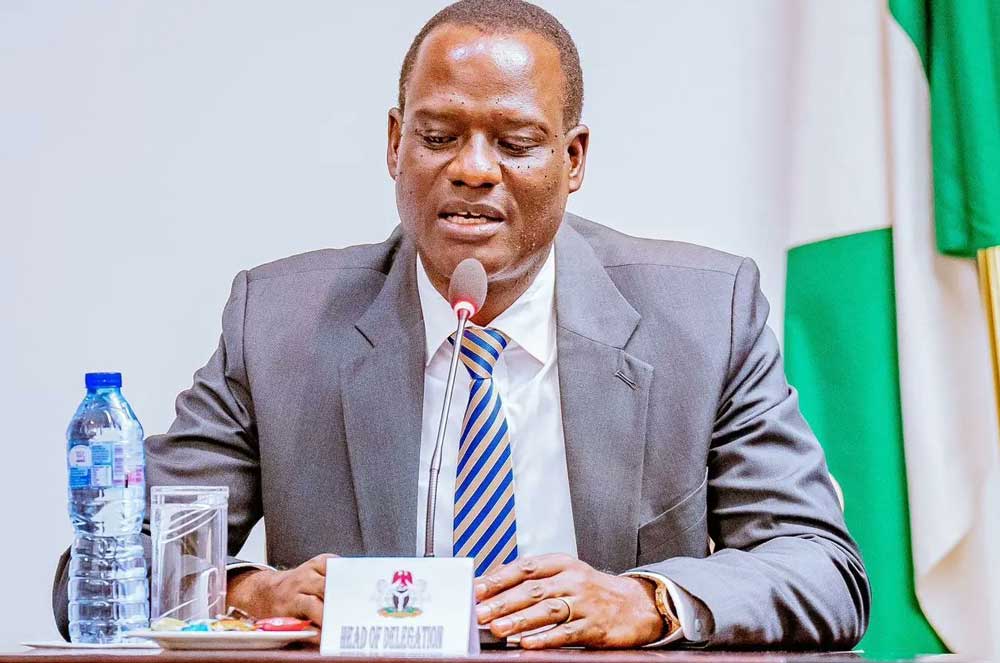
Nigeria’s Minister of Finance and Coordinating Minister of the Economy, Taiwo Oyedele, has acknowledged that the government’s economic reforms have imposed significant hardship on households and businesses, but argued that they prevented an even deeper economic crisis.
Oyedele spoke on Wednesday at a media briefing where he presented the Federal Government’s reform scorecard, covering the impact of the administration’s policies since June 2023.
The reforms, which included the removal of petrol subsidy and the unification and liberalisation of the foreign exchange market, triggered a sharp adjustment in the naira, higher prices and increased borrowing costs.
“Those decisions came at a real cost, and we are not here to pretend otherwise,” Oyedele said.
“Prices rose. The naira adjusted sharply. Households and businesses felt it, and many still do.”
He said the purpose of the scorecard was to provide Nigerians with a fuller assessment of the reforms, including both their costs and the problems the government believes they prevented.
Advertisement
“What we want to do today is put the whole picture in front of you, the Nigerian people — what those reforms cost, what they have achieved and, just as importantly, what they prevented,” he said.
According to Oyedele, the scorecard contains 25 indicators across five areas, including fiscal sustainability, external stability, investment climate, social impact, growth and productivity.
The assessment compares Nigeria’s position before the reforms with its current position and a projected “no-reform” scenario — an estimate of where the country could have been had the pre-2023 policies continued.
Oyedele said the counterfactual was necessary because simply comparing prices before and after the reforms does not provide the complete picture.
“It is harder to see what did not happen,” he said, arguing that the government’s assessment attempts to quantify the economic damage that could have occurred had the reforms been delayed.
Advertisement
On the foreign exchange market, the minister said the previous system had become unsustainable and had created opportunities for arbitrage and corruption.
“We are talking about an exchange rate system that had become a source of arbitrage, destruction and corruption, rather than stability,” he said.
Oyedele also defended the government’s decision to end the subsidy regime, arguing that the benefits of the policy had been captured by rent-seekers rather than ordinary Nigerians.
He said savings from the reforms had increased resources available to the federation, while the Federal Government had also generated additional revenue from government-owned entities.
The minister said the additional resources had been used to finance higher wages, debt service, infrastructure and other government expenditure.
He highlighted wage adjustments and the increase in the national minimum wage as evidence that some of the additional fiscal resources were being channelled to workers.
Advertisement
Oyedele said the government had also increased spending on strategic infrastructure while continuing to meet its external debt obligations.
He acknowledged that the reforms had significantly increased the cost of servicing foreign-currency debt because of the naira’s depreciation.
“If we’re paying $1m before in interest on our foreign debts, it is still the same $1m, but instead of N460, it’s now N1,415,” he said.
“You don’t negotiate, you don’t delay. You pay because delay or default have consequences.”
The minister also pointed to what he described as improvements in the ability of state governments to meet salary and pension obligations.
He said 27 states had struggled to pay salaries and pensions before the reforms, whereas the government’s assessment now puts the number at zero.
He further cited the increase in the minimum wage from N30,000 to N70,000, student loans, cash transfers, subsidised mortgages and agricultural support among measures intended to cushion the impact of the reforms.
But Oyedele stressed that the government’s scorecard was not intended to portray the reforms as an unqualified success.
“We are being honest about the cost. We are not saying all of it is rosy,” he said.
“A scorecard that only lists wins is not a scorecard; it’s a campaign leaflet, and we did not come here to give you one.”
He noted, for example, that the monetary policy rate had risen sharply and that petrol prices had increased substantially since the reforms began.
“Petrol at the pump had risen from roughly N185 a litre to between N1,100 and it is a major felt cost, and I will not stand here and tell you otherwise,” Oyedele said.
He nevertheless maintained that the relevant question was not only how much Nigerians had paid for the reforms, but also what the country might have faced had the previous policies remained in place.
The minister said the reform scorecard and supporting figures would be made available through the Ministry of Finance to enable journalists, editors and independent analysts to examine the government’s methodology and figures.
“You can verify. You can validate,” he said.