
Violent Protests Erupt In S/Africa Over Alleged ‘Igbo King’ Coronation
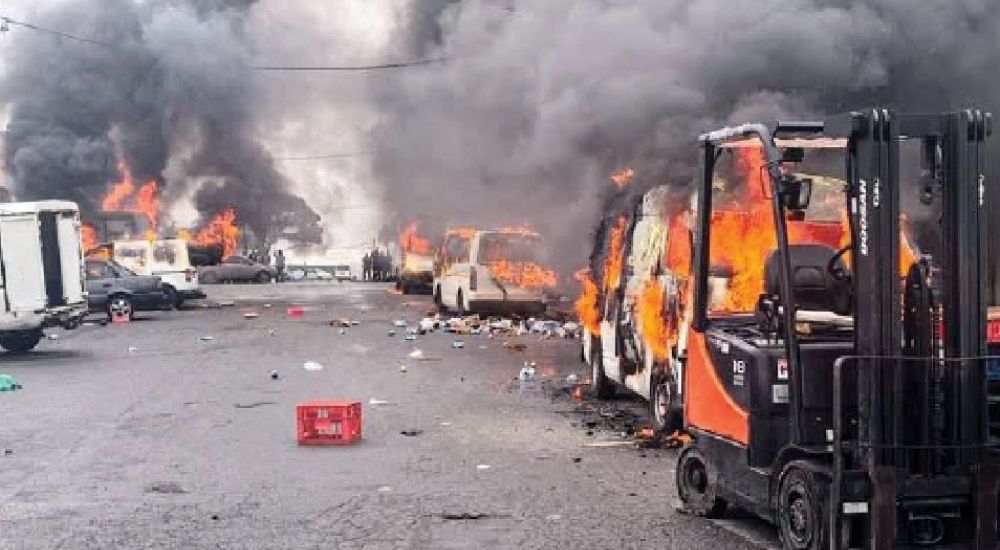
Violent protests broke out in KuGompo City (formerly East London), Eastern Cape, South Africa, following reports that a Nigerian, Solomon Ogbonna Eziko, had been installed as a traditional Igbo leader, sometimes referred to as Igwe Ndigbo.
Residents, civic groups, and some political figures opposed the event, arguing it was not recognised under South African customary law and breached local traditional authority structures.
Hundreds of demonstrators took to the streets, carrying placards and chanting against the installation. The protests escalated into violence, with vehicles set on fire, buildings damaged, and some shops targeted, particularly those believed to be foreign-owned.
At least one person was stabbed and taken to hospital, according to local media reports. Police and emergency services were deployed to restore order, using crowd control measures to disperse protesters.
Political party ActionSA and local civic organisations played a prominent role in the demonstrations. Athol Trollip, ActionSA’s Eastern Cape chair, said the party opposed the coronation because it was “not recognised under the constitution or local customary law.” Trollip and other leaders called for support for recognised traditional authorities and urged that constitutional processes be respected.
KuGompo City Mayor Princess Faku condemned the violence, emphasising that while residents have the right to protest, “violence doesn’t solve problems… it’s very sad that such an important march was turned into chaos.” Other community leaders echoed calls for calm and lawful resolution of grievances.
Advertisement
The Nigerian High Commission in South Africa confirmed that no official coronation had taken place, describing the event as a cultural gathering rather than the establishment of a new sovereign authority. Media investigations found no evidence supporting claims that the ceremony intended to create a separate homeland or encourage mass migration from Nigeria.
The unrest occurs against a backdrop of recurring tensions over migration and economic competition in South Africa.
High unemployment, inequality, and competition in small business sectors have fuelled resentment toward foreign nationals, particularly migrants from other African countries.
Previous incidents of xenophobic violence have targeted communities from Zimbabwe, Nigeria, and Ethiopia.
Experts warn that rhetoric around migration and foreign businesses can exacerbate tensions, while structural economic challenges remain largely unaddressed.
Advertisement
Authorities continue to investigate the incidents, assess property damage, and monitor the situation to prevent further escalation.
Civic and political groups involved in the protests have pledged to remain engaged on matters of local governance while urging residents to refrain from violence.