
Illicit Financial Flows Undermining Africa’s Development— Adedeji
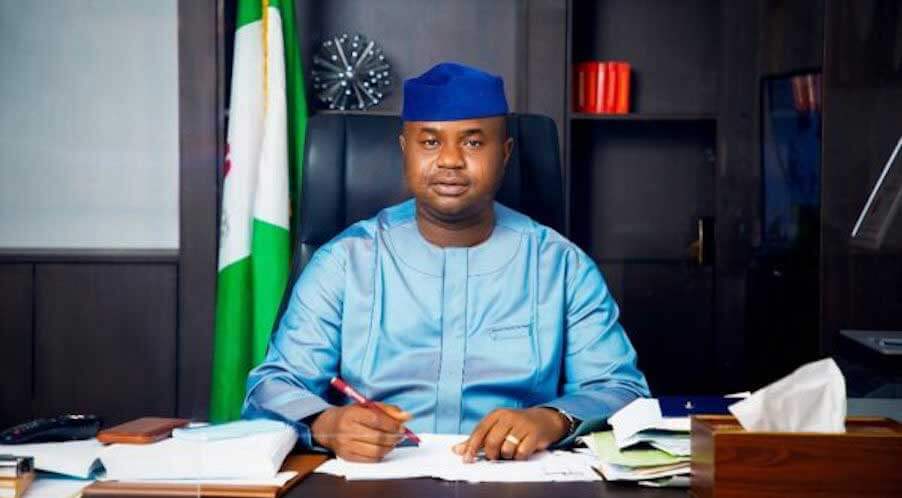
Africa is losing billions of dollars annually to illicit financial flows, a trend that continues to undermine development efforts across the continent, Nigeria’s top fiscal authorities have warned.
Speaking at a Specialised Technical Conference on finance, monetary affairs, economic planning and integration held in Abuja, the Minister of Finance and Coordinating Minister for the Economy, Wale Edun, and the Executive Chairman of the Nigeria Revenue Service, Zacch Adedeji, called for urgent and coordinated reforms to stem capital flight, strengthen domestic resource mobilisation, and reposition African economies for sustainable growth.
The event, which brought together delegates from across the continent, focused on fiscal reforms, tax administration, and strategies to combat illicit financial flows, widely seen as a major drain on Africa’s economic potential.
Edun described the moment as pivotal for Africa, stressing that the continent must move decisively to halt the illegal movement of funds and take greater control of its economic destiny.
“We gather at a defining moment for Africa’s economic future,” he said. “The question is no longer whether we will reform, but how urgently and how boldly we are prepared to act.”
He noted that Africa, with a population of over 1.4 billion people and vast natural resources, has the capacity to drive its own development but must reduce its dependence on external financing.
Advertisement
According to him, reliance on debt, aid, and foreign investment alone is no longer sustainable in an increasingly uncertain global environment.
“Africa cannot sustainably finance its development through debt, aid, or external investment alone,” Edun said. “We must mobilise domestic resources and build resilient economies that can withstand global shocks.”
He highlighted ongoing reforms in Nigeria under President Bola Tinubu, including efforts to stabilise the macroeconomic environment, improve investor confidence, and overhaul the tax system.
Edun said the reforms are already beginning to yield results, pointing to improvements in economic stability and renewed investor interest.
He added that Nigeria’s approach could serve as a model for other African countries seeking to implement similar changes.
Advertisement
Central to the discussions was the scale of illicit financial flows, which Edun estimated at about $88bn annually across Africa, adding that the resources could otherwise be channelled into infrastructure, healthcare, education, and job creation.
“These are funds that should be building roads, schools, and hospitals,” he said. “Instead, they are lost through illegal transfers, tax evasion, and other financial leakages.”
Edun also pointed to the African Union’s Agenda 2063 as a guiding framework for the continent’s development, noting its emphasis on domestic resource mobilisation, improved tax systems, and stronger financial governance.
The agenda, he said, sets an ambitious target of financing up to 90 per cent of Africa’s development needs through domestic resources.
Achieving this goal, however, will require deep structural reforms, including strengthening public financial management, expanding capital markets, and promoting financial inclusion.
Edun stressed the importance of leadership in driving these reforms, noting that difficult decisions must be taken to ensure long-term economic stability.
Advertisement
“Reform requires courage—the courage to take difficult decisions, the discipline to sustain them, and the collaboration to ensure that no country moves forward alone,” he said.
He added that Africa must also leverage technology to improve efficiency, reduce corruption, and enhance transparency in financial systems.
Adedeji echoed these concerns, describing illicit financial flows as one of the most pressing threats to Africa’s economic progress.
“Every year, billions of dollars that should support development across our continent are diverted through illegal financial transfers, trade mispricing, tax evasion, and aggressive tax avoidance,” he said.
He warned that the consequences of such losses are far-reaching, depriving governments of the resources needed to address critical development challenges.
“These outflows represent lost opportunities, lost hospitals, lost schools, lost infrastructure, and lost investments in the future of our people,” Adedeji added.
He emphasised that tackling illicit financial flows requires coordinated action at both national and continental levels, given their transnational nature.
According to him, criminals and corporations often exploit regulatory gaps between jurisdictions, making collaboration among African countries essential.
“Illicit financial flows are inherently transnational,” he said. “They exploit differences between jurisdictions and weaknesses in international regulatory systems. This is why continental cooperation is not only useful but indispensable.”
Adedeji highlighted the role of revenue authorities as being at the forefront of efforts to curb these practices. He noted that effective tax administration systems are critical not only for revenue generation but also for strengthening governance and public trust.
“When revenue systems are transparent and efficient, they reinforce public confidence in government institutions,” he said.
He disclosed that Nigeria is undertaking a comprehensive modernisation of its tax administration system, with a focus on digitalisation, efficiency, and transparency.
The reforms, he said, are designed to broaden the tax base, improve compliance, and create a more predictable environment for investment and economic growth.
Across Africa, similar efforts are underway, with countries adopting digital tools, enhancing compliance frameworks, and expanding tax nets to capture more economic activities.
Stakeholders at the event agreed that the fight against illicit financial flows must be prioritised if the continent is to unlock its full economic potential.
They called on African governments, institutions, and stakeholders to work together to close regulatory gaps, strengthen enforcement mechanisms, and ensure that resources generated within the continent are retained and reinvested for development.