700,000 Meters Available For Installation Nationwide, Says NERC
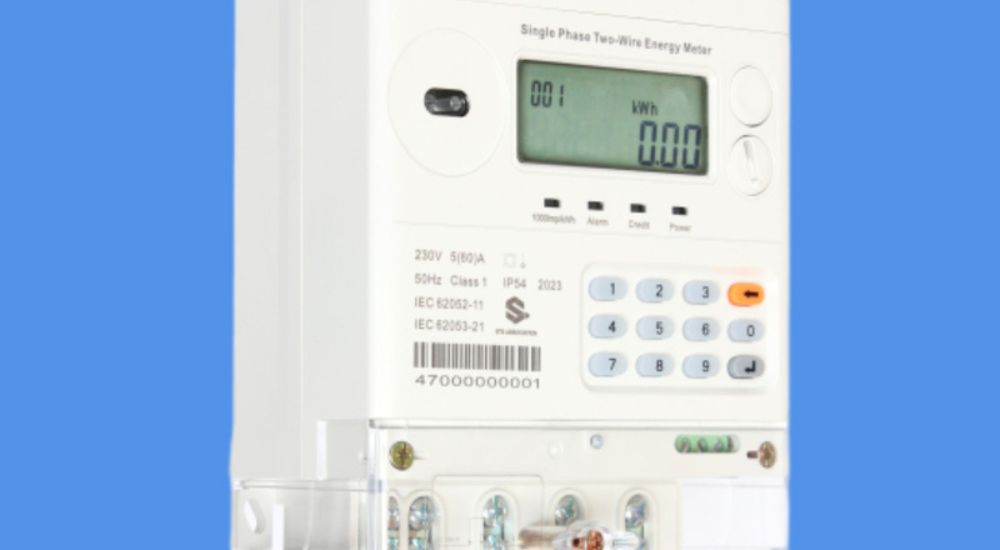
The Nigerian Electricity Regulatory Commission (NERC) has disclosed that between 600,000 and 700,000 meters are currently available in the country.
The NERC Vice Chairman, Dr Musiliu Oseni, who gave this figure, also challenged the electricity distribution companies (DisCos) to improve publicity and roll them out with speed.
He noted that the government has invested, so the DisCos need to step up.
A statement obtained by THE WHISTLER on NERC’s X handle (formerly Twitter) on Tuesday quoted him speaking during the opening section of the 4th NESI Stakeholders Meeting in Abuja.
Addressing regulators, operators, and stakeholders, Oseni touched on critical “crossroads” for the sector: with the transition to State Electricity Regulatory Commissions in full swing, Oseni issued a stern warning to DisCos regarding their cooperation with new state regulators.
He declared that no licensee is bigger than their regulator.
Advertisement
Addressing recent media misinformation regarding the tenure of NERC Commissioners, Oseni clarified the “Staggering Principle” embedded in Section 36 of the Electricity Act, which was exported from the Electricity Power Sector Reform Act (EPSRA) and applied to only the pioneer Commission.
“Subsequent chairmen and commissioners have 5-year tenures as provided in Section 36 (1) of the EA,” he said.
THE WHISTLER had previously reported that the Nigerian Electricity Regulatory Commission (NERC), the country’s power plants, recorded improved performance in October.
The commission, however, announced that the grid voltage and frequency stability remained outside prescribed operational limits.
According to the Commission’s Operational Performance of Power Plants fact sheet, grid-connected plants recorded a Plant Availability Factor (PAF) of 40 per cent during the month, up by two per cent.
Advertisement
It stated that out of the nation’s 13,625MW of installed capacity, an average of 5,506MW was available for dispatch, a 6% increase from the previous month.
Despite this improvement, only 78 per cent of available generation capacity was utilised.
During the month under review, an average hourly energy generation stood at 4,290MWh/h, representing a 5 per cent rise.