
Atiku’s Subsidy U-Turns In One Week Expose Confusion – Presidency
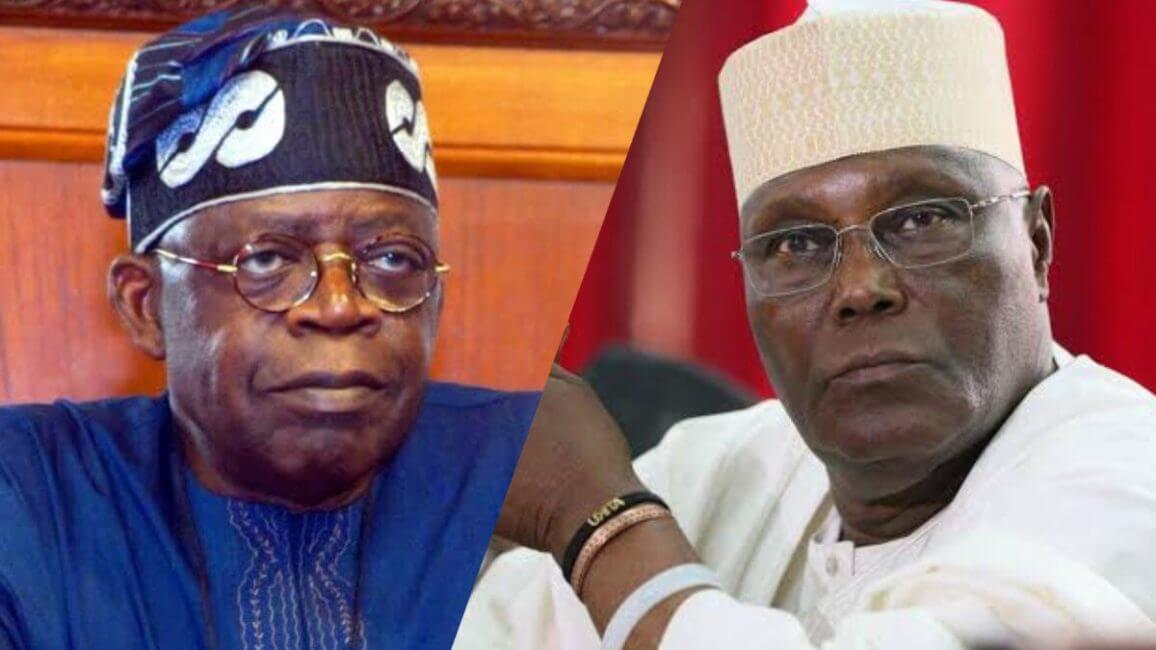
The presidency has accused former Vice President Atiku Abubakar of confusion over his plan to restore petrol subsidy after conflicting explanations by his aides on how the proposed intervention would work.
The controversy began when Atiku’s spokesperson, Paul Ibe, said the former vice president would restore petrol subsidy if elected president in 2027 and gradually phase it out after the economy recovers.
Ibe had said the intervention would be tied to crude oil production and domestic refining. According to him, Atiku’s government would supply crude to local refiners at a discounted price to enable them to produce petrol and diesel at lower costs.
“What he’s simply saying is that the subsidy that he is advocating will be tied to the barrel, the crude oil barrel. This is perhaps the only thing that we have in so much abundance that Nigerians have not yet benefited from,” Ibe said.
“The crude oil will be sold at a discounted price, subsidised to refiners, and that will enable refiners to be able to produce fuel and diesel at a cheap cost. And when they produce cheaply, they will sell at the real pump price.”
But Atiku later disowned Ibe and reaffirmed that he would fully restore petrol subsidy.
Advertisement
Another aide of the African Democratic Party (ADC) presidential candidate, Phrank Shaibu, subsequently clarified that Atiku’s proposed subsidy restoration would be targeted, capped and tied to domestic refining, with no withdrawal date.
“For the avoidance of doubt, policy belongs to the candidate, not the spokesperson.
“Our responsibility as communicators is to explain Atiku’s position accurately, not create formulations capable of confusing Nigerians or handing opponents convenient talking points,” Shaibu said.
He stressed that there would be no predetermined date for ending the intervention.
“There is no arbitrary withdrawal date. As domestic refining expands, supply stabilises, competition deepens, and the market becomes capable of delivering affordable prices without government support, the intervention progressively becomes unnecessary,” he added.
Advertisement
Atiku later intervened and said his position had not changed.
Speaking on Tuesday when he received the Osun State leadership of the African Democratic Congress in Abuja, Atiku said: “Earlier, one of my press aides contradicted me in a policy statement as far as subsidy is concerned.
“I want to repeat categorically that when I said I would return to subsidy, I will! Nigeria is rich enough to look after the welfare of its citizens. Let it be clearly stated that he was not speaking on my own authority,” Atiku said.
In a statement posted on his X account, he restated, “On the question of subsidy, my position has not changed and will not change: I will restore it! A nation as blessed as ours has no business abandoning its citizens to hardship. Nigeria is rich enough to look after her own.”
But reacting on Wednesday, presidential spokesman, Bayo Onanuga, said Atiku camp’s third change of position within one week shows the ex-VP was “simply playing politics” with Nigerians’ economic hardship.
In a State House release, Onanuga said Atiku and his aides had given Nigerians three different explanations of what an Atiku administration would do about petrol subsidy.
Advertisement
Onanuga said the changes amounted to a serious policy contradiction.
“If Atiku’s position has not changed, why did one of his principal aides say the subsidy would be temporary and phased out? Why did another senior aide have to publicly disown that explanation and introduce a completely different framework based on market conditions? And why did Atiku then step in to reaffirm the original position?” he asked.
The presidential aide questioned the economics of Atiku’s proposed subsidy.
Onanuga said petrol accounts for about 45 per cent of a refined barrel, while diesel accounts for roughly 25 per cent, jet fuel and kerosene about 9 per cent, and other products include materials used for plastics, asphalt, lubricants and other industrial purposes.
He questioned whether Atiku intended to subsidise those other products as well if the proposed intervention was tied to the crude oil barrel.
“Will Atiku subsidise all these by-products of the barrel as well, since kerosene is used by the underprivileged to cook, and many homes and factories use diesel to power generators and delivery trucks?” Onanuga asked.
He further countered Atiku on the suggestion that petrol prices alone were responsible for food inflation. He said agricultural productivity, insecurity, exchange rates, logistics, storage, flooding, input costs and supply constraints also affect food prices.
The presidency said the Federal Government’s removal of petrol subsidy in May 2023, alongside foreign exchange reforms, had been defended as necessary to strengthen public finances and improve the macroeconomic environment.
Onanuga urged Atiku to explain how his proposed “targeted subsidy” would be funded, who would benefit, how beneficiaries would be identified and what conditions would determine its termination.
“Nigerians deserve clarity, not policy by trial and error,” he said.
He added that the economy was “too serious for policy somersaults, incoherence, destructive populism and election gimmicks.”