
Can Tinubu’s Economic Reforms Deliver Inclusive Growth?
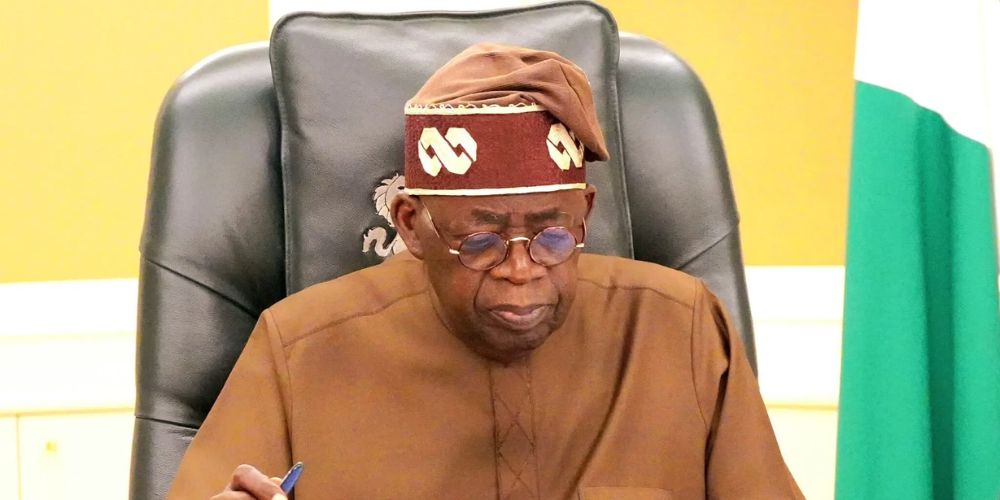
In recent times, the performance of President Bola Tinubu’s government and its economic reforms has been questioned on both its merits and demerits, especially as think tank organisations across the country continue to release data and other variables on the state of the nation’s economy.
Political actors, particularly those in the opposition, have also continued to demand explanations and condemn some of Tinubu’s reforms, even as the 2027 campaign season has officially been opened by the Independent National Electoral Commission (INEC).
Yet, Nigeria’s economic scorecard under Tinubu in the first half of 2026 suggests that the economy remains resilient, with non-oil sector performance, improved private-sector activity and stronger external reserves keeping the economy on a positive path despite inflationary pressures and fiscal constraints.
Without doubt, Nigeria’s economy under President Bola Tinubu’s reforms has demonstrated resilience and recorded measurable numerical growth. This points to a series of disciplined reforms undertaken by the administration over the last three years, particularly across fiscal policy, monetary policy and trade.
The impact has been reflected in major policy measures such as foreign exchange liberalisation, popularly referred to as FX floating, the introduction of a new tax regime, the removal of petrol subsidy and the restructuring of the national security architecture. Collectively, these measures have created significant adjustments across the economy and altered the direction of economic management.
Advertisement
Another important development has been the effort to revive and strengthen Nigeria’s financial system through the recapitalisation of the banking sector, reforms in the insurance industry and increased capital accumulation reflected in the equities market.
We have also seen resources freed up to state governments, supporting the construction and reconstruction of roads and bridges at the subnational level. This is generating activity in the construction sector while creating opportunities to open up states and improve the business-enabling environment.
Similarly, the reforms appear to be placing the economy on a stronger growth trajectory, particularly with the decline in headline inflation, which now stands at 15.43 per cent, while food inflation has also fallen significantly to about 20.18 per cent.
There has equally been some improvement in the stability of the naira, alongside rising external reserves, which have reached about $52bn, as well as the reported growth in the Central Bank of Nigeria’s gold reserves, valued at about $3bn.
Beyond the monetary and financial indicators, there has also been increased attention to national infrastructure. New road corridors are being developed, old roads are undergoing rehabilitation, and investments in the rail network are continuing.
Advertisement
These infrastructure investments are important because they have the potential to reduce the cost of movement, improve connectivity, support trade and ultimately strengthen productivity across different sectors of the economy.
However, the critical question that must continue to be asked about the resilience and gains recorded under the Tinubu administration is: how much of this economic growth is actually reaching Nigerian households?
Economic growth cannot be judged solely by headline numbers, reserves, market capitalisation or infrastructure spending. The real test is whether these reforms are translating into better purchasing power, improved living standards, more employment opportunities and reduced pressure on household incomes.
What has happened to Nigeria’s economy over the last 30 months and counting is not magic. It represents a series of bold steps aimed at correcting some of the deep structural problems affecting the economy, including fiscal imbalances, monetary policy distortions and weaknesses within the trade system.
These challenges did not emerge overnight, and therefore their correction cannot also be expected to happen overnight.
What we are seeing is a government taking difficult decisions with predominantly long-term objectives, even though the immediate consequences have created significant pressure for businesses and households.
Advertisement
Nigerians are understandably feeling the pain, and the social cost of these reforms cannot be ignored.
However, the failure of previous administrations to address some of these structural problems decisively has also contributed to the difficulty of the adjustment process today.
At this point, sustaining the gains will require continuity, consistency and consolidation.
Ultimately, the objective should be to institutionalise and legally protect these reforms so that they can survive beyond the Tinubu administration. Economic reforms should not be treated as the personal agenda of one government or as temporary policy experiments.
They must become sustainable national economic institutions that successive administrations can improve upon rather than abandon. Economic reforms are not merely statistics or eternal mathematics written on paper; they are the live wire of government, businesses and citizens’ economic sustainability.
Going forward, therefore, the reforms must be sustained, but the emphasis must increasingly shift from numerical growth to quality and inclusive growth.
Nigerians must feel the impact in their everyday lives, in food affordability, employment, purchasing power, infrastructure, access to finance and the overall cost of living. The ultimate measure of economic reform is not simply whether the numbers are improving, but whether those numbers are translating into real value and a better quality of life for the people.
Finally, the questions that must be answered after the reforms are: What does Nigeria’s emerging macroeconomic stability reveal about the reforms? How can Nigeria leverage this stability to unlock stronger, more inclusive economic growth?
Trusting that in the coming days, months and years, these questions will be resolved.
Adefolarin Olamilekan, a
Political Economist and Broadcast Journalist wrote from Abuja via adefolarin77@gmail.com