
Censors Board Reviews Nancy Isime’s Movie After Muslim Group’s Backlash
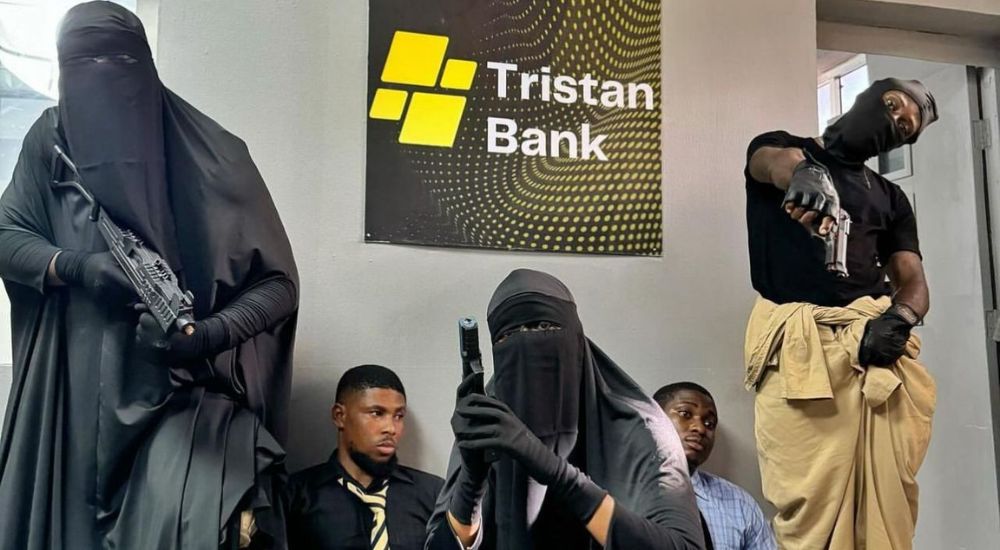
The National Film and Video Censors Board (NFVCB) said it has taken steps to address the usage of niqab garments in a robbery scene in Nancy Isime’s ‘Blood Brothers’ movie.
On Thursday, the Muslim Rights Concern demanded that the soon-to-be-released movie featuring Nancy Isime be banned after promotional flyers of the movie were shared on Instagram, showing the use of the Islam niqab in a supposed robbery scene.
The niqab is usually worn over the hijab and other traditional clothes by Muslim women. It is a facial covering that only reveals the eyes while covering the entire face.
Some Muslim women choose to wear niqabs as a kind of Islamic clothing as part of their modesty rituals.
MURIC described the film as “satanic,” stating that it incites public hostility towards Muslim women by portraying them as criminals.
In reaction, the NFVCB’s Director-General, Shaibu Husseini, stated on Thursday that discussions had been held with the producers to resolve the controversial matter.
Advertisement
Husseini said to resolve the divisive matter, it contacted the producers and is making efforts to have the complaints resolved.
“NFVCB, which is the official body responsible for overseeing film and video productions, exhibition, and distribution in Nigeria, released a statement stating that it had received complaints regarding a forthcoming film in which the Hijab—a garment worn by Muslim women that represents modesty, respect, and religious devotion—was linked to immoral behaviour. Upon conducting a check, we discovered that the film has not been distributed and has not been submitted to the NFVCB for classification, as mandated by law.
“However, we have been able to reach the producers of the film and have taken steps to address the concerns raised with the producers,” Husseini said, adding that any film or video content that offends religious, cultural, or ethnic sensibilities will not be accepted by the organisation.
“We restate that as a classification agency, the NFVCB will not overlook any film or video works, including dramatized short contents (skits) that abuse, denigrate, or undermine religious, cultural and ethnic sensibilities.
“We commit to contributing to the positive transformation of the Nigerian society through classification of films and video works whilst balancing the need to preserve freedom of expression within the law, and limit social, cultural and religious harm caused by films.”
Advertisement
The National Film and Video Censors Board is the regulatory body set up by Act No. 85 of 1993 to regulate the film and video industry in Nigeria.