
Common Investment Mistakes First-Time Investors Must Avoid
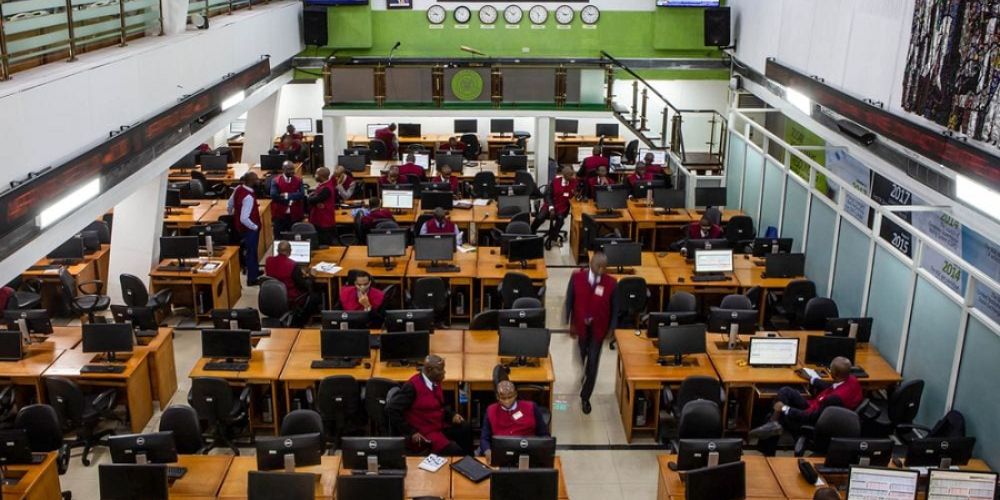
In Nigeria today, investing has become more than a financial strategy, it has become a survival conversation. Rising inflation, unstable income patterns, and increasing living costs have pushed many people to seek alternative ways of growing money. From salaried workers in Abuja and Lagos to traders in Kano and Port Harcourt, interest in investment is at an all-time high.
However, while enthusiasm is rising, financial literacy is not keeping pace. Many first-time investors are entering the market with hope, urgency, and pressure but without structure or understanding. This mismatch often leads to losses that could have been avoided.
Below are the most common investment mistakes beginners make.
Investing Without Clear Financial Goal
Many first-time investors begin their journey without a defined purpose. The decision to invest is often triggered by emotion seeing others make money, hearing success stories, or feeling pressure to “do something” with idle cash. In such cases, there is usually no clear target or timeline guiding the investment.
For example, a young professional in Abuja may invest N500,000 into a digital platform simply because colleagues are earning returns. When asked what the money is meant for, there is no clear answer, just a general desire to “grow it.”
Advertisement
Without a goal, investing becomes directionless. There is no benchmark to measure success or failure. This makes it easy to withdraw prematurely when emotions change or to hold on to bad investments longer than necessary.
Clear goals, however, bring discipline. An investor who says, “I am saving N3m in two years for a business,” will make very different decisions from someone who is just “trying investment.”
Goals also determine risk appetite. Short-term goals require safer investments, while long-term goals can tolerate more volatility. Without this structure, investors often mismatch their money with the wrong instruments.
Ultimately, investing without a goal is like travelling without a destination. You may be moving, but you are not progressing.
Chasing Unrealistic Returns and Quick Money Schemes
Advertisement
The desire for fast wealth is one of the strongest drivers of poor investment decisions. Many first-time investors are attracted to platforms or opportunities that promise unusually high returns within very short periods.
For instance, a trader in Lagos may come across an online platform promising “30 per cent weekly returns.” He invests N300,000, encouraged by early smooth withdrawals and social media testimonials.
At first, everything appears legitimate. But after a few weeks, withdrawals slow down and eventually stop completely. The platform disappears, along with thousands of investors’ funds.
This is the classic pattern of Ponzi-style schemes. They rely on new deposits to pay earlier investors, not real business activity. Once inflows reduce, the system collapses.
Genuine investments behave differently. Stocks, bonds, and mutual funds do not guarantee fixed weekly returns. They grow gradually based on economic performance, not promises.
The important truth is simple: the faster the promise, the higher the risk of loss.
Advertisement
Head of the Enforcement Department of the Securities and Exchange Commission, Dr. Sa’ad Abdulsalam noted that the proliferation of fraudulent investment schemes continues to erode public trust in formal investment platforms.
“The erosion of market confidence caused by Ponzi schemes leads to significant volatility and reduced investor engagement,” he said. “The fallout not only damages individual finances but also tarnishes the reputation of regulatory institutions tasked with protecting investor interests.”
Beyond the capital market, Abdulsalam emphasized that the social and economic consequences of Ponzi schemes are far-reaching. Household financial losses, often involving life savings or borrowed funds, intensify socio-economic stress and threaten community cohesion.
“These losses are not just figures on a balance sheet,” he explained. “They represent broken trust, devastated livelihoods, and increased poverty in affected communities.”
Nigeria has a long and troubling history with Ponzi operations. According to Abdulsalam, from the infamous Umanah Umanah scheme in the 1990s to Nospecto in the early 2000s and the widespread MMM of the 2010s, fraudulent fund managers have repeatedly exploited regulatory gaps and economic vulnerabilities.
Abdulsalam noted that over 400 unlicensed fund managers were uncovered in 2010 alone, underscoring the scale of the threat.
Investing is not designed to make people instantly rich. It is designed to build wealth steadily over time. Those who understand this survive; those who ignore it often become victims.
Investing In What You Do Not Understand
A major mistake among beginners is copying investment decisions without understanding them. Many people invest simply because others are doing so or because they heard success stories without context.
For example, a civil servant in Kaduna may invest N200,000 in cryptocurrency because friends claimed it is “the future of money.” He does not understand wallets, market volatility, or how profits are actually generated.
When the market dips sharply, panic sets in. Without understanding the system, he exits at a loss, convinced that he has been cheated.
This lack of understanding is not limited to cryptocurrency. It also applies to agricultural schemes, real estate pooling, and online investment platforms.
Another example is a young graduate investing in a “farm investment” scheme that shows pictures of livestock and crops online. He believes he is funding agriculture, but in reality, there is no verifiable production behind it.
Understanding is protection. If an investor cannot explain how an investment makes money in simple terms, then they are not investing—they are gambling.
Knowledge does not eliminate risk, but it significantly reduces unnecessary loss.
Lack Of Diversification
Many first-time investors make the mistake of concentrating their entire capital in a single opportunity. This is often driven by excitement or overconfidence in a particular asset.
For example, a small business owner in Port Harcourt invests his entire N10m savings into buying land in a developing area, believing it will appreciate quickly.
Months later, he discovers that the land is involved in a legal dispute, making it impossible to develop or resell. His entire savings become stuck in one asset.
If he had diversified by placing some money in land, some in a fixed deposit, and some in his business, the impact of the loss would have been reduced.
Diversification is not about having many investments randomly. It is about spreading risk intelligently across different asset classes.
Different investments react differently to economic conditions. When one performs poorly, another may perform well, balancing the overall outcome.
Concentration may feel rewarding when it works, but it is dangerous when it fails.
Investing Money Meant For Survival Needs
One of the most painful mistakes is investing funds that are meant for essential needs such as rent, school fees, or feeding.
A teacher in Ibadan, for instance, may invest her rent money of N500,000 into a “high-return investment” expecting to double it within weeks.
When the investment fails, she is left financially stranded, forced to borrow money or face eviction pressure.
Similarly, some small traders invest business capital hoping to increase returns quickly. When the investment fails, their business collapses along with it.
The problem here is not investment itself but liquidity pressure. When money that is needed for survival is locked in risky assets, emotional stress leads to poor decisions.
Investments should only be funded with surplus money, funds that are not required for immediate obligations.
Financial stability must always come before investment ambition.
Without stability, even good investments become dangerous.
Emotional Investing
Emotions are one of the biggest hidden forces in investing decisions. Many beginners react based on excitement or panic rather than logic.
For example, when stock prices rise, investors rush in out of fear of missing out. When prices fall slightly, panic sets in and they sell immediately to avoid “further loss.”
Another case is when individuals see social media posts of people claiming daily profits from online platforms. They rush in without verifying the authenticity.
This emotional cycle leads to buying high and selling low the opposite of what successful investing requires.
Fear causes investors to abandon good investments too early. Greed pushes them into bad ones too quickly.
Professional investors, on the other hand, focus on long-term strategy rather than short-term emotions.
They understand that markets fluctuate naturally and that patience often produces better results than reaction.
Controlling emotion is not easy, but it is essential for survival in investing.
Investing is not a shortcut to wealth. It is a disciplined process that rewards patience, knowledge, and consistency over time.
Experts said that first-time investors who succeed are not necessarily those who take the biggest risks, but those who avoid the most common mistakes early enough to stay in the game.
In Nigeria’s fast-changing economic environment, financial success depends less on opportunity alone and more on the ability to make informed decisions.
Before investing any amount of money, the most important questions remain: Do I understand this? Can I afford to lose it? These questions are vital because in investing, survival is the foundation of success.